

Written by Nutravyntra Team | Published July 21, 2026

Fibermaxxing is the biggest nutrition trend of 2026. Everyone from TikTok creators to grocery store shelves is talking about it, and there is a real reason behind the hype.
Unlike most viral diet trends fibermaxxing is not really new science. It is old advice that finally caught up with public attention. Dietitians have been saying for decades that most people do not eat enough fiber. What changed in 2026 is that gut health research finally made it into everyday conversation and people started connecting the dots between digestion mood energy and even skin.
This article breaks down what fibermaxxing actually means how much fiber you really need what happens if you overdo it and how to build a fiber rich routine without turning your stomach into a science experiment.
Table of Contents
What Fibermaxxing Actually Means
Fibermaxxing simply means intentionally maximizing your daily fiber intake through whole foods and occasionally supplements. The goal is not just avoiding constipation. Fiber affects blood sugar stability cholesterol levels how long you stay full and the health of the trillions of bacteria living in your gut.
Most nutrition trends focus on cutting something out. Fibermaxxing is different because it focuses on adding something in. That alone makes it easier to stick with compared to restrictive diets.
How Much Fiber Do You Actually Need
This is the part most articles skip or get wrong. Mayo Clinic puts the general target at around 25 grams a day for women and 38 grams for men. After age 50 that drops a bit, to about 21 grams for women and 30 grams for men, mainly because calorie needs go down with age too.
Here is the uncomfortable truth. Most people only eat between 10 and 15 grams of fiber a day which is roughly half of what their body actually needs, a gap also confirmed by Harvard T.H. Chan School of Public Health. That gap is exactly why fibermaxxing became popular. People are not chasing a trend for fun. They are trying to close a nutrition gap that has existed for years without anyone talking about it clearly.
| Group | Recommended Daily Fiber |
|---|---|
| Women under 50 | 25 grams |
| Men under 50 | 38 grams |
| Women over 50 | 21 grams |
| Men over 50 | 30 grams |
| Average person today | 10 to 15 grams |
Best Foods For Fibermaxxing
You do not need imported superfoods or expensive powders to hit your fiber goals. Some of the most effective sources are things already sitting in a normal kitchen.
Legumes And Whole Grains
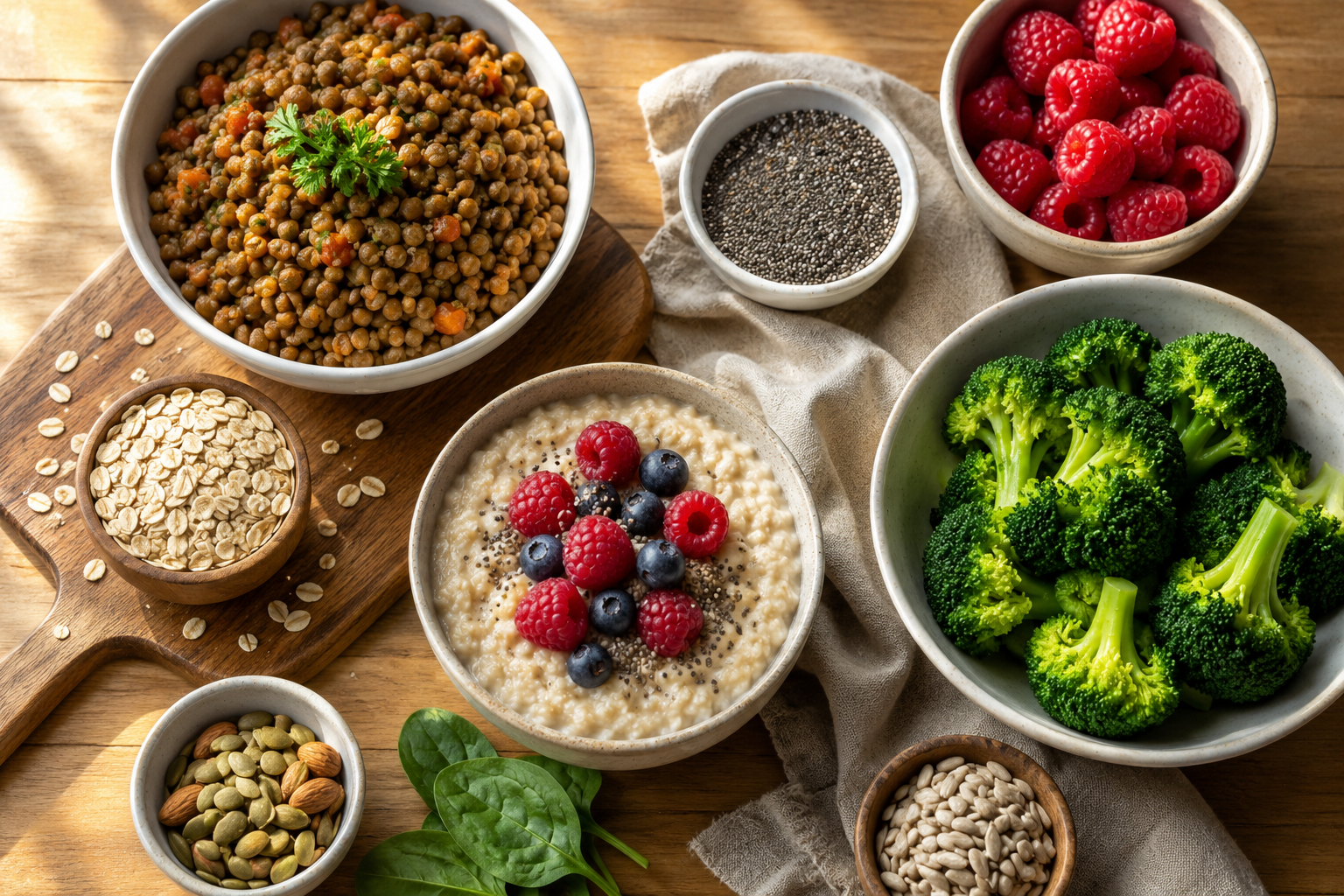
Legumes such as lentils chickpeas and black beans are among the highest fiber foods available and they also provide protein. Whole grains such as brown rice quinoa and whole wheat bread are simple swaps for refined versions of the same food.
Oats And Seeds
Oats provide a type of soluble fiber called beta glucan which is especially good for cholesterol and blood sugar control, a benefit also outlined by the NIH National Institute of Diabetes and Digestive and Kidney Diseases. Chia seeds and flaxseeds are easy to sprinkle into yogurt smoothies or oatmeal without changing the taste much.
Fruits And Vegetables
Berries especially raspberries and blackberries pack a surprising amount of fiber for their size. Vegetables like broccoli carrots and leafy greens add both fiber and volume to meals which helps with fullness. If you want a deeper breakdown of which everyday vegetables give the most nutritional value our earlier guide on vege health foods and easy meal ideas is a good place to start.
| Food | Serving Size | Fiber Content |
|---|---|---|
| Lentils cooked | 1 cup | 15 grams |
| Chickpeas cooked | 1 cup | 13 grams |
| Oats | 1 cup dry | 8 grams |
| Raspberries | 1 cup | 8 grams |
| Broccoli cooked | 1 cup | 5 grams |
| Chia seeds | 2 tablespoons | 10 grams |
| Whole wheat bread | 2 slices | 4 grams |
The Bloating Problem Nobody Warns You About
Here is the part most fibermaxxing content leaves out and it is probably the biggest reason people quit within a week. If you jump from 12 grams of fiber a day to 40 grams overnight your gut bacteria simply cannot keep up. The result is bloating gas and stomach discomfort that has nothing to do with fiber being bad for you and everything to do with increasing it too fast.
The fix is gradual increase. Add about 5 grams of fiber every few days rather than overhauling your entire diet in one sitting. Drinking enough water matters just as much because fiber needs water to move through your digestive system properly. Without enough fluid high fiber intake can actually make constipation worse instead of better.
| Week | Target Daily Fiber | Focus |
|---|---|---|
| Week 1 | 15 grams | Add one high fiber food per meal |
| Week 2 | 20 grams | Introduce legumes a few times a week |
| Week 3 | 25 grams | Add seeds and whole grains daily |
| Week 4 | 30 to 35 grams | Maintain variety and steady water intake |
Food First Or Supplements
Fiber supplements like psyllium husk or inulin powder can help when your meals fall short, but they should not replace real food. Whole foods come with vitamins minerals and plant compounds that a powder just cannot copy. The smartest approach is treating food as your main source and keeping supplements as a backup for the days when your diet slips.
The Gut Brain Connection
One reason fibermaxxing has gained so much attention in 2026 is that scientists keep finding new links between the gut and the brain. The bacteria living in your gut produce compounds that can affect your mood focus and even how well you sleep. Fiber basically feeds those bacteria, which is probably why some people say they feel mentally sharper after a few weeks of eating more of it. Researchers are still figuring out the full picture here, but it explains why fiber keeps coming up in conversations about mental wellness and not just digestion.
A Simple Way To Start
Instead of trying to hit 30 grams starting tomorrow pick one meal to upgrade first. Swap white rice for brown rice at dinner. Add a handful of berries to breakfast. Choose lentil soup over a sandwich for lunch once or twice a week. These small swaps stack up over a month and they are far easier to stick with than a complete diet overhaul.
People Also Ask
Is fibermaxxing actually healthy
Yes for most people. Fiber supports digestion blood sugar control and heart health. The key is increasing intake gradually and drinking enough water so your gut has time to adjust.
How much fiber is too much
Going above 70 grams a day can lead to bloating gas and nutrient absorption issues for some people. Most adults do not need to worry about this since the average intake is far below the recommended amount in the first place.
What is the fastest way to increase fiber intake
Adding one high fiber food to each meal works better than trying to overhaul your whole diet at once. Oats at breakfast a bean based lunch and vegetables at dinner can get most people close to their daily target within a couple of weeks.
Can fiber help with weight loss
Fiber slows digestion and helps you feel full longer which can naturally reduce overeating. It is not a direct weight loss tool on its own but it supports the kind of eating pattern that makes weight management easier.
Does fiber help with bloating or cause it
Both, depending on how it is introduced. Increasing fiber too quickly causes bloating, while a steady gradual increase paired with enough water actually reduces bloating over time by improving regular digestion.
Final Thoughts
Fibermaxxing is one of those rare nutrition trends that lines up with actual long standing dietary advice instead of contradicting it. The idea is not complicated. Eat more whole plant foods increase your fiber gradually drink enough water and let your gut adjust at its own pace. Do that consistently and the benefits show up on their own without needing to chase every new supplement or hack that shows up online.
If you want a fiber plan built around your own eating habits and goals visit the Nutravyntra homepage to learn more about personalized nutrition guidance, or browse the Nutravyntra blog for more evidence based nutrition articles.
This article is for general informational purposes only and is not a substitute for medical advice. Anyone with a digestive condition or other health concerns should speak with a doctor or registered dietitian before making major changes to fiber intake.