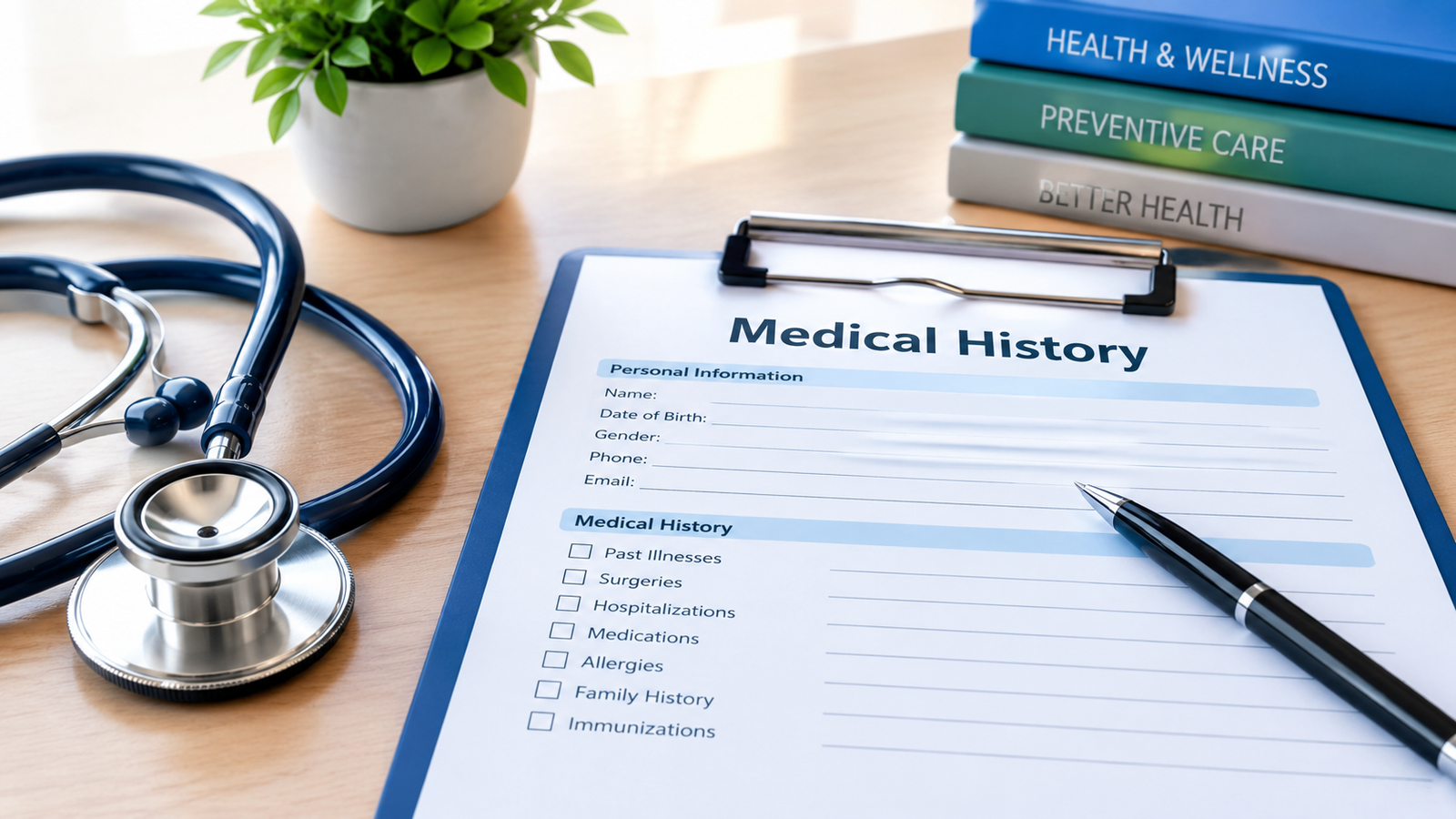

Your health information tells an important story about your past and present. It can include previous illnesses, surgeries, medications, allergies, treatments, family health conditions and other details that may help healthcare professionals understand your overall health.
Keeping this information accurate and organized can make healthcare conversations easier. It can also help healthcare professionals identify relevant risks and make more informed decisions when evaluating a new concern.
A well-prepared health record does not need to be complicated. Even a simple summary of important conditions, medicines and family health information can be useful during medical appointments.
Table of Contents
What Is Medical History?
Medical history is a record of a person’s previous and current health information. It gives healthcare professionals background information that may be relevant when assessing symptoms, planning treatment or discussing preventive care.
According to MedlinePlus, personal health records can help people keep important information about their health in one place. This information can complement the records maintained by healthcare providers.
A complete record may contain information from many stages of life. Some details may be directly related to current health while others provide useful background that helps put a person’s situation into context.
What Does Medical History Include?
Previous Health Conditions
Previous illnesses and ongoing health conditions are important parts of a health record. These may include conditions that required treatment in the past as well as problems that are still being managed.
For example, information about asthma, diabetes, high blood pressure or previous infections may be relevant when a healthcare professional evaluates a new symptom.
It is useful to include approximately when a condition was diagnosed and whether it required medication, hospitalization or other treatment.
Surgeries and Hospitalizations
Previous surgeries and hospital stays can provide important information about a person’s health. Details may include the type of procedure, approximate date and reason for hospitalization.
Some procedures can affect future healthcare decisions. Sharing this information with a healthcare professional can help provide a more complete picture of previous treatment.
Medications and Allergies
Current medications are another important part of a person’s health information. This includes prescription medicines as well as other products recommended by a healthcare professional.
Allergies should also be clearly documented. Medication allergies can be particularly important because they may influence which treatments are appropriate.
Keeping an updated list can be helpful when visiting a new doctor or receiving care from more than one healthcare provider.
Why Is This Information Important?
A detailed health background can help healthcare professionals understand symptoms within a wider context. Two people may experience similar symptoms but have very different health histories.
Previous conditions, medications and treatments can influence how a healthcare professional approaches an evaluation. This is one reason why providing accurate information during an appointment is important.
The Centers for Disease Control and Prevention (CDC) also explains that family health information can help people understand conditions that may run in families.
How Healthcare Professionals Use It
Understanding Current Symptoms
When someone develops a new health concern, previous health information can provide useful context.
For example, a history of a previous condition may help a healthcare professional decide which questions to ask or which types of evaluation may be appropriate.
This does not mean that an old condition is always responsible for a new symptom. Instead, it gives the healthcare professional additional information to consider.
Reviewing Previous Treatment
Information about previous medicines and treatments can help healthcare professionals understand what has already been tried.
It can also prevent unnecessary confusion when a person has received care from different clinics or hospitals.
Keeping copies of important reports and maintaining an updated list of medications can make these conversations easier.
Personal and Family Health History
Personal health information describes an individual’s own health experiences. Family health history is different because it focuses on health conditions that have affected relatives.
Family information can sometimes help identify patterns that may be relevant to health risk. The CDC guide on family health history for adults recommends collecting information about health conditions among close relatives when possible.
Useful information may include major illnesses, approximate ages when conditions were diagnosed and the relationship of the affected family member.
It is not necessary to know every detail. Even basic information can be useful when discussing family health patterns with a healthcare professional.
How to Prepare Your Health Information
Create a Simple Health Summary
A simple health summary can include:
- Current health conditions
- Previous major illnesses
- Surgeries and hospitalizations
- Current medications
- Known allergies
- Previous major treatments
- Important family health conditions
- Names of healthcare professionals when relevant
Keeping this information in one organized place can make it easier to update over time.
Keep Important Records Organized
Medical reports, test results and medication information can become difficult to manage when they are stored in different places.
A personal health record can provide a convenient way to organize important information. The U.S. National Library of Medicine’s MedlinePlus information on personal health records explains how these records can help people manage and access their health information.
Digital records can be useful, but important information should also be protected with appropriate privacy and security measures.
Medical History and Electronic Health Records
Many healthcare organizations now use electronic health records. These systems allow healthcare professionals to document patient information digitally and may make it easier to access relevant information within a healthcare system.
However, electronic records do not always contain every detail about a person’s health. Information from another healthcare provider may not automatically appear in a new system.
For this reason, patients may still need to provide information about previous treatment, medications, allergies and other relevant details.
Common Mistakes to Avoid
Guessing Important Details
People do not always remember exact dates or treatment details. If you are unsure about something, it is better to say that you are unsure rather than provide information that may be incorrect.
Approximate information can sometimes still be useful when clearly identified as approximate.
Leaving Out Relevant Information
Some people may forget to mention an old condition because it no longer causes problems. However, previous health issues can sometimes remain relevant.
Important surgeries, serious illnesses, allergies and long-term medications should generally be included when discussing your health with a healthcare professional.
Forgetting to Update Your Records
Health information changes over time. New medications may be prescribed, treatments may end and new conditions may develop.
Reviewing your information periodically can help keep it accurate.
Medical History and Preventive Healthcare
Health information is not only useful when someone becomes sick. It can also support preventive healthcare.
The CDC’s preventive care guidance highlights the importance of preventive services and regular healthcare. Depending on age, health status and individual circumstances, preventive care may include screenings, vaccinations and other recommended services.
Family health information can also provide useful context when discussing preventive care with a healthcare professional.
Medical History and Overall Wellness
Keeping health information organized can support better communication between patients and healthcare professionals. It may also help people become more aware of their own health patterns.
Health information is only one part of maintaining overall wellness. Nutrition, physical activity, sleep and everyday habits can also contribute to long-term health.
For example, learning about food quality can support better nutrition choices. Nutravyntra’s guide to Most Nutrient Dense Foods explains how nutrient-dense foods can provide important vitamins, minerals and other nutrients.
Planning meals can also make healthy eating more practical. Nutravyntra’s guide to Easy Meal Prep Ideas covers simple approaches to preparing meals ahead of time.
Frequently Asked Questions
What should be included in a health history?
It can include previous illnesses, current conditions, surgeries, hospitalizations, medications, allergies, treatments and relevant family health information.
Why is family health history important?
Family health information can help healthcare professionals understand whether certain health conditions may occur more frequently within a family.
Should old health conditions be included?
Important previous conditions can be worth mentioning even if they are no longer causing symptoms. A healthcare professional can determine whether the information is relevant to current care.
How often should health information be updated?
It is useful to update it whenever there is a major change such as a new diagnosis, medication, allergy or significant treatment.
Can I keep my own health records?
Yes. Personal health records can help individuals organize important information and have it available when speaking with healthcare professionals.
What if I do not remember an exact date?
You can provide an approximate date and clearly indicate that it is approximate. Healthcare professionals can use the information alongside other available records.
Conclusion
Keeping an accurate and organized health record can make communication with healthcare professionals easier. Information about previous conditions, treatments, medications, allergies and family health can provide useful context when making healthcare decisions.
You do not need a complicated system. A clear summary that is updated when important changes occur can be a practical way to stay organized and better understand your own health information.