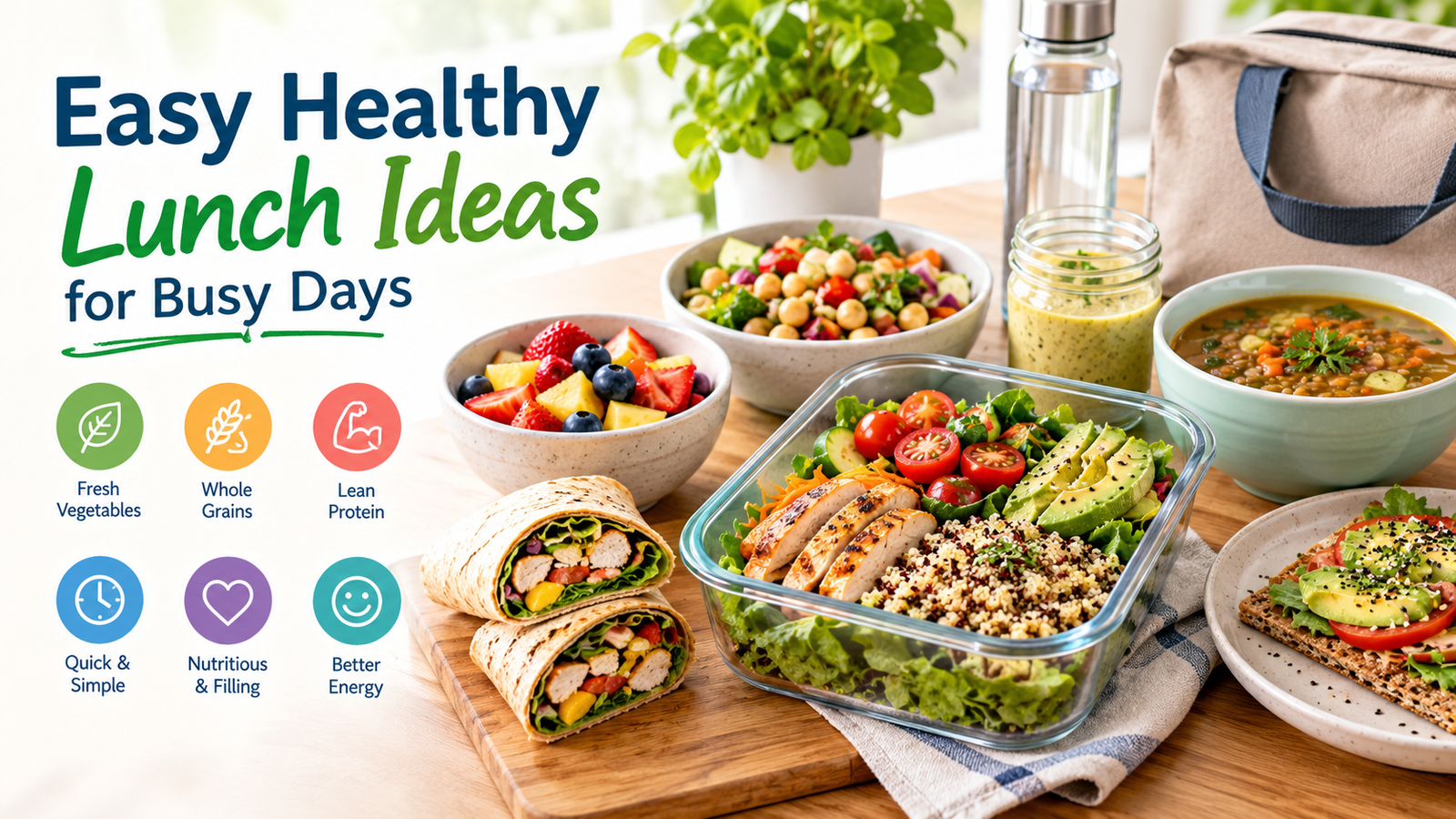

Finding a lunch that is nutritious, satisfying, and simple to prepare can make busy days much easier. When you have limited time, it is tempting to rely on whatever is quickest. But a balanced lunch does not have to require complicated recipes, expensive ingredients, or hours in the kitchen.
The best easy healthy lunch ideas combine simple ingredients in a way that gives you variety and makes the meal enjoyable. Vegetables, fruits, whole grains, and protein-rich foods can all have a place in a balanced lunch. Harvard’s Healthy Eating Plate recommends emphasizing vegetables and fruits while including whole grains and healthy protein sources.
Table of Contents
What Makes a Lunch Healthy?
A healthy lunch does not need to follow a strict formula. Instead, think about including several types of nutritious foods.
Vegetables and fruit can add fiber, vitamins, minerals, and variety. Whole grains such as brown rice, whole-wheat bread, quinoa, and whole-grain pasta can provide useful carbohydrates and fiber. Protein sources such as beans, eggs, chicken, fish, tofu, nuts, and seeds can make meals more satisfying.
Harvard’s nutrition guidance suggests building meals around vegetables and fruits, whole grains, and healthy protein sources while choosing water or other low-sugar beverages.
The goal is not perfection. A flexible lunch routine is much easier to maintain than a complicated plan that becomes stressful.
Chicken and Vegetable Wrap
A chicken and vegetable wrap is one of the easiest lunches to customize. Start with a whole-grain tortilla and add cooked chicken, lettuce, cucumber, tomato, and another vegetable you enjoy.
You can add a small amount of hummus or a yogurt-based dressing for extra flavor. If you are preparing lunch ahead of time, keep wet ingredients separate until you are ready to eat so the wrap stays fresh.
For a meat-free option, replace chicken with beans, chickpeas, tofu, or another protein you enjoy.
Simple Chickpea Salad
Chickpea salad is inexpensive, flexible, and requires very little cooking. Combine chickpeas with cucumber, tomato, bell pepper, leafy greens, and a simple dressing made with olive oil and lemon.
You can serve the mixture on its own or alongside whole-grain bread. Adding herbs such as parsley or cilantro can give the salad more flavor without making the preparation complicated.
This type of lunch also works well for meal preparation because several portions can be prepared at once.
Egg and Avocado Toast
Whole-grain toast topped with egg and avocado can make a quick lunch when you want something simple. Add tomato, spinach, cucumber, or another vegetable for extra variety.
Hard-boiled eggs can be prepared ahead of time, making this option especially convenient on busy days. You can also add fruit on the side to create a more complete meal.
The idea is to combine a whole-grain food with a protein source and produce rather than relying on one ingredient alone.
Brown Rice and Vegetable Bowl
A rice bowl is another flexible choice because you can change the ingredients based on what you already have.
Start with brown rice or another whole grain. Add vegetables such as broccoli, carrots, spinach, bell peppers, or cabbage. Then include a protein source such as chicken, beans, tofu, eggs, or fish.
A small amount of a flavorful dressing or sauce can bring everything together. Harvard’s guidance highlights whole grains, vegetables, and healthy protein as useful components of balanced meals.
Tuna or Bean Salad
A simple tuna or bean salad can be prepared in minutes. Combine your chosen protein with vegetables such as cucumber, tomatoes, leafy greens, or bell peppers.
If you use tuna, choose a preparation that fits your dietary preferences. For a plant-based alternative, beans can provide protein and fiber while working well with many vegetables.
Serve the salad with whole-grain crackers or bread if you want additional carbohydrates.
Quick Vegetable Pasta
Pasta can be part of a nutritious lunch when you combine it with vegetables and a suitable protein source.
Try whole-grain pasta with tomatoes, spinach, broccoli, peppers, and beans or chicken. Use olive oil, herbs, garlic, or a light sauce to add flavor.
Harvard’s nutrition guidance on carbohydrates notes that whole grains, vegetables, fruits, and beans are useful sources of carbohydrates and nutrients.
This makes pasta a convenient option for using leftover vegetables and ingredients from the refrigerator.
Hummus and Vegetable Pita
Hummus can turn a few basic ingredients into a satisfying lunch. Fill a whole-grain pita with hummus, cucumber, tomato, lettuce, shredded carrots, and bell peppers.
You can add boiled egg, grilled chicken, or beans if you want another protein source.
For a complete lunch, serve the pita with fresh fruit or a small side salad. This option is particularly useful when you want something that does not require much cooking.
Easy Lentil Soup
Soup can be a convenient lunch, especially when prepared in a larger batch. Lentils can be combined with vegetables such as carrots, tomatoes, onions, celery, and spinach.
Prepare several servings and store them appropriately so you have lunch ready for another day. Add whole-grain bread or another grain-based side if desired.
Lentils and other beans are also useful plant-based ingredients for creating filling meals. Harvard’s nutrition resources include beans and other legumes among healthy protein choices.
Leftover Grain and Protein Bowl
You do not always need a new recipe for lunch. Leftovers from dinner can become a completely different meal when combined with fresh ingredients.
For example, leftover roasted vegetables can be paired with rice and chicken. Leftover beans can be added to a salad. Cooked vegetables can also be mixed with eggs or tofu.
This approach saves time, reduces food waste, and makes meal planning easier.
For more practical preparation ideas, see Easy Meal Prep Ideas That Actually Save You Time Each Week.
How to Make Healthy Lunches Easier
Preparation is often more important than finding complicated recipes. Keep a few versatile foods available so you can quickly assemble a meal.
Cook a batch of grains, wash vegetables, prepare a protein source, and keep simple ingredients such as hummus, beans, fruit, yogurt, or nuts available. Then combine them differently throughout the week.
Harvard’s guidance also emphasizes variety and quality when planning meals.
Another useful strategy is to prepare ingredients rather than complete meals. Chopped vegetables, cooked grains, and prepared proteins can be mixed into different lunches depending on what you want that day.
Healthy Lunch Ideas on a Budget
Eating well does not always require expensive ingredients. Beans, lentils, eggs, oats, brown rice, seasonal vegetables, potatoes, canned fish, and whole-grain products can be useful staples.
Buying foods that can work in multiple meals can also reduce costs. For example, a large batch of cooked beans can be used in salads, wraps, bowls, and soups.
Frozen vegetables and fruits can also be practical options because they are convenient and can reduce food waste.
Keep Your Lunch Interesting
Eating the same lunch every day can become boring. Instead of completely changing your meals, change one component at a time.
Use different vegetables, switch between rice and whole-grain pasta, alternate chicken with beans or eggs, or experiment with different herbs and dressings.
You can also change the presentation. A grain bowl, wrap, salad, soup, or sandwich can use many of the same basic ingredients while still feeling different.
FAQ
What is a simple healthy lunch?
A simple healthy lunch can combine vegetables or fruit, a whole grain, and a protein source. Examples include chicken wraps, chickpea salads, rice bowls, egg toast, and vegetable pasta.
Can I prepare healthy lunches ahead of time?
Yes. Preparing ingredients such as cooked grains, vegetables, beans, chicken, or eggs ahead of time can make weekday lunches easier to assemble.
What are good protein options for lunch?
Chicken, fish, eggs, beans, lentils, tofu, nuts, seeds, and other protein-rich foods can be included depending on your preferences and dietary needs.
How can I make lunch healthier without complicated recipes?
Start by adding more vegetables or fruit, choosing whole grains more often, and including a nutritious protein source. Simple combinations can be just as useful as elaborate recipes.
Are leftovers good for lunch?
Absolutely. Leftovers can save time and money. Combine them with fresh vegetables, whole grains, or another ingredient to create a balanced meal.
Conclusion
Healthy lunches do not need to be complicated. With a few basic ingredients, you can prepare wraps, salads, grain bowls, soups, pasta dishes, and other satisfying meals without spending hours in the kitchen.
The key to successful easy healthy lunch ideas is keeping your routine practical. Choose foods you enjoy, prepare versatile ingredients ahead of time, and create different combinations throughout the week. A flexible approach can make nutritious lunches easier to maintain over time.
