
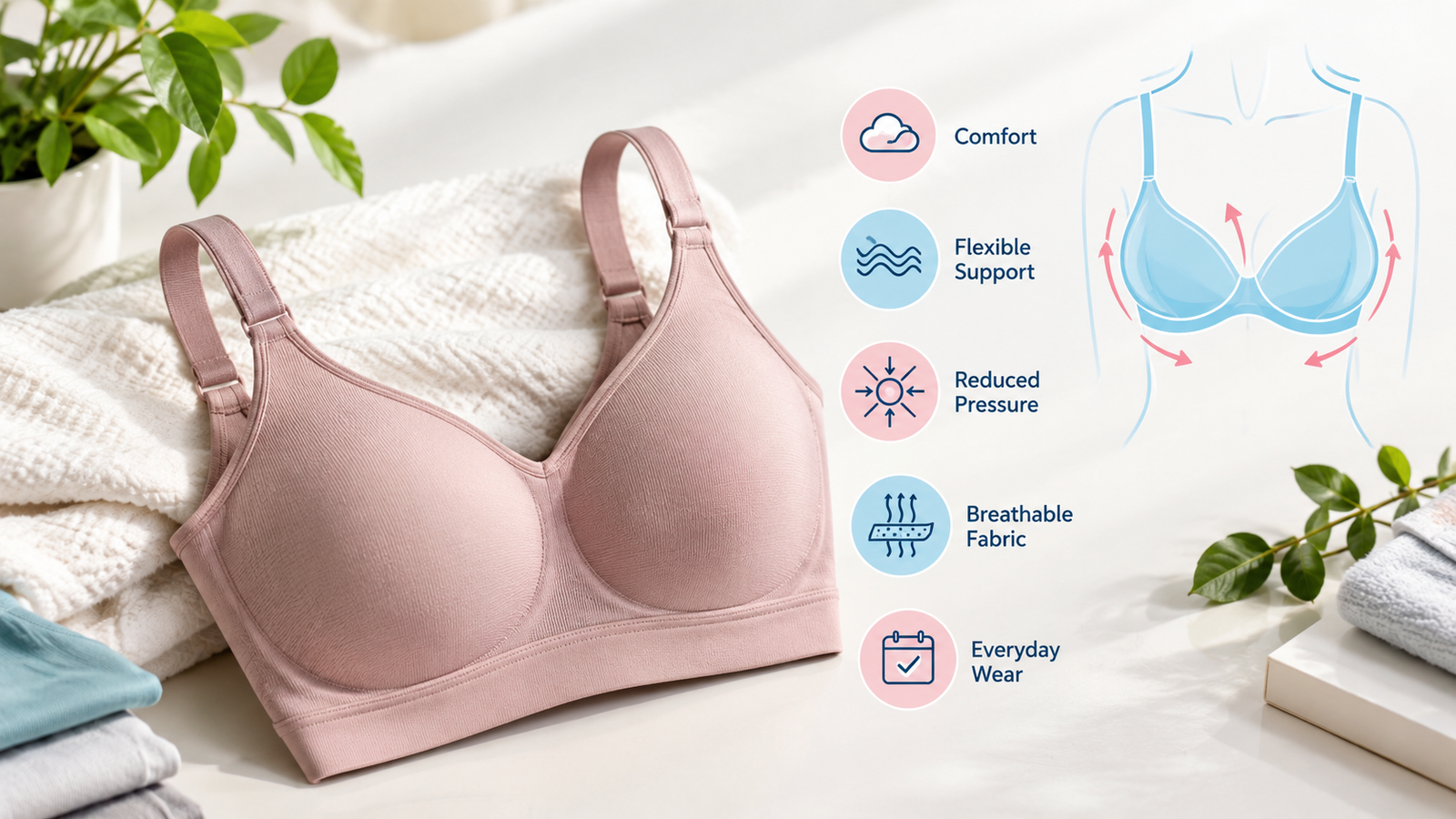

Choosing the right bra can make a noticeable difference in everyday comfort. Wireless bras have become popular because they provide support without the rigid underwire found in traditional bra styles. For many people, this can make daily wear feel more flexible and comfortable.
However, it is important to separate comfort benefits from medical claims. A wireless bra is not automatically healthier than an underwire bra. Fit, support, fabric, activity level, and individual comfort are generally more important than the presence or absence of an underwire.
Table of Contents
What Is a Wireless Bra?
A wireless bra is designed without the rigid wire that normally runs underneath the breasts. Instead, it uses fabric, elastic bands, cups, seams, and straps to provide support.
Some wireless bras are lightweight and designed mainly for comfort, while others include wider bands, molded cups, reinforced panels, or supportive materials for additional stability.
This means that removing the underwire does not necessarily mean sacrificing support.
Potential Comfort Benefits
One of the main reasons people choose wireless styles is comfort. Without a rigid wire pressing against the lower breast area, some people may experience less pressure during long periods of sitting, working, studying, traveling, or relaxing.
A properly fitted wireless bra can also move more naturally with the body. This may be useful for people who dislike the feeling of an underwire or a structured bra.
However, comfort is highly individual. A wireless bra that is too tight or poorly fitted can still cause pressure, irritation, or discomfort.
Less Pressure From Underwire
Underwire itself is not automatically harmful when a bra fits properly. However, an incorrectly fitted bra can create pressure and discomfort.
According to Cleveland Clinic’s guidance on breast pain, an ill-fitting bra or inadequate support can contribute to breast discomfort, particularly during physical activity.
A wireless design may therefore feel more comfortable for someone who is sensitive to pressure around the ribcage or lower breast area.
The important point is that the benefit comes mainly from comfort and proper fit rather than the idea that underwire is inherently unhealthy.
Flexible Support for Everyday Wear
Wireless bras can provide enough support for many everyday activities. They can be useful for work, school, relaxing at home, traveling, shopping, and other low-impact activities.
When choosing one, look for:
- A supportive but comfortable band
- Adjustable straps
- Properly fitting cups
- Soft and breathable fabric
- Strong stitching
- Wide straps when additional support is needed
- A band that stays in place
A good wireless bra should feel secure without constantly needing adjustment.
Can Wireless Bras Help With Breast Discomfort?
Some people may find wireless bras more comfortable during periods of temporary breast tenderness. Hormonal changes can sometimes cause sensitivity, and a softer bra may feel preferable during these times.
For additional information, Cleveland Clinic’s breast pain information explains common causes of breast discomfort and when medical evaluation may be appropriate.
Changing your bra style should not be considered a treatment for an underlying medical condition. Persistent, severe, unusual, or concerning symptoms should be discussed with a healthcare professional.
Useful During Periods of Breast Sensitivity
Breast sensitivity can change throughout the menstrual cycle. During periods when the breasts feel more tender, some people prefer clothing that creates less pressure.
A soft wireless bra may be a practical option because it can feel less restrictive. Seamless designs and smooth fabrics may also help reduce irritation from rough edges or tight seams.
The best choice is the one that provides comfortable support without causing additional pressure.
Wireless Bras and Physical Activity
Wireless bras can work well for some light activities, but the required level of support depends on the activity.
Walking and gentle movement may require less support, while running, jumping, and other higher-impact activities generally require a sports bra designed to control breast movement.
Research has found that appropriate breast support can reduce breast movement and discomfort during exercise. A 2026 PubMed study on breast support and sports bra prescription also found improved satisfaction with fit and support among participants receiving an individually prescribed sports bra.
For exercise, choose a supportive sports bra rather than assuming that any everyday wireless bra will provide sufficient stability.
Better Comfort for Long Wear
Another potential advantage is that wireless bras can feel comfortable during extended wear when they fit correctly.
People who spend long hours working, studying, traveling, or completing daily activities may prefer a flexible design that does not feel rigid around the body.
However, sizing remains important. A wireless bra that is too tight can cause pressure just as an unsuitable underwire bra can.
How to Choose a Comfortable Wireless Bra
Check the Band
The band should feel secure without squeezing. It should remain relatively level rather than riding up at the back.
Check the Cups
The cups should comfortably contain the breast tissue without excessive gaps, spilling, or uncomfortable compression.
Look at the Straps
Straps should provide support without digging into the shoulders. Wider straps may feel more comfortable for everyday use.
Consider the Fabric
Soft, breathable materials can be preferable for long periods of wear. If your skin is sensitive, consider smooth seams and fabrics that do not cause irritation.
Match Support to Activity
A lightweight wireless bra may be suitable for everyday use, while exercise usually calls for a purpose-built sports bra with stronger support.
Are Wireless Bras Better Than Underwire Bras?
There is no universal answer.
For some people, wireless bras are more comfortable because they provide flexibility and avoid the sensation of a rigid wire. Others may prefer underwire because it provides the shape and support they want.
The most important consideration is fit and individual comfort rather than assuming one construction is medically superior.
A properly fitted underwire bra is not automatically unhealthy, and a wireless bra is not automatically healthier.
What About Wearing a Bra While Sleeping?
Whether someone chooses to wear a bra while sleeping is largely a matter of personal comfort. There is no good evidence that simply wearing a bra while sleeping increases breast cancer risk.
Some people prefer not to wear one because they find it restrictive, while others may prefer gentle support.
A soft wireless style may be more comfortable for someone who wants light support while sleeping.
When Should You Talk to a Healthcare Professional?
Changing your bra style can improve comfort, but it should not replace medical evaluation.
Talk with a healthcare professional if you notice persistent breast pain, a new lump, unusual skin changes, nipple changes, discharge, or another symptom that concerns you.
Breast symptoms can have many possible causes, so professional evaluation is important when symptoms persist or seem unusual.
How Nutrition Can Support Overall Wellness
A comfortable bra is only one small part of overall health. Balanced nutrition, regular movement, sufficient sleep, and healthy daily habits also contribute to general well-being.
For ideas about foods that provide a wide range of essential nutrients, explore Most Nutrient Dense Foods. A varied diet can help provide important vitamins, minerals, protein, fiber, and other nutrients.
Mental Well-Being and Everyday Comfort
Physical comfort can also be part of a broader self-care routine. Wearing clothing that feels comfortable and choosing products that suit your individual needs can make everyday routines easier.
You can also explore Healthy Coping Strategies for practical ideas related to managing everyday stress and supporting emotional well-being.
Common Myths About Wireless Bras
Wireless Bras Prevent Breast Cancer
There is no evidence that wearing a wireless bra prevents breast cancer. Bra construction is not a proven cancer-prevention method.
Underwire Bras Are Dangerous
A properly fitted underwire bra is not automatically dangerous. Problems are more likely to involve poor fit, excessive pressure, or inadequate support.
Every Wireless Bra Provides the Same Support
Wireless bras vary significantly. Some provide minimal support, while others are designed to provide stronger everyday support.
Wireless Bras Are Only for Relaxing
Not necessarily. Wireless bras are available in many designs and can be suitable for everyday activities.
Frequently Asked Questions
Are wireless bras healthier than underwire bras?
Not necessarily. Wireless bras may be more comfortable for some people, but there is no evidence that wireless construction is inherently healthier.
Can wireless bras reduce breast pain?
They may improve comfort when discomfort is related to pressure or inadequate fit. Persistent breast pain should be discussed with a healthcare professional.
Are wireless bras good for everyday wear?
Yes. A properly fitted wireless bra can be suitable for everyday activities and extended wear.
Are wireless bras suitable for exercise?
Some may work for light activity, but higher-impact exercise usually requires a supportive sports bra designed to control movement.
Can you sleep in a wireless bra?
You can if it feels comfortable. A soft wireless style may be preferable for people who want gentle support while sleeping.
Conclusion
The potential health benefits of wireless bras are mainly related to comfort, flexibility, and finding a fit that works well for your body. Removing the underwire can make a bra feel less restrictive for some people, particularly during long periods of everyday wear or temporary sensitivity.
However, wireless does not automatically mean healthier. Proper sizing, adequate support, breathable materials, and choosing a bra appropriate for your activity are more important considerations.
Ultimately, the best bra is one that fits comfortably, provides the support you need, and allows you to move through your day without unnecessary pressure or irritation.