
Quick answer: Paneer protein per 100g is about 18 to 20 g. For example, Amul Malai Paneer lists 20 g protein, 323 calories and 25 g fat per 100 g. So paneer is a good vegetarian protein, but it is also high in fat and calories, which makes portion size important.
Paneer is the go-to protein for millions of vegetarian families. It is soft, filling and works in almost every meal, from bhurji at breakfast to tikka at dinner. But is it really a high protein food, and how does it compare with chicken or eggs?
This guide gives paneer nutrition per 100 g, protein in common portions, a paneer vs chicken vs eggs comparison, how much paneer to eat in a day and the healthiest ways to cook it.
Table of Contents
Paneer Nutrition per 100g
Values below are from the Amul Malai Paneer label, a widely sold full-fat paneer. Homemade paneer and other brands can differ, depending on the milk used.
| Nutrient | Per 100 g paneer |
|---|---|
| Calories | 323 kcal |
| Protein | 20 g |
| Total fat | 25 g |
| Saturated fat | 15 g |
| Carbohydrates | 4.5 g |
| Added sugar | 0 g |
| Calcium | 480 mg |
What this means: about 25 percent of paneer’s calories come from protein and about 70 percent from fat. It is rich in protein and calcium, but it is not a “lean” protein like chicken breast.
Paneer Protein in Common Portions
Based on 20 g protein and 323 kcal per 100 g. Numbers are rounded.
| Portion | Protein | Calories | Fat |
|---|---|---|---|
| 1 small cube (about 20 g) | 4 g | 65 kcal | 5 g |
| 50 g | 10 g | 162 kcal | 12.5 g |
| 100 g | 20 g | 323 kcal | 25 g |
| 150 g | 30 g | 485 kcal | 37.5 g |
| 200 g (1 pack) | 40 g | 646 kcal | 50 g |
Check the label on your pack, as some paneer is made from toned milk and has less fat and fewer calories.
Paneer vs Chicken vs Eggs vs Tofu
Here is how paneer compares with other popular protein foods, per 100 g. Paneer values are from the Amul label. Other values are from USDA FoodData Central and are approximate.
| Food (100 g) | Protein | Calories | Protein per 100 kcal |
|---|---|---|---|
| Chicken breast, cooked | About 29 g | About 151 kcal | About 19 g |
| Paneer (full fat) | 20 g | 323 kcal | About 6 g |
| Firm tofu | About 16 g | About 144 kcal | About 11 g |
| Whole eggs (about 2 eggs) | About 12.5 g | About 143 kcal | About 9 g |
| Greek yogurt, plain, non-fat | About 10 g | About 59 kcal | About 17 g |
| Lentils (dal), boiled | About 9 g | About 116 kcal | About 8 g |
What about soya chunks? Dry soya chunks are one of the richest vegetarian protein sources, with about 52 to 53 g of protein per 100 g dry, based on popular brand labels. They swell when soaked, so a cooked bowl has much less per 100 g, but they are still a very good, low fat partner for paneer. For the full breakdown, see our guide to soya chunks protein per 100g.
- Per 100 g, paneer has more protein than eggs and tofu, but less than chicken breast.
- Per calorie, paneer gives the least protein of these foods because of its high fat.
- For vegetarians, paneer is still one of the easiest ways to get protein. Mixing it with dal, Greek yogurt, tofu or soya gives a better balance.
For chicken numbers, see our guides to boiled chicken breast calories and grilled chicken breast calories. For eggs, read how many eggs you can eat a day.
Health Benefits of Paneer
- Good vegetarian protein: Paneer is made from milk, so its protein contains all the essential amino acids your body needs.
- Rich in calcium: 100 g gives about 480 mg of calcium, which supports bones and teeth.
- Keeps you full: Protein and fat together make paneer filling, which can help reduce snacking.
- Low in carbs: With only about 4.5 g carbs per 100 g, it fits easily into low carb meals.
- Easy to use: It works in breakfast, lunch, dinner and snacks.
Things to Watch Out For
- High in calories and fat: A full 200 g pack has about 650 calories and 50 g fat, mostly saturated fat.
- Cooking adds more: Frying paneer, rich gravies with cream and butter, and paneer pakoras can double the calories.
- Freshness: Paneer spoils quickly. Keep it in the fridge, check the use-by date and buy from trusted brands or shops.
- Health conditions: If you have high cholesterol, heart disease or kidney disease, ask your doctor how much full-fat dairy is right for you.
How Much Paneer Can You Eat in a Day?
There is no official daily limit for paneer. For most healthy adults, 50 to 100 g a day is a sensible amount. It gives 10 to 20 g of protein without too many calories.
For context, the general protein recommendation for adults is about 0.8 g per kg of body weight per day, according to Harvard Health. A 60 kg adult needs about 48 g a day, so 100 g of paneer covers around 40 percent of that. New to the topic? Read protein meaning in Hindi for a simple explanation.
It is better to get protein from a mix of foods, such as paneer, dal, curd, eggs, soya, chana and nuts, rather than relying on paneer alone.
Paneer for Muscle Building and Gym
Paneer is popular with vegetarians who work out, and for good reason:
- Complete protein: It gives all the essential amino acids that muscles need to repair and grow.
- Slow digesting: Most of the protein in paneer is casein, a milk protein the body digests slowly, so it keeps you full for longer.
- Easy to add: 100 g of paneer adds about 20 g of protein to a meal.
If you are trying to gain muscle without gaining much fat, combine paneer with leaner proteins such as Greek yogurt, soya chunks, dal, eggs or chicken, so your calories do not climb too high.
Is Paneer Good for Weight Loss?
Paneer can be part of a weight loss diet if you control the portion and the cooking method. Its protein helps you feel full, and it is low in carbs. But because it is high in calories, large portions or fried paneer can make weight loss harder.
- Stick to about 50 to 100 g per meal.
- Grill, bake, air fry or make bhurji with very little oil.
- Pair paneer with lots of vegetables, salad or dal.
- Choose low-fat or toned-milk paneer if you eat it often.
Remember the oil: 1 tablespoon of oil or ghee adds about 120 calories. If 100 g of paneer soaks up 2 tablespoons of oil while frying, it goes from about 323 to over 500 calories.
Looking for more filling options? See our list of high protein snacks for weight loss.
Healthy Ways to Eat Paneer
| Idea | Why it is a good choice |
|---|---|
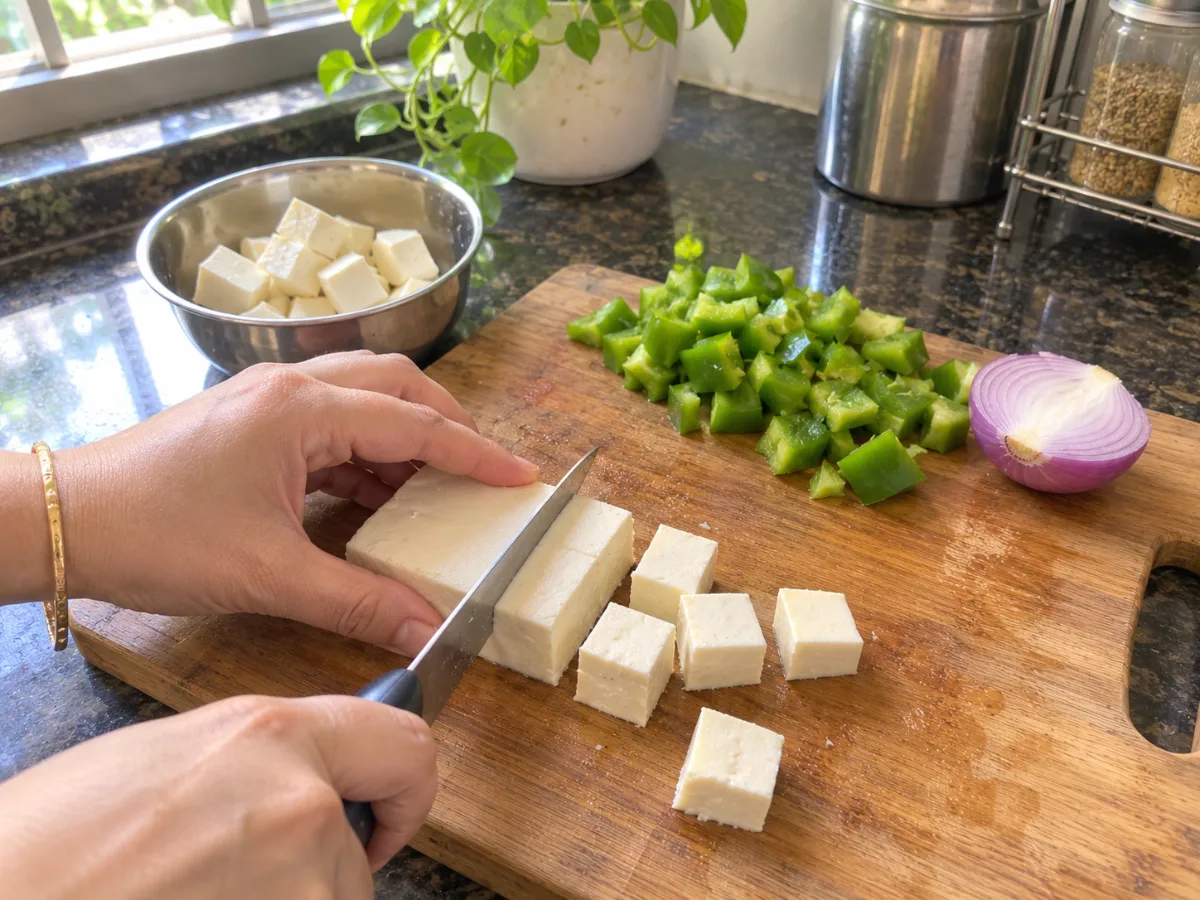
| Paneer bhurji with vegetables | Quick breakfast, little oil, add onion, tomato and capsicum |
| Grilled paneer tikka | Marinated in curd and spices, no deep frying |
| Paneer salad | Raw or lightly grilled paneer with cucumber, tomato and lemon |
| Paneer and vegetable stir fry | High protein, high fiber dinner with little oil |
| Palak paneer (light) | Spinach adds fiber and iron, skip the cream |
| Paneer stuffed roti | Filling lunch, cook with very little ghee |
Less healthy options to enjoy only sometimes: paneer pakora, butter paneer, shahi paneer and paneer in creamy restaurant gravies.
Homemade Paneer vs Store-Bought
- Homemade: You control the milk. Paneer made from toned or low-fat milk has less fat and fewer calories than full-cream paneer. About 1 litre of full-cream milk usually gives around 180 to 200 g of paneer.
- Store-bought: Convenient and the label shows exact nutrition. Choose trusted brands with an FSSAI licence number on the pack, check that it is made from pasteurised milk and look at the use-by date.
- Storage: Keep paneer in the fridge in a closed box, or covered with water that you change daily, and use it within the time shown on the label.
Paneer Protein per 100g in Hindi
100 ग्राम पनीर में लगभग 18 से 20 ग्राम प्रोटीन होता है। उदाहरण के लिए, अमूल मलाई पनीर के 100 ग्राम में 20 ग्राम प्रोटीन, 323 कैलोरी, 25 ग्राम फैट और 480 मिलीग्राम कैल्शियम होता है। पनीर शाकाहारी लोगों के लिए प्रोटीन का अच्छा स्रोत है, लेकिन इसमें फैट और कैलोरी भी ज़्यादा होती है। ज़्यादातर स्वस्थ लोग दिन में 50 से 100 ग्राम पनीर खा सकते हैं। वज़न घटाना हो तो पनीर को तलने की बजाय ग्रिल करें या कम तेल में भुर्जी बनाएं।
| पनीर की मात्रा | प्रोटीन | कैलोरी |
|---|---|---|
| 50 ग्राम | 10 ग्राम | 162 |
| 100 ग्राम | 20 ग्राम | 323 |
| 200 ग्राम | 40 ग्राम | 646 |
Frequently Asked Questions
How much protein is in 100g of paneer?
About 18 to 20 g. Amul Malai Paneer lists 20 g of protein per 100 g. Homemade paneer can vary based on the milk used.
How much protein is in 200g of paneer?
About 40 g of protein, with around 646 calories and 50 g of fat, based on the Amul label.
Which is better, paneer or chicken?
Chicken breast has more protein (about 29 g per 100 g cooked) and far less fat. Paneer is the better choice for vegetarians and is richer in calcium. Both can fit a healthy diet in sensible portions.
Is paneer good for weight loss?
Yes, in moderation. Keep portions to about 50 to 100 g, avoid frying and pair it with vegetables. Large portions add a lot of calories.
Does cooking paneer reduce its protein?
Normal cooking does not remove much protein. The bigger change is the oil, butter or cream you add, which increases the calories.
Can I eat paneer every day?
Most healthy people can eat a moderate amount of paneer every day as part of a balanced diet. Mix it with other protein foods for variety.
Is paneer or tofu better for protein?
Paneer has a little more protein per 100 g (about 20 g vs about 16 g for firm tofu), but tofu has far fewer calories and less saturated fat.
Can I eat paneer at night?
Yes. A moderate portion of paneer at dinner is fine for most people. Choose grilled paneer or bhurji with vegetables rather than rich, creamy gravies, which can feel heavy before sleep.
Is paneer safe during pregnancy?
Paneer made from pasteurised milk is considered safe in pregnancy by the NHS. Check the label, avoid paneer from unknown sources and cook street-food paneer dishes until steaming hot.
Is paneer better than soya chunks for protein?
Dry soya chunks have much more protein per 100 g (about 52 g vs 20 g) and far less fat. Paneer gives more calcium and a softer texture. Many vegetarians use both.
Can people with diabetes eat paneer?
Paneer is low in carbs, so many people with diabetes can include it in sensible portions. Ask your doctor or dietitian what suits you, especially if you also need to watch fat intake.
Final Thoughts
Paneer protein per 100g is about 18 to 20 g, which makes it one of the best everyday protein foods for vegetarians. The catch is its fat and calories, so portion size and cooking method matter. Enjoy 50 to 100 g a day, grill or make bhurji instead of frying, and mix paneer with dal, curd and vegetables for a balanced, high protein diet.
This article is for general information and does not replace advice from a doctor or registered dietitian.
Sources
- Amul: Amul Malai Paneer product and nutrition information
- USDA FoodData Central: nutrient values for chicken breast, eggs, tofu, Greek yogurt and lentils
- NHS: Foods to avoid in pregnancy (pasteurised soft cheeses such as paneer are safe)
- Harvard Health Publishing: How much protein do you need every day?