
Few side dishes manage to feel both simple and special at the same time quite like roasted sweet potatoes. They work equally well alongside a weeknight dinner or a holiday spread and they manage to taste indulgent while actually being packed with nutrients. Getting them right however comes down to a few small details that make the difference between a soggy disappointing tray and one with crispy caramelized edges and tender centers.
This guide walks through everything worth knowing about getting this dish just right at home. It covers ingredient selection cutting techniques oven temperature seasoning ideas and common mistakes that quietly ruin the texture. Whether the goal is a simple weeknight side or an impressive addition to a holiday table this article gives a complete practical roadmap.
Table of Contents
What Are Roasted Sweet Potatoes
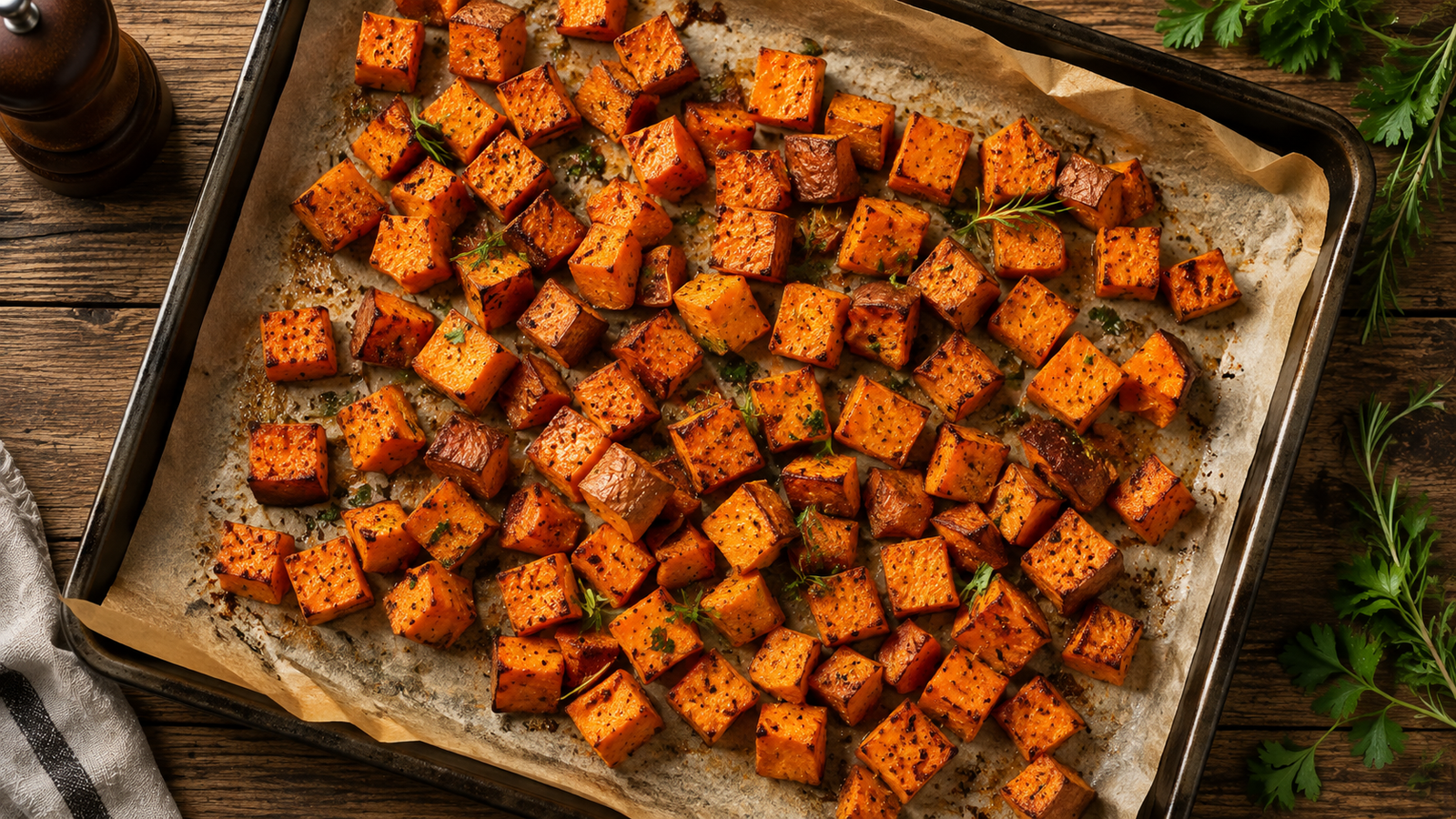
This dish is simply sweet potato pieces cooked in a hot oven until the exterior develops a caramelized golden brown crust while the interior turns soft and tender. Unlike boiling or steaming which can leave the vegetable watery and bland roasting concentrates the natural sugars in sweet potatoes through a process called caramelization producing a noticeably richer flavor without needing much added sugar or seasoning. The Mayo Clinic associates this kind of reaction with deeper flavor development in roasted vegetables generally.
The basic method is straightforward enough for a beginner cook yet flexible enough to accommodate countless variations in seasoning and preparation style. Cubes wedges rounds or even whole sweet potatoes can all be roasted successfully as long as the oven temperature and cooking time are adjusted accordingly. This flexibility combined with genuine nutritional value is a big part of why this simple dish has remained a staple on so many dinner tables.
Why This Dish Deserves a Regular Spot on Your Plate
Sweet potatoes are naturally rich in fiber vitamin A and antioxidants according to the Cleveland Clinic which makes them a genuinely nutritious choice compared to many other starchy side dishes. Roasting preserves most of these nutrients since the vegetable cooks in its own moisture rather than losing water soluble vitamins into boiling water the way steamed or boiled preparations often do.
Beyond the nutritional benefits this dish also offers remarkable versatility in the kitchen since it pairs well with almost any main course from roasted chicken to grain bowls to holiday turkey. It requires minimal hands on effort once the potatoes are prepped and in the oven which makes it an easy addition to a busy weeknight meal without adding much extra work. These practical advantages combined with genuine flavor explain why this dish shows up so consistently across family dinners and special occasion menus alike.
The Latest Update on Sweet Potato Cooking Trends
Interest in sweet potatoes has grown steadily as more people look for nutrient dense alternatives to traditional white potato side dishes without sacrificing comfort or flavor. Air fryer versions of this classic dish have become especially popular in recent years since the smaller cooking chamber produces even crispier results in a fraction of the time compared to a traditional oven.
There has also been a noticeable shift toward savory seasoning blends rather than the heavily sweetened marshmallow topped versions that once dominated holiday tables. Smoky spice rubs herb blends and simple salt and pepper preparations have become far more common as home cooks lean into the natural sweetness of the vegetable itself rather than layering on additional sugar. This shift reflects a broader movement toward showcasing whole food flavors rather than masking them.
Choosing the Right Sweet Potatoes
Firm sweet potatoes with smooth unblemished skin tend to roast most evenly since bruised or soft spots can cook unevenly and affect texture. Medium sized potatoes are generally easier to cut into uniform pieces than very large ones which helps ensure everything finishes cooking at the same time rather than leaving some pieces undercooked while others overcook.
Orange fleshed varieties are the most common and widely available option though purple and white fleshed sweet potatoes can also be roasted successfully with slightly different flavor profiles and textures. Storing sweet potatoes in a cool dark pantry rather than the refrigerator helps preserve their texture and flavor since cold storage can actually alter the starches in a way that affects how they cook.
Getting the Cut and Prep Right
Cutting sweet potato pieces into uniform sizes is one of the most important steps for even cooking since pieces that vary significantly in size will finish at different times leaving some mushy and others still firm. A half inch to one inch cube is a reliable standard size that balances crispy edges with a tender interior in a reasonable amount of time.
Leaving the skin on adds fiber and a slightly rustic texture though peeling is perfectly fine for those who prefer a smoother result. Patting the cut pieces dry with a paper towel before tossing them in oil removes excess surface moisture which is one of the simplest ways to encourage better browning and prevent the dreaded steamed texture that comes from too much moisture in the pan.
The Best Oven Temperature and Technique
A hot oven somewhere between four hundred and twenty five and four hundred and fifty degrees Fahrenheit produces the best results for this dish since high heat encourages caramelization on the surface while still cooking the interior through properly. Lower temperatures tend to steam the potatoes rather than roast them which results in a softer less crispy final texture.
Spreading the pieces in a single layer with space between each piece rather than crowding the pan is essential since overcrowded potatoes trap steam and end up soft instead of crispy. Flipping the pieces halfway through cooking ensures even browning on multiple sides rather than just the bottom touching the pan. Most cuts finish roasting in twenty five to thirty five minutes depending on size though checking for a fork tender interior and golden exterior is more reliable than relying on time alone.
Seasoning Ideas Worth Trying
A simple combination of olive oil salt black pepper and a touch of garlic powder lets the natural sweetness of the vegetable shine through without much distraction. This straightforward approach works well as a base that pairs with nearly any main course without competing for attention on the plate.
For something more adventurous a smoky blend of paprika cumin and chili powder adds warmth and depth that pairs particularly well with grilled proteins or Mexican inspired meals. A rosemary and thyme combination with a touch of maple syrup leans into a more autumnal flavor profile that works beautifully alongside roasted chicken or a holiday spread. Finishing the finished dish with fresh herbs a squeeze of lime or a sprinkle of flaky salt right before serving adds a final layer of brightness that ties the whole dish together.
Simple Roasted Sweet Potato Recipe Anyone Can Follow
This basic version serves about four and takes roughly thirty five minutes from start to finish. Preheat the oven to four hundred and twenty five degrees Fahrenheit then peel and cube two large sweet potatoes into roughly one inch pieces. Toss the cubes with two tablespoons of olive oil one teaspoon of salt half a teaspoon of black pepper and half a teaspoon of garlic powder until evenly coated.
Spread the pieces in a single layer on a parchment lined baking sheet making sure there is space between each piece. Roast for twenty five to thirty minutes flipping once halfway through until the edges are golden brown and the centers are fork tender. Remove from the oven and finish with a sprinkle of fresh parsley or a squeeze of lemon juice before serving warm.
Meal Prep Friendly Sweet Potato Ideas
This dish stores well in the refrigerator for several days which makes it a convenient option for weekly meal prep. Roasting a large batch at the start of the week and portioning it into containers alongside a protein source and a vegetable creates an easy grab and go lunch that requires almost no daily effort.
Reheating in the oven or air fryer rather than the microwave helps restore some of the original crispiness that can be lost during refrigeration. This dish also blends well into grain bowls salads and wraps which makes them a flexible base ingredient that can be repurposed into several different meals throughout the week without feeling repetitive.
Sweet Potatoes for Weight Loss
Sweet potatoes are naturally filling thanks to their fiber content which makes them a smart choice for anyone managing calorie intake as long as the amount of added oil and sugar stays reasonable. Using a modest amount of olive oil rather than heavy butter or sugary glazes keeps the calorie count in check while still delivering satisfying flavor and texture.
Pairing a moderate portion of this dish with a lean protein and plenty of vegetables creates a well balanced plate that supports fullness without excessive calories. Because the natural sweetness of the vegetable reduces the need for added sugar this dish tends to satisfy cravings for something sweet and comforting without derailing weight management goals.
Reviews and Feedback From People Who Make This Dish Regularly
Many home cooks who roast sweet potatoes regularly report that the biggest lesson learned through trial and error is not overcrowding the baking sheet since this single factor makes the most noticeable difference in achieving crispy results. This feedback appears consistently across cooking forums and recipe comment sections where the crowded pan mistake is mentioned far more often than any seasoning related issue.
Some feedback also highlights how well this dish holds up as leftovers particularly when reheated properly rather than microwaved directly from the fridge. Overall sentiment remains overwhelmingly positive with most people describing the dish as a reliable go to side that consistently turns out well once the basic technique of dry high heat and proper spacing is understood.
Common Mistakes to Avoid
Overcrowding the baking sheet is the single most common mistake and the one most responsible for soggy rather than crispy results since it traps steam around the potatoes instead of allowing hot air to circulate properly. Using two baking sheets rather than piling everything onto one is a simple fix that makes a significant difference in the final texture.
Cutting pieces in inconsistent sizes is another frequent issue that leads to some pieces burning while others remain undercooked. Skipping the step of patting the potatoes dry before tossing them in oil is a smaller but still meaningful oversight since excess surface moisture interferes with proper browning. Finally roasting at too low a temperature in an attempt to avoid burning often backfires by producing a softer steamed texture rather than the crispy exterior most people are aiming for.
Why This Dish Is Trending Right Now
Interest in this simple side dish has grown alongside broader trends toward nutrient dense whole food cooking and away from heavily processed side dish options. Social media recipe accounts have played a significant role in popularizing air fryer versions and creative seasoning blends that keep the dish feeling fresh rather than repetitive.
At the same time growing awareness around fiber intake and the benefits of colorful vegetables has kept sweet potatoes firmly in the spotlight as a go to choice for health conscious home cooks. This combination of nutritional relevance ease of preparation and genuine flavor explains why this dish continues to perform well across recipe blogs meal prep content and holiday menu planning guides.
Tips for Building Your Own Sweet Potato Routine
Start by keeping sweet potatoes stocked as a pantry staple since they store well and require minimal planning to turn into a satisfying side dish on short notice. A helpful approach similar to the framework covered in Nutravyntra’s healthy eating guides is to think in terms of uniform cuts plus high heat plus proper spacing plus a finishing touch of fresh herbs or acidity. This keeps the dish flexible enough to rotate seasoning combinations throughout the week without losing the technique that makes it work.
Roasting a large batch on a weekend and portioning leftovers for lunches throughout the week is one of the easiest ways to always have a nutritious side dish on hand. Keeping a few favorite seasoning combinations in rotation rather than making the exact same version every time also helps prevent the dish from feeling repetitive over time.
Frequently Asked Questions
What temperature is best for roasting sweet potatoes?
A temperature between four hundred and twenty five and four hundred and fifty degrees Fahrenheit produces the crispiest results since high heat encourages proper caramelization on the surface. Lower temperatures tend to steam the potatoes rather than roast them.
How do I keep this dish from getting soggy?
Avoiding overcrowding on the baking sheet and patting the pieces dry before tossing them in oil are the two most effective ways to prevent a soggy texture. Using a hot oven and giving each piece enough space to allow steam to escape also makes a significant difference.
Should I peel sweet potatoes before roasting?
Peeling is optional since the skin is edible and adds extra fiber along with a slightly rustic texture. Many people leave the skin on for convenience while others prefer peeling for a smoother final result.
How long does this dish last in the fridge?
Properly stored leftovers generally stay fresh for four to five days in the refrigerator when kept in an airtight container. Reheating in the oven or air fryer rather than the microwave helps restore some of the original crispiness.
Can I make this dish in an air fryer instead of the oven?
Yes an air fryer works very well for this dish and often produces even crispier results in less time than a traditional oven. Cooking in smaller batches without overcrowding the basket is still important for the best texture.
Are sweet potatoes healthier than regular potatoes?
Sweet potatoes generally contain more fiber and significantly more vitamin A than regular white potatoes though both can fit into a healthy diet depending on preparation method. The nutritional difference becomes most meaningful when comparing roasted versions of each rather than fried preparations.
What can I season sweet potatoes with besides salt and pepper?
Smoky spice blends like paprika and cumin herb combinations like rosemary and thyme and a touch of maple syrup or cinnamon are all popular options depending on the flavor direction desired. Finishing with fresh herbs or a squeeze of citrus right before serving adds a final layer of brightness.
Can this dish be frozen?
Yes though the texture softens somewhat after freezing and thawing compared to fresh results. Reheating frozen leftovers in a hot oven rather than the microwave helps restore as much crispiness as possible.
Conclusion
Roasted sweet potatoes prove that a simple side dish built from just a few ingredients can turn out consistently impressive with the right technique. Between choosing firm potatoes cutting uniform pieces using high heat and avoiding an overcrowded pan the difference between a soggy tray and a crispy caramelized one really does come down to a handful of small details.
Whether the goal is a quick weeknight side a meal prep staple or an impressive addition to a holiday spread starting with the recipe and tips covered in this guide is an easy way to make this dish a reliable part of the regular rotation. For more practical food guidance visit Nutravyntra and explore additional ways to build balanced everyday meals.