

Last updated October 3 2026. Nutrition and food safety information in this article is checked against USDA and National Cancer Institute resources before publishing.
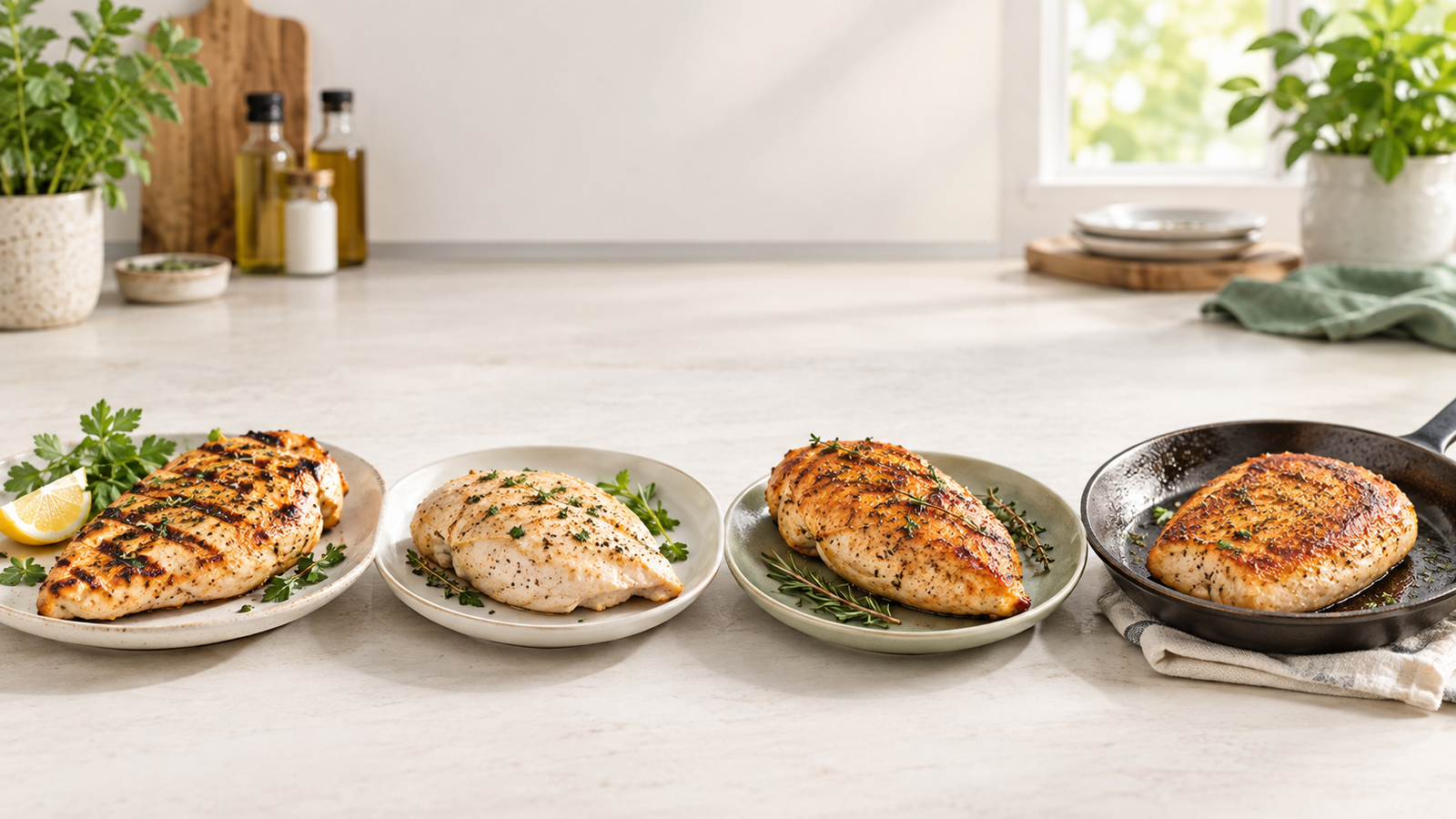
Chicken breast is one of the most cooked proteins in the world and yet the same piece of meat can turn out completely differently depending on how it is prepared. Grilling gives it a smoky char while baking keeps it gentle and even. Frying adds crispness at the cost of extra fat and boiling keeps things simple but sometimes bland.
This breakdown of grilled chicken breast vs other cooking methods compares calories nutrition taste texture convenience and health considerations across the most common ways chicken breast gets prepared. By the end you will have a clear picture of which method fits your goals whether that is weight management muscle building or simply getting dinner on the table with the least effort.
Table of Contents
Key Takeaways
- Grilling and baking produce very similar calorie and protein counts since both rely on little or no added fat.
- Frying adds meaningful calories and fat because the chicken absorbs oil during cooking.
- Boiling results in the lowest fat content but often the blandest flavor and texture.
- High heat methods like grilling and pan frying can produce compounds called HCAs and PAHs though the National Cancer Institute notes that human studies have not established a definitive cancer link from normal consumption.
- The best cooking method ultimately depends on your priorities whether that is flavor convenience or minimizing added fat.
What Changes When You Cook Chicken Breast Differently
Cooking method affects more than just taste. It changes moisture retention fat content and in some cases the formation of specific chemical compounds. Grilling for example exposes the surface of the meat to very high direct heat which creates char and smoky flavor but also causes some moisture loss. Baking surrounds the meat with steady indirect heat which tends to preserve more moisture throughout the cooking process.
The amount of added fat is often the biggest nutritional difference between methods. Grilling and baking typically require little to no oil since the chicken can be seasoned and cooked directly. Frying on the other hand submerges or coats the chicken in oil which it absorbs during cooking. This single difference accounts for much of the calorie gap between a grilled piece of chicken and a fried one.
Why Cooking Method Matters For Nutrition And Health
The protein content of chicken breast stays fairly consistent across cooking methods since protein is not significantly lost through heat exposure the way some vitamins are. What does change is the fat and calorie content along with the levels of certain compounds that form during high heat cooking.
Understanding these differences helps you make informed choices based on your specific goals. Someone managing their weight might prioritize methods that avoid added fat while someone focused on convenience might lean toward whichever method fits their schedule best. There is no single correct answer since the right method depends on what matters most to you in that moment.
How Each Cooking Method Affects Chicken Breast
Below is a closer look at how grilling compares to the other most common ways people cook chicken breast at home.
Grilling
Grilling cooks chicken breast using direct high heat usually over an open flame or hot grates. This method requires little to no added oil and allows excess fat to drip away during cooking which keeps the calorie count relatively low. A 100 gram serving of grilled skinless chicken breast contains approximately 165 calories with about 31 grams of protein and 3.6 grams of fat.
The tradeoff with grilling is that the high direct heat can dry out the meat if it is overcooked and the char that forms adds flavor but is also where certain high heat compounds concentrate. Despite this grilling remains one of the most popular cooking methods because of the flavor it produces and the minimal added fat required.
Baking Or Roasting
Baking surrounds chicken breast with consistent indirect heat in an oven which tends to produce more even cooking than grilling. Like grilling baking requires very little added oil which keeps the calorie and fat content similar. A 100 gram serving of baked skinless chicken breast typically contains close to the same 165 calories as the grilled version.
Baking is often considered more forgiving for beginners since the indirect heat makes it easier to avoid drying out the meat compared to the intense direct heat of grilling. It also does not produce the same char that grilling does which means fewer high heat compounds form during the cooking process.
Boiling Or Poaching
Boiling or gently poaching chicken breast in water or broth results in the lowest fat content of any common cooking method since no oil is involved at all and no fat renders out through direct heat exposure in the same way. A 100 gram serving of boiled skinless chicken breast contains around 150 calories.
The downside of boiling is texture and flavor. Without any browning or char the chicken can taste relatively plain and the texture tends to be softer rather than having the slight crispness that grilling or pan frying provides. Boiled chicken works well when it will be shredded and mixed into another dish such as soup or a salad where the texture matters less.
Pan Frying
Pan frying cooks chicken breast in a skillet with oil which adds flavor and a crisp exterior but also increases the calorie and fat content since the meat absorbs some of the cooking oil. A 100 gram serving of pan fried chicken breast typically falls in the range of 200 to 220 calories depending on how much oil is used.
This method offers a middle ground between the leanness of grilling or baking and the heavier calorie load of deep frying. It also allows for quick cooking times which makes it a practical weeknight option even though it does add more fat than the leaner methods.
Deep Frying
Deep frying submerges chicken breast fully in hot oil which produces the crispiest texture of any method but also the highest calorie and fat content by a significant margin. Breaded and deep fried chicken breast can reach 280 to 320 calories per 100 gram serving largely due to the breading and oil absorption.
While deep frying delivers a texture and flavor that many people enjoy it is the least practical option for anyone focused on managing calories or fat intake on a regular basis. It is also the most involved method in terms of equipment and cleanup compared to the other options covered here.
Air Frying
Air frying has become popular as a middle ground between frying and baking. It uses rapid hot air circulation to create a crisp exterior similar to frying but typically requires only a small amount of oil or sometimes none at all. This keeps the calorie content much closer to grilled or baked chicken while still delivering some of the textural appeal associated with frying.
Air fried chicken breast generally falls close to the baked or grilled range nutritionally while offering a slightly crisper bite. For people who enjoy fried texture but want to limit added fat air frying is often a practical compromise.
Slow Cooking
Slow cooking uses low consistent heat over an extended period often in a slow cooker or covered pot. This method tends to produce very tender chicken since the long cooking time breaks down connective tissue. Because slow cooking typically involves little to no added fat the calorie content stays close to baking or boiling depending on whether any liquid or sauce is added.
The main tradeoff with slow cooking is time. While the hands on effort is minimal the total cooking time is much longer than grilling baking or frying which makes it better suited for planning ahead rather than a quick meal.
Calorie And Nutrient Comparison By Cooking Method
Looking at grilled chicken breast vs other cooking methods side by side makes the nutritional gap easy to see. The table below summarizes approximate values per 100 gram serving of skinless chicken breast prepared using each method. Actual numbers can vary based on added oil marinades and specific preparation.
| Cooking Method | Calories | Fat | Added Oil Needed |
|---|---|---|---|
| Grilled | 165 | 3.6g | Little to none |
| Baked or roasted | 165 | 3.6g | Little to none |
| Boiled or poached | 150 | 3g | None |
| Air fried | 170 | 4g | Minimal |
| Slow cooked | 165 | 3.6g | Little to none |
| Pan fried | 200 to 220 | 8 to 10g | Moderate |
| Deep fried breaded | 280 to 320 | 14 to 18g | High |
Protein content stays fairly consistent across all of these methods at roughly 26 to 31 grams per 100 gram serving which means the biggest differentiator between methods comes down to fat and overall calories rather than protein.
Health Considerations Grilling Versus Other Methods
High heat cooking methods including grilling and pan frying can produce two groups of compounds called heterocyclic amines and polycyclic aromatic hydrocarbons which form when meat is cooked at high temperatures particularly when charring occurs. According to the National Cancer Institute several studies have found associations between high consumption of well done grilled or fried meat and increased risk of certain cancers though population studies have not established a definitive cause and effect link in humans.
This does not mean grilling needs to be avoided entirely. The National Cancer Institute and other health organizations note that several practical steps can reduce the formation of these compounds. Marinating meat before grilling trimming visible fat to reduce dripping flipping meat frequently and avoiding charred or blackened portions can all help lower exposure. Baking boiling and slow cooking generally produce fewer of these compounds since they do not involve the same direct high heat exposure or charring.
Taste And Texture Comparison
Flavor and texture are often the deciding factor for many people regardless of the nutritional differences between methods. Grilling produces a distinct smoky char that many people consider the gold standard for flavor especially when combined with a good marinade. Baking offers a milder more neutral flavor that works well when the chicken is part of a larger dish with its own seasoning.
Boiled chicken tends to be the most neutral in flavor and softest in texture which makes it ideal for recipes like soups or shredded chicken salads where the chicken blends into other ingredients rather than standing on its own. Fried chicken whether pan fried or deep fried delivers the most pronounced textural contrast between a crisp exterior and juicy interior which is part of why it remains so popular despite the added calories.
Which Cooking Method Fits Different Goals
For Weight Management
Grilling baking and air frying are generally the strongest choices since they require minimal added fat while still delivering good flavor and texture. These methods make it easier to keep portions satisfying without unnecessary added calories.
For Meal Prep And Convenience
Baking and slow cooking tend to work best for preparing larger batches at once since both methods allow for mostly hands off cooking while other tasks get done. If you want a quick reference for building meals around grilled chicken our grilled chicken breast calories guide breaks down exact serving sizes. For a full weekly approach check out our easy meal prep ideas which cover how sheet pan chicken fits into a batch cooking routine.
For Maximum Flavor
Grilling and pan frying tend to win when flavor is the top priority since both methods create browning and char that add depth that gentler cooking methods cannot fully replicate.
For The Lowest Fat Content
Boiling or poaching remains the leanest option of all the methods covered here since no oil is involved at any stage of cooking.
Tips For Healthier Grilling
- Trim visible fat before grilling to reduce dripping and flare ups that contribute to PAH formation.
- Marinate chicken for at least thirty minutes since acidic marinades have been shown to reduce HCA formation significantly.
- Flip chicken frequently rather than letting one side cook for an extended period at high heat.
- Avoid charred or blackened portions and trim them off if they occur.
- Consider partially cooking chicken in the oven before finishing it on the grill to reduce total grilling time.
Common Mistakes People Make When Comparing Cooking Methods
- Assuming all methods produce the same nutrition: The difference between grilled and deep fried chicken can be well over 100 calories per serving due to oil absorption alone.
- Overcooking lean methods like grilling or baking: This leads to dry chicken which often results in people reaching for extra sauce or butter that adds calories back in.
- Avoiding grilling entirely out of cancer concerns: Current research has not established a definitive link at normal consumption levels and simple steps like marinating and avoiding char can reduce any potential risk further.
- Ignoring portion size regardless of cooking method: Even the leanest cooking method will not offset consistently oversized portions.
- Choosing a method based on habit alone: Trying a new method such as air frying can offer a good middle ground between flavor and nutrition that some people overlook.
Frequently Asked Questions
Is grilled chicken breast healthier than fried chicken breast
Yes in terms of calories and fat content. Grilled chicken breast contains roughly half the fat of pan fried chicken and significantly less than deep fried breaded chicken due to the oil absorbed during frying.
Does grilling chicken cause cancer
Current research has not established a definitive link between grilling chicken at normal consumption levels and cancer. High heat cooking can produce compounds called HCAs and PAHs though steps like marinating and avoiding char can reduce their formation.
Is baked chicken breast the same as grilled nutritionally
Very close. Both methods typically use little to no added oil which keeps calorie and fat content nearly identical between grilled and baked chicken breast.
What is the leanest way to cook chicken breast
Boiling or poaching produces the lowest fat content since no oil is used at any point during cooking.
Is air frying chicken breast a good alternative to deep frying
Yes. Air frying uses hot air circulation rather than submerging chicken in oil which keeps the calorie content much closer to baked or grilled chicken while still offering a crispier texture than boiling or baking alone.
Does cooking method affect the protein content of chicken breast
Not significantly. Protein content stays fairly consistent across cooking methods since heat does not meaningfully break down protein the way it affects fat and calorie content through added oil.
Which cooking method is best for meal prep
Baking and slow cooking tend to work best for meal prep since both allow for larger batches with minimal hands on effort compared to grilling or frying individual portions.
Can marinating chicken reduce health risks from grilling
Yes. Research has shown that marinating meat in acidic ingredients such as lemon juice or vinegar before grilling can significantly reduce the formation of HCAs compared to unmarinated meat.
Conclusion
When you weigh grilled chicken breast vs other cooking methods it holds up well against nearly every alternative when it comes to balancing flavor nutrition and convenience. It matches baking in calories and fat while offering a char and smokiness that baking cannot fully replicate. Frying delivers a different kind of appeal through crispness but comes with a real calorie and fat tradeoff. Boiling remains the leanest choice though often at the cost of flavor. Ultimately the best cooking method depends on what you value most in a given meal whether that is minimizing fat maximizing flavor or simply getting dinner on the table with the least effort.