
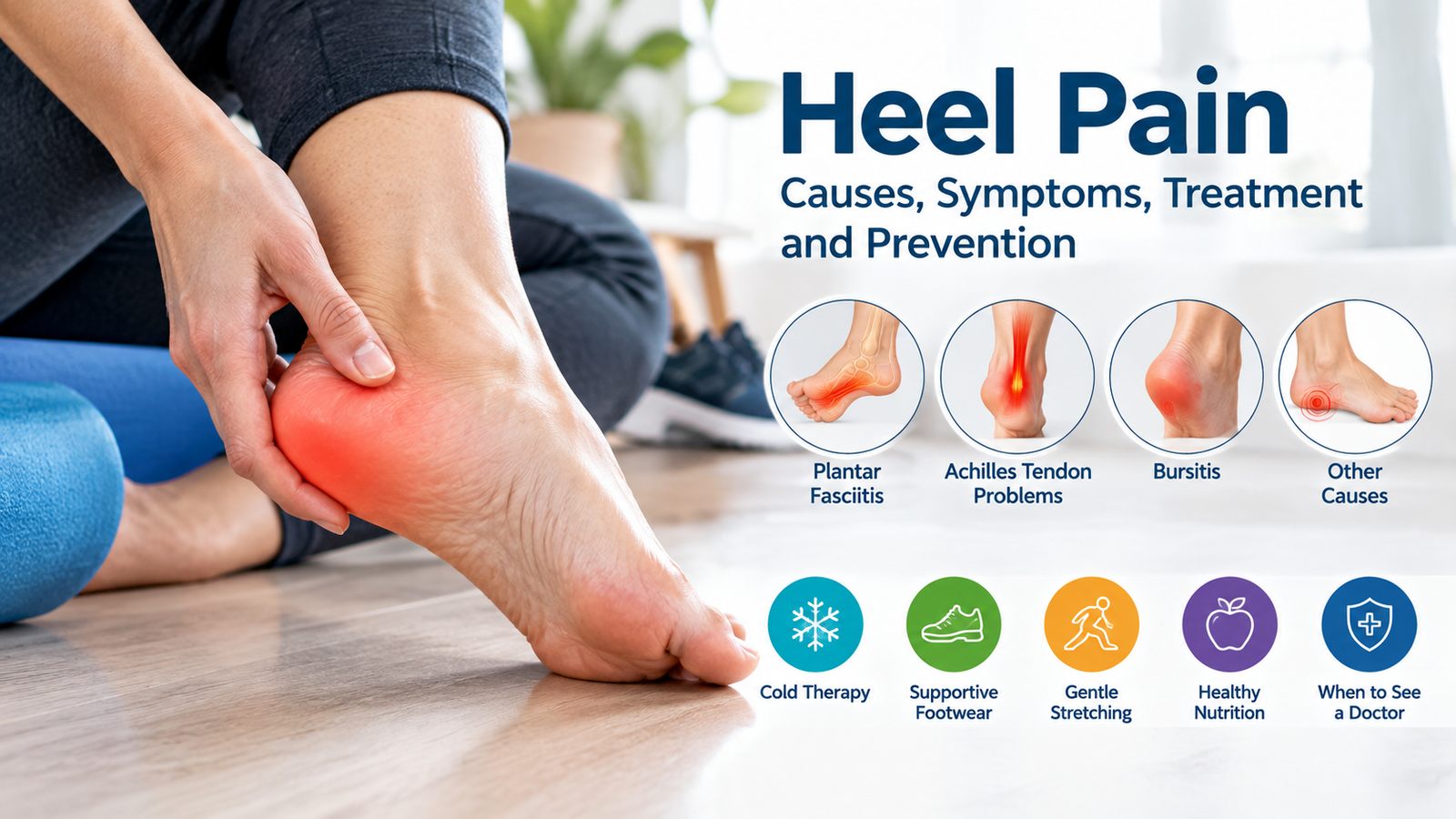

Heel discomfort can make simple activities such as walking, standing, climbing stairs, or participating in sports uncomfortable. It may develop gradually because of repeated stress on the feet or appear suddenly after an injury. Where the discomfort occurs and when it becomes worse can provide useful clues about the underlying problem.
Common causes include plantar fasciitis, Achilles tendon problems, bursitis, unsuitable footwear, overuse, and injuries. According to MedlinePlus heel pain guidance, problems can affect different parts of the heel and may range from mild irritation to symptoms requiring medical evaluation.
Understanding the possible causes can help you choose appropriate next steps while recognizing when professional care is necessary.
Table of Contents
What Causes Heel Pain?
Several different conditions can lead to discomfort around the heel. Repetitive stress is one common factor, especially when someone suddenly increases walking, running, jumping, or another physical activity. Standing for long periods on hard surfaces can also increase stress on the feet.
Other possible contributing factors include:
- Poorly fitting footwear
- Inadequate cushioning or support
- Tight calf muscles
- Sudden increases in physical activity
- Repeated running or jumping
- Hard walking or running surfaces
- An awkward landing or fall
- Irritation of tissues around the heel
- Certain foot-arch problems
Overuse and unsuitable footwear are common contributors, but the exact cause can vary from person to person.
Plantar Fasciitis
Plantar fasciitis is a common cause of discomfort underneath the heel. The plantar fascia is a strong band of tissue that runs along the bottom of the foot and helps support the arch.
One typical pattern is discomfort during the first steps after waking or after sitting for an extended period. It can also become more noticeable after prolonged standing, walking, running, or jumping.
For more information, the MedlinePlus plantar fasciitis information explains common symptoms, causes, and treatment approaches.
Achilles Tendon Problems
The Achilles tendon connects the calf muscles to the heel bone and plays an important role during walking, running, and jumping. Repeated stress or a sudden increase in activity can irritate this tendon.
Problems involving the Achilles tendon are generally felt toward the back of the heel and may be accompanied by stiffness or tenderness. MedlinePlus Achilles tendon guidance provides additional information about this type of problem.
Bursitis
Bursae are small fluid-filled sacs that help reduce friction between tissues. Irritation of a bursa near the heel can cause discomfort, swelling, warmth, or redness.
Bursitis can become more noticeable during activities that place repeated pressure around the affected area. The cause and appropriate treatment depend on the individual situation.
Common Symptoms to Watch For
Symptoms can vary depending on the underlying condition. Paying attention to the location, timing, and severity of discomfort can help a healthcare professional determine what may be happening.
Possible symptoms include:
- Discomfort underneath the heel
- Pain at the back of the heel
- Stiffness after resting
- Symptoms with the first morning steps
- Tenderness when touching the area
- Swelling or redness
- Increased discomfort after activity
- Difficulty walking normally
- Symptoms that repeatedly return
The NHS heel pain advice explains several common patterns and provides guidance on when medical attention may be appropriate.
How to Relieve Heel Pain at Home
For mild symptoms that are not caused by a serious injury, several conservative measures may help. The appropriate approach depends on the underlying cause, so persistent or worsening symptoms should not be managed indefinitely without professional advice.
Reduce Activities That Make It Worse
If running, jumping, prolonged walking, or standing increases discomfort, temporarily reduce those activities. Giving the affected area time to recover may help prevent repeated irritation.
You do not necessarily need to avoid all movement. Comfortable everyday activity can often continue while more demanding activities are reduced until symptoms improve.
Use Cold Therapy
A cold pack wrapped in a towel can be placed over the affected area for a limited period. The NHS recommends an ice pack wrapped in a towel for up to 20 minutes at a time.
Never put ice directly against the skin because this can cause skin damage.
Choose Comfortable Footwear
Footwear can influence the amount of stress placed on the feet. Choose shoes that fit comfortably and provide suitable cushioning and support.
Soft insoles or heel pads may be useful for some people. Avoid shoes that feel tight, uncomfortable, or unsuitable for the activity you are doing.
Try Appropriate Stretching
Gentle stretching of the calf, Achilles tendon, and bottom of the foot may be included in treatment for certain conditions. Physical therapy may also provide exercises designed around the specific problem.
If stretching causes significant or increasing discomfort, stop and seek professional advice rather than forcing the movement.
How Nutrition and Daily Habits Can Support Wellness
Nutrition does not directly treat every cause of foot discomfort, but eating a balanced variety of foods supports normal body function and overall health.
Meals containing vegetables, fruits, whole grains, protein-rich foods, and healthy fats can contribute to a balanced eating pattern. You can explore Most Nutrient Dense Foods You Should Be Eating Every Week for practical ideas about adding nutrient-rich foods to everyday meals.
Daily habits also matter when dealing with discomfort. Adequate rest, reasonable activity levels, and healthy ways to manage everyday stress can make it easier to maintain a consistent wellness routine. Our guide to Healthy Coping Strategies That Actually Help You Feel Better covers practical approaches for supporting overall well-being.
When Should You See a Healthcare Professional?
Not every case requires immediate medical attention, but persistent symptoms should not be ignored.
Consider speaking with a healthcare professional if symptoms:
- Are severe
- Continue getting worse
- Keep returning
- Interfere with normal activities
- Do not improve with appropriate home care
- Are accompanied by tingling or loss of sensation
- Make it difficult to put weight on the foot
The NHS recommends seeking medical advice when symptoms are severe, worsening, repeatedly returning, affecting normal activities, or failing to improve after a period of home treatment.
When Is Urgent Care Needed?
Sudden and severe symptoms following an injury deserve particular attention. A fall, hard impact, awkward landing, or sports injury can sometimes cause a fracture or serious tendon injury.
Seek urgent medical assessment if you cannot walk or put weight on the foot, the foot looks deformed, there is substantial swelling or bruising, or you heard a popping or snapping sound during an injury.
The NHS heel pain guidance provides further information about symptoms that require prompt medical attention.
How Is Heel Pain Diagnosed?
A healthcare professional will usually ask when the symptoms began, where they occur, what activities make them worse, and whether an injury happened.
They may examine the foot, ankle, calf, and surrounding tissues. Depending on the symptoms, imaging such as an X-ray may be considered to look for fractures or other problems.
The goal is to identify the underlying cause rather than simply treating the symptom. Different conditions can produce similar symptoms, which is why persistent discomfort may require professional assessment.
How to Prevent Future Problems
Some foot problems can be reduced by taking a gradual approach to physical activity and choosing appropriate footwear.
If you are beginning a new sport or exercise routine, increase activity gradually rather than making a large change in intensity or duration. Allow your body adequate recovery time and pay attention to symptoms that develop during or after activity.
Comfortable shoes that fit properly can also help reduce unnecessary stress on the feet. Replacing worn-out athletic shoes may be useful when they no longer provide appropriate cushioning or support.
Planning balanced meals in advance can also make healthy routines easier during busy periods. These Easy Meal Prep Ideas That Actually Save You Time Each Week can help make nutritious meals more convenient.
Frequently Asked Questions
Why does my heel hurt when I first get out of bed?
Discomfort with the first steps after waking is commonly associated with plantar fasciitis. However, other conditions can produce similar symptoms, so recurring problems should not automatically be self-diagnosed.
Can shoes contribute to heel discomfort?
Yes. Shoes with poor cushioning, inadequate support, or an uncomfortable fit can contribute to foot discomfort. Comfortable footwear appropriate for your activity may help reduce unnecessary stress.
Is a heel spur always the cause?
No. A heel spur can be present without being responsible for discomfort. Soft-tissue problems such as plantar fasciitis can cause symptoms even when a heel spur is not present.
Can stretching help?
Gentle stretching may be part of treatment for some causes, particularly problems involving the plantar fascia, calf, or Achilles tendon. The appropriate exercises depend on the underlying condition.
When should I get medical advice?
Seek professional advice if symptoms are severe, worsening, repeatedly returning, interfering with normal activities, or not improving with appropriate home care. Symptoms following a significant injury may require more immediate assessment.
Conclusion
Heel discomfort can have several possible causes, including plantar fasciitis, Achilles tendon problems, bursitis, overuse, unsuitable footwear, and injuries. Understanding where symptoms occur and when they become worse can help determine the appropriate next step.
For mild symptoms, reducing activities that aggravate the area, using appropriate cold therapy, wearing comfortable supportive footwear, and following suitable stretching guidance may help. However, severe symptoms, problems following an injury, inability to walk, significant swelling, or persistent discomfort should be evaluated by a healthcare professional.