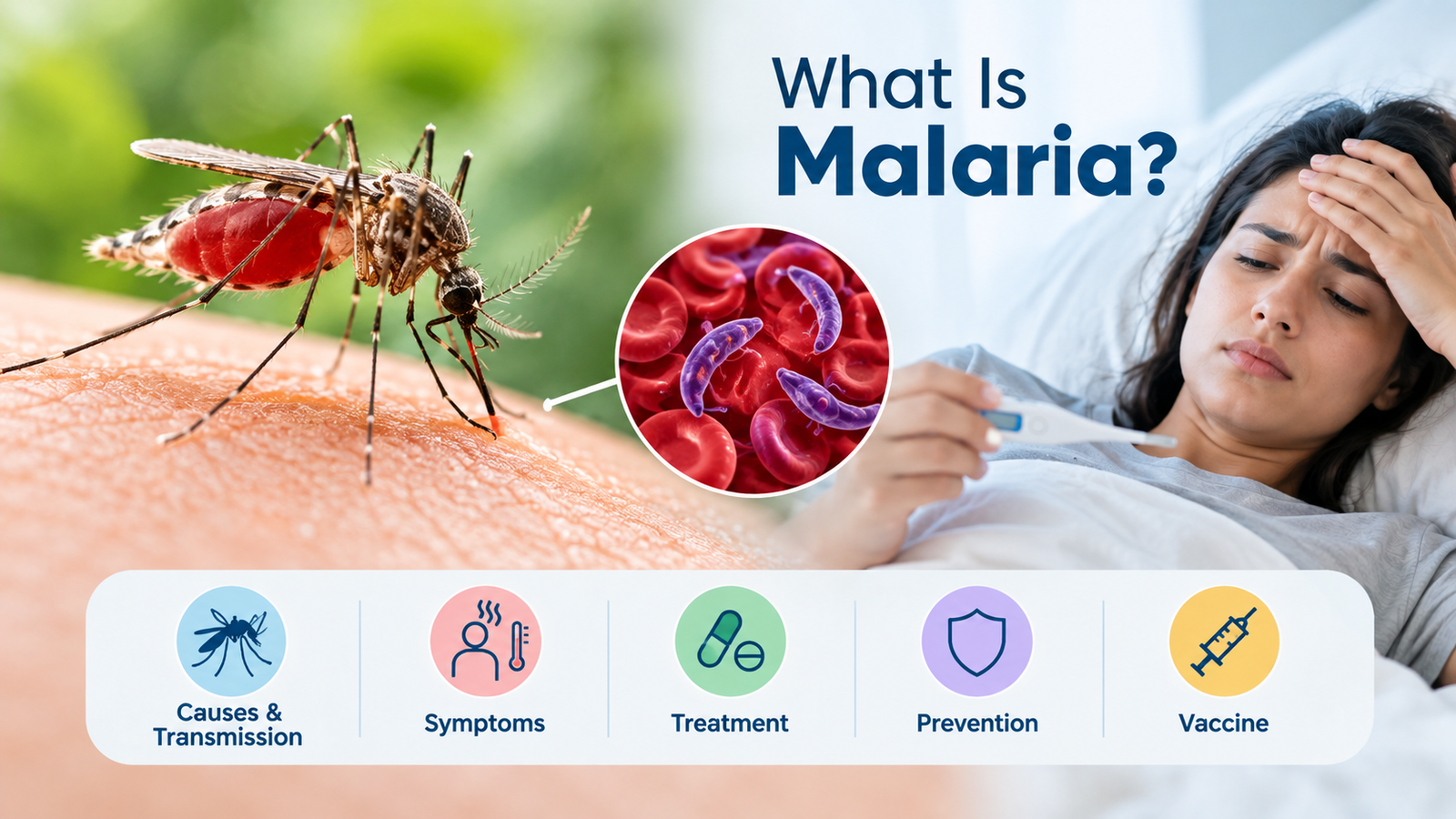

If you are wondering what is malaria, it is a serious infectious disease caused by Plasmodium parasites. It is mainly transmitted through the bite of an infected female Anopheles mosquito. Malaria can cause fever, chills, headache, weakness, muscle aches, nausea, vomiting, and other flu like symptoms. Without timely diagnosis and treatment, some forms can become severe and life threatening.
Malaria remains an important public health problem in many tropical and subtropical regions. The World Health Organization regularly updates its malaria recommendations as new evidence becomes available, covering prevention, treatment, and vaccination.
What Is Malaria?
Malaria is a parasitic infection caused by several species of Plasmodium. The infection begins when an infected mosquito introduces parasites into a person’s bloodstream.
The parasites first develop in the liver and later infect red blood cells. As the parasites multiply, symptoms such as fever, chills, headache, and tiredness may develop.
Several Plasmodium species can infect humans. Plasmodium falciparum is particularly important because it can cause rapidly progressing severe disease. Prompt diagnosis and treatment are therefore essential.
How Does Malaria Spread?
Malaria is primarily spread through infected Anopheles mosquitoes. When a mosquito bites a person carrying malaria parasites, it can become infected. The mosquito can then transmit the parasites to another person through a later bite.
Malaria does not normally spread through everyday contact such as touching, sitting beside someone, sharing food, or breathing the same air. Rare transmission can occur through contaminated blood or from a pregnant person to a baby.
Mosquito prevention is therefore one of the most important ways to reduce the risk of infection.
Where Is Malaria Common?
Malaria is mainly found in tropical and subtropical regions where mosquitoes capable of transmitting the parasite can survive. The level of risk differs considerably between countries and even between different areas within the same country.
Transmission can be influenced by climate, mosquito populations, seasons, local prevention programs, parasite types, and access to testing and treatment.
People traveling to areas where malaria occurs should check current health recommendations and speak with a healthcare professional about appropriate prevention before traveling.
What Are the Symptoms of Malaria?
Malaria symptoms can range from mild illness to severe disease. Common symptoms include:
- Fever
- Chills
- Headache
- Muscle aches
- Tiredness or weakness
- Nausea
- Vomiting
- Diarrhea
Symptoms can begin at different times depending on the parasite species. Some malaria parasites can also remain dormant in the liver and cause illness much later.
Because malaria symptoms can resemble other infections, laboratory testing is important when the disease is suspected.
What Causes Severe Malaria?
Malaria can become severe when the infection progresses and affects important organs or normal blood function.
Serious complications can include severe anemia, kidney problems, breathing difficulties, confusion, seizures, coma, and other forms of organ dysfunction. P. falciparum is particularly associated with rapidly progressing severe malaria.
This is why suspected malaria should not simply be treated as an ordinary fever without appropriate medical evaluation.
How Is Malaria Diagnosed?
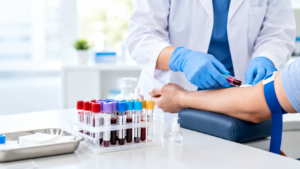
Malaria requires laboratory testing for confirmation. Depending on the healthcare setting, testing may include microscopic examination of blood smears, malaria antigen based rapid diagnostic tests, or molecular tests.
The CDC malaria diagnosis guidance explains how blood testing is used to confirm infection, identify the parasite species, determine parasite levels, and monitor treatment response.
If someone develops a fever after spending time in a malaria endemic area, it is important to tell the healthcare professional about that travel or exposure history.
How Is Malaria Treated?
Malaria is treatable with prescription antimalarial medicines. The appropriate treatment depends on factors such as the parasite species, where the infection was acquired, drug resistance patterns, age, health status, pregnancy status, and whether the infection is uncomplicated or severe.
The WHO malaria guidelines provide evidence based recommendations covering malaria prevention, diagnosis, treatment, and vaccination.
Treatment should always be determined by a qualified healthcare professional rather than by choosing medication based only on symptoms.
How Can Malaria Be Prevented?
Preventing mosquito bites is an important part of malaria prevention. Depending on the location and individual circumstances, preventive measures can include:
- Using insecticide treated mosquito nets
- Wearing long sleeved clothing
- Using appropriate insect repellent
- Keeping living spaces protected from mosquitoes
- Reducing exposure to mosquitoes
- Taking recommended preventive medication when advised
- Following local malaria control recommendations
For travelers, preventive medication may be recommended depending on the destination and individual health factors. The CDC malaria prevention information provides additional guidance for people traveling to areas where malaria occurs.
Are There Malaria Vaccines?
Yes. Malaria vaccines are now an important part of malaria prevention programs in areas where malaria transmission is significant.
WHO recommends malaria vaccines including RTS,S/AS01 and R21/Matrix-M for preventing P. falciparum malaria in children living in malaria endemic areas.
Vaccination is an additional prevention tool and does not replace other recommended malaria-control measures.
Who Is Most at Risk?
The risk of severe malaria is not the same for everyone. Young children, pregnant women, people with certain health conditions, and people who have little or no previous immunity can be at greater risk of serious illness.
Travelers who have not previously lived in malaria-endemic areas can also be vulnerable when visiting regions where malaria transmission occurs.
Following recommended mosquito precautions and seeking medical attention quickly when symptoms develop can help reduce the risk of complications.
Can Nutrition Help During Recovery?
Good nutrition does not cure malaria and should never replace appropriate medical treatment. However, maintaining adequate nutrition and hydration can support general health during illness and recovery.
A balanced diet can include vegetables, fruits, whole grains, protein rich foods, and other nutrient-rich choices. For general nutrition ideas, explore most nutrient dense foods as part of a balanced eating pattern.
People recovering from malaria should follow their healthcare professional’s advice regarding food, fluids, medication, and follow-up care.
Why Rest Matters During Recovery
An infection can leave a person feeling weak and tired even after treatment has started. Adequate rest and following medical advice can be important parts of recovery.
It can also be stressful to deal with an illness, especially when symptoms interfere with normal daily activities. General strategies for managing everyday stress can be found in healthy coping strategies.
These wellness practices can support general well being but should always complement proper medical care.
When Should You Seek Medical Care?
Anyone who develops fever, chills, or other malaria like symptoms after spending time in an area where malaria occurs should seek medical advice promptly and mention their travel or exposure history.
Urgent medical evaluation is especially important if symptoms become severe or include confusion, seizures, difficulty breathing, extreme weakness, or other signs of serious illness.
Malaria can progress quickly in some cases, making timely diagnosis and treatment especially important.
Can Malaria Be Prevented Completely?
No prevention method provides an absolute guarantee, but combining recommended measures can substantially reduce exposure and risk.
For someone living in or traveling to a malaria endemic area, prevention may involve mosquito protection, appropriate preventive medicines when recommended, vaccination programs where applicable, and prompt testing if symptoms develop.
The most suitable prevention strategy depends on the person’s location, travel plans, age, health status, and local malaria transmission patterns.
Frequently Asked Questions
What is malaria caused by?
Malaria is caused by parasites belonging to the Plasmodium genus. These parasites are mainly transmitted to humans through infected Anopheles mosquitoes.
Is malaria contagious?
Malaria does not normally spread through casual person to person contact. It is primarily transmitted through infected mosquitoes, although rare transmission can occur through blood or from a pregnant person to a baby.
Is malaria curable?
Yes. Malaria is treatable and can be cured with appropriate antimalarial medication. Treatment depends on the parasite species and the person’s medical circumstances.
How is malaria diagnosed?
Healthcare professionals use laboratory tests such as blood smears, rapid diagnostic tests, or molecular tests to confirm malaria.
What are the first symptoms of malaria?
Early symptoms commonly include fever, chills, headache, muscle aches, tiredness, nausea, vomiting, and sometimes diarrhea.
Can malaria become dangerous?
Yes. Without timely diagnosis and treatment, malaria can progress to severe complications affecting the brain, kidneys, blood, lungs, and other organs.
Conclusion
Understanding what is malaria helps explain why mosquito protection, early diagnosis, and proper treatment are so important. Malaria is a parasitic infection mainly transmitted through infected Anopheles mosquitoes, and its symptoms can range from fever and chills to serious complications.
The disease is preventable and treatable, but it should always be taken seriously. People who develop symptoms after exposure to a malaria-endemic area should seek medical evaluation promptly. Effective prevention, accurate testing, appropriate treatment, and malaria vaccination programs can all play an important role in reducing the impact of this disease.