
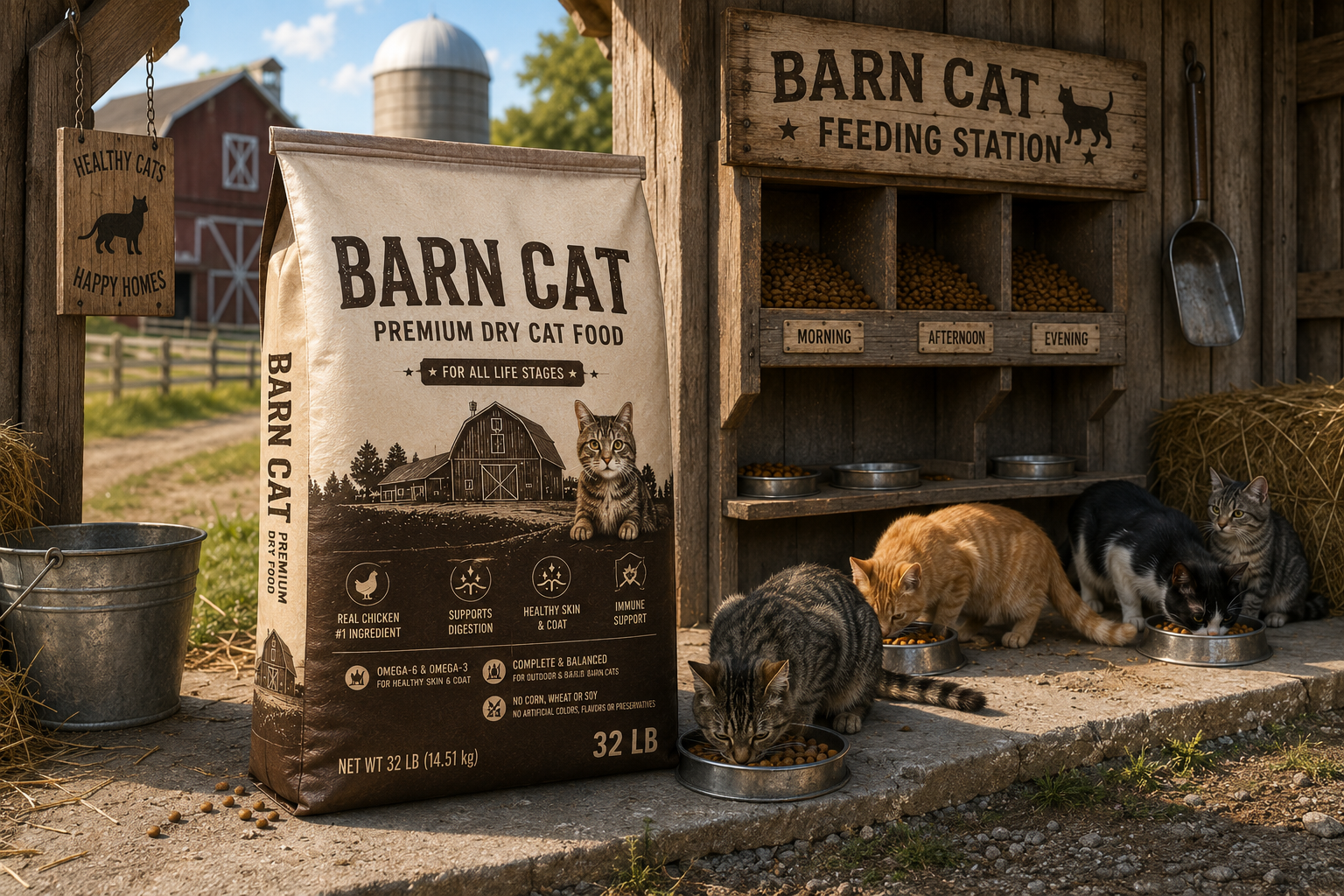

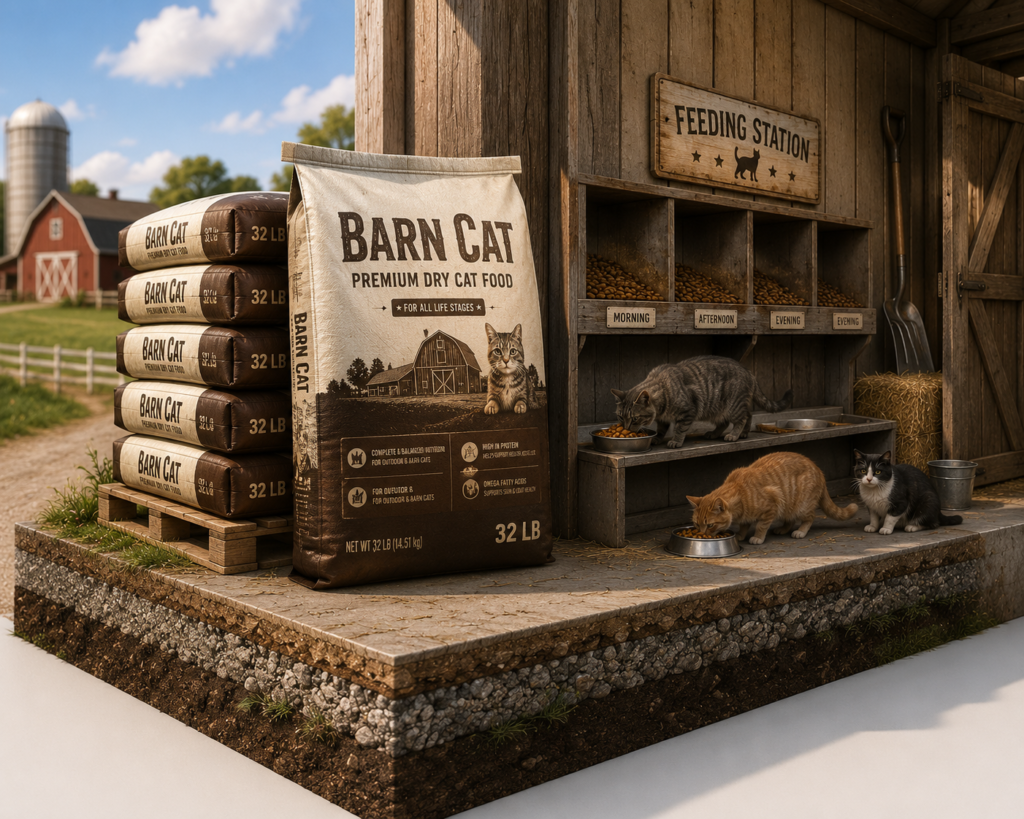
Feeding a barn full of cats or even just a handful of outdoor cats is a different job than feeding one house cat. The bowls empty faster, more mouths need to be fed at once, and running to the store every few days just isn’t realistic. That’s why so many people search for a 32lb bag of barn cat dry food. It’s the size that actually matches how these cats eat. But before you grab the biggest bag on the shelf, it helps to understand what you’re getting, what to check on the label, and how to store it properly so your money isn’t wasted.
Table of Contents
What Barn Cat Food Actually Means
The term barn cat food isn’t a strict regulated category. It’s more of a marketing label used for formulas aimed at cats that live outdoors, work as mousers, or live in a colony rather than as a single indoor pet. These formulas are usually built to be higher in protein and fat than a basic indoor cat food, since outdoor cats burn more energy staying warm, hunting, and moving around a larger territory.
That said, not every bag labeled “barn cat” is formulated the same way. Some brands genuinely build a complete diet meant to meet a cat’s full nutritional needs. Others lean on the assumption that the cat will supplement its diet by hunting mice, which isn’t something you should count on for consistent nutrition.
Why the 32lb Size Makes Sense for Multiple Cats
If you’re only feeding one cat, a 32lb bag is probably overkill. But once you’re feeding three, five, or a whole colony of barn cats, the math changes fast.
A few reasons this size works well for multi-cat setups:
- Fewer trips to the feed store or pet supply shop
- Lower cost per pound compared to small bags
- Less risk of suddenly running out mid-week
- Easier to keep a consistent feeding routine across a group of cats
The tradeoff is that a bigger bag needs to be handled and stored properly, which is where a lot of people go wrong.
Checking the Label Before You Buy
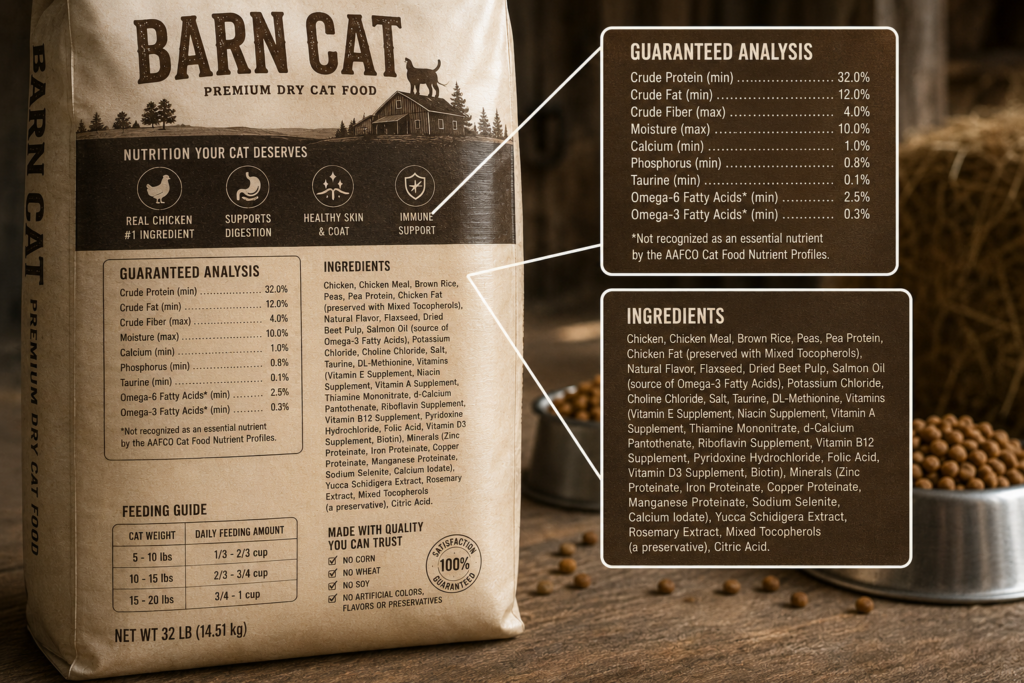
This is the step most people skip, and it’s the one that actually matters. Bag size tells you nothing about quality. Before committing to a 32lb bag, look for the following on the packaging:
- Guaranteed analysis: protein and fat percentages, usually listed as a minimum
- Life stage statement: whether it’s labeled complete and balanced for all life stages or a specific age group
- Ingredient list: the first few ingredients make up most of the food by weight
- Nutritional adequacy statement: whether it meets established nutrient profiles
Most barn cat formulas fall around 30 percent protein and 7 to 9 percent fat, which is a reasonable range for active outdoor cats. For a full breakdown of what these nutrient minimums are supposed to look like, the AAFCO cat food nutrient profiles are a useful reference point that most reputable brands are built around.
Storage: The Part Everyone Underestimates
A 32lb bag can sit around for weeks depending on how many cats you’re feeding, and that’s exactly where problems start. Dry food isn’t shelf stable forever once it’s opened. Air, humidity, and temperature swings all break down the fats in the food over time, which is what causes that stale smell and loss of nutritional value.
In a barn environment this risk is even higher because of dust, moisture, and the possibility of rodents getting into an open bag. A few habits go a long way here:
- Reseal the bag tightly after every use, or transfer it to a sealed container
- Keep it off the ground and away from direct sunlight
- Store it somewhere pests can’t chew through
- Use the bag within a reasonable window rather than letting it sit half full for months
- Toss it if the smell or color changes, regardless of how much is left
Who Should Actually Buy the 32lb Size
This size makes the most sense for:
- Multi cat households feeding the same formula to every cat
- Farms or properties with an established barn cat colony
- Foster or rescue situations feeding several cats at once
- Anyone trying to cut down on frequent shopping trips and who has proper storage space
It makes less sense for a single indoor cat, since the bag may go stale before it’s finished, or for a cat that needs a specialized prescription diet, which usually isn’t sold in bulk sizes anyway.
Switching Cats Over to a New Food
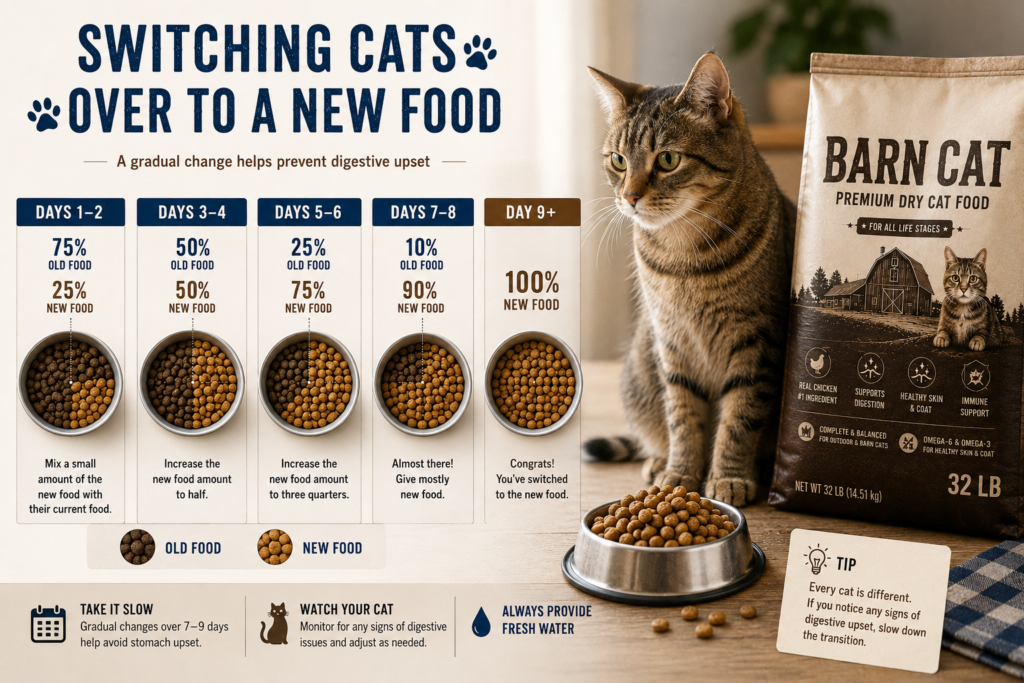
If you’re moving your cats from a different brand onto a barn cat formula, don’t do it all at once. A gradual transition over about seven to ten days, mixing increasing amounts of the new food with the old, helps avoid digestive upset. This matters even more in an outdoor colony setting since it’s harder to catch and treat stomach issues early when cats aren’t confined to one house.
If you’re also managing outdoor feeding stations, general routine, and shelter setup for a colony, it’s worth reading through a broader feeding and care guide rather than focusing on food alone. The ASPCA’s guidance on feeding cats covers the basics of portioning and nutrition that still apply even in an outdoor setup.
Final Thought
A 32lb bag of barn cat dry food is a genuinely practical choice once you’re feeding more than a cat or two, but the size alone shouldn’t be the deciding factor. Check the actual protein and fat content, confirm it’s labeled complete and balanced, and have a real plan for storing it once it’s opened. Get those three things right and a large bag stops being just a bigger box of guesswork and actually becomes the convenient option it’s supposed to be.
