

A few years ago the idea of doing public health work from home would have sounded strange. Public health has always felt like a field built around clinics, field visits, and community centers. That’s changed. Health departments, hospital systems, insurers, and nonprofits now run large parts of their public health work through remote teams, and the number of postings for public health jobs remote has grown steadily as a result.
If you’re trying to break into this space, or move your existing public health career into a remote setup, the challenge isn’t whether these jobs exist. They do, in real numbers, across research, policy, education, and program coordination. The challenge is knowing where to look, what the pay actually looks like, and what employers expect from someone applying for a remote public health jobs entry level role versus a more senior position.
Table of Contents
What Remote Public Health Jobs Actually Involve
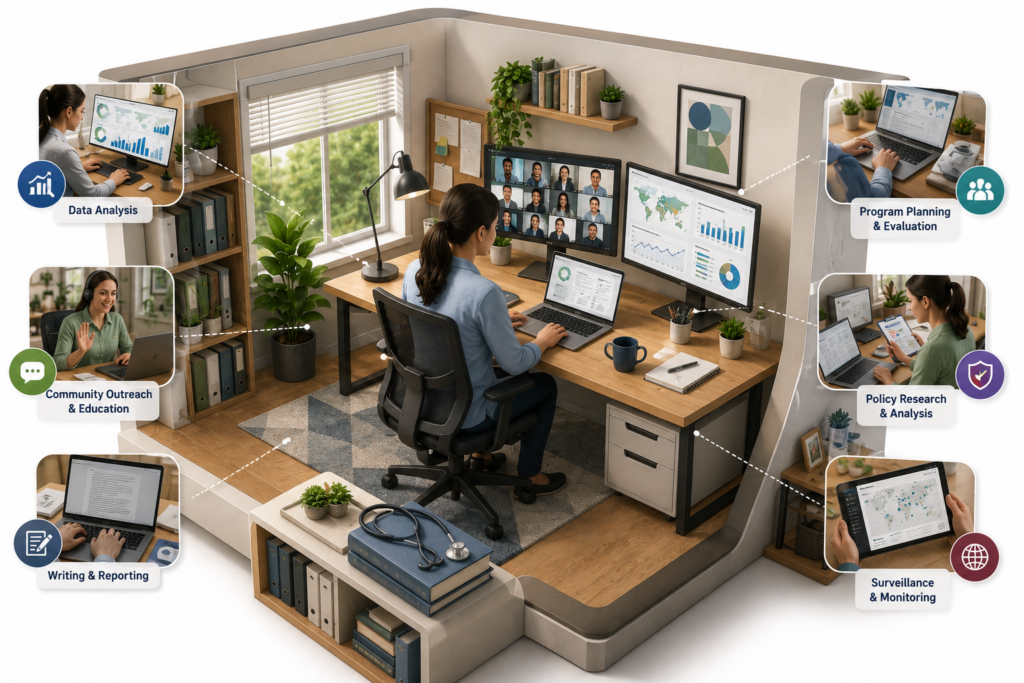
Remote public health work covers more ground than most people expect. It’s not limited to research analysts sitting behind a laptop, although that’s part of it.
Common remote roles include:
- Epidemiologists and data analysts who track disease trends, review health data, and build reports for local or state agencies
- Health educators who design outreach materials, run virtual workshops, or manage community health campaigns online
- Program coordinators who oversee grant-funded public health initiatives from a distance, checking in with field teams and managing timelines
- Policy analysts who research and draft health policy recommendations for government bodies or advocacy groups
- Community health workers in hybrid roles that combine phone or video outreach with occasional in-person visits
Some of these roles are fully remote. Others are what recruiters call flexible or hybrid, meaning most of the work happens online but there are occasional in-person meetings or site visits. If a vacancy public health listing says “remote” without more detail, it’s worth checking the fine print before applying, since some postings only mean remote-eligible after a training period.
How Much Do Remote Public Health Jobs Pay
Pay varies a lot depending on role, experience, and location, but recent data gives a decent picture.
According to ZipRecruiter salary data, the average hourly pay for remote public health roles across the United States sits around $39.80, with most workers earning between $28.61 and $46.39 an hour. That works out to a median annual figure in the mid $70,000s for a full time role, though this shifts based on specialty and seniority.
Entry level roles look different depending on where you’re applying from. In Washington DC specifically, entry level remote public health workers earn an average of around $121,792 a year, with a typical range between $83,200 and $151,800. That’s notably higher than the national average, largely because DC’s public health job market is shaped by federal agencies, national nonprofits, and policy organizations that tend to pay more than local health departments elsewhere.
On the lower end, roles like community health worker or health educator positions can start closer to the mid $40,000s, particularly outside major metro markets. Health educators working across schools and organizations average around $45,830 a year, which gives a realistic starting point for anyone entering the field through education or outreach roles rather than research or policy.
Where to Actually Find Public Health Jobs Remote
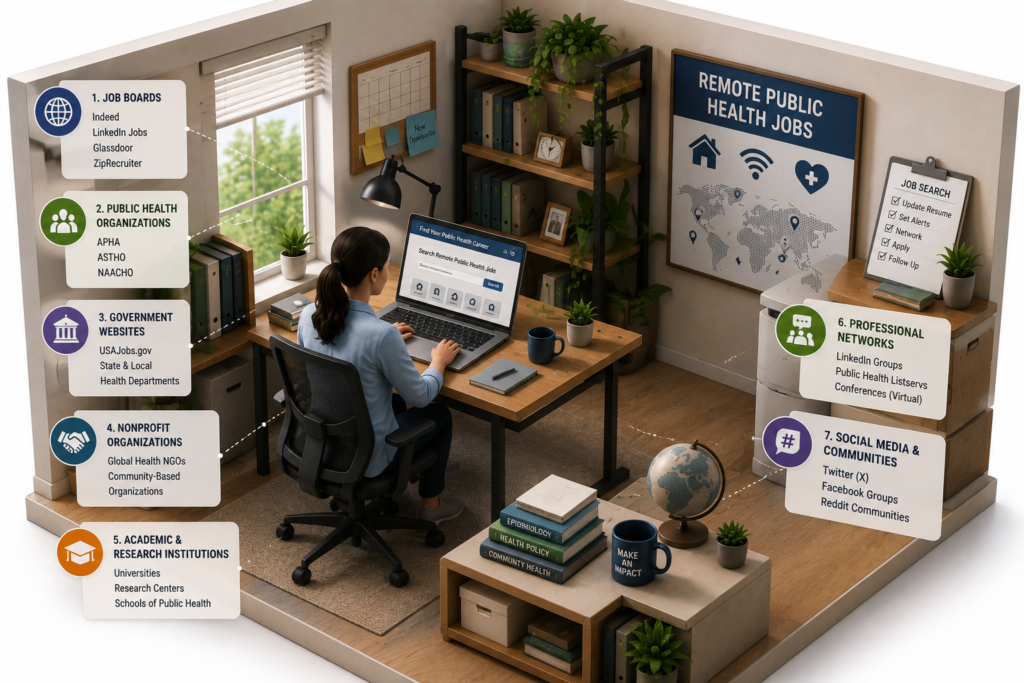
Generic job boards work, but they’re noisy. A search for “public health jobs” on a broad site returns a mix of in-person clinical roles, remote openings, and postings that are only partially remote. A few practical starting points:
- State and county health department career pages often post remote and hybrid roles directly, especially for policy, communications, and data positions
- Federal job boards for agencies like the CDC or HRSA occasionally list remote-eligible roles, particularly for research and grant management
- University public health departments sometimes hire remote research assistants or program staff, even for people without an advanced degree yet
- Nonprofit and NGO career pages, since many national health nonprofits run distributed teams
- Niche job boards focused on public health, which tend to filter out irrelevant listings better than general sites
If you’re specifically looking at public health jobs Washington DC, it’s worth checking directly with organizations headquartered there, since a large share of national public health policy work is based out of the city even when the role itself is remote.
A Note on Entry Level Listings
Public health jobs remote entry level postings are out there, but they’re often labeled inconsistently. Some are labeled “entry level” but expect a bachelor’s degree plus a year or two of internship experience. Others genuinely mean no prior experience required. Reading the qualifications section carefully before applying saves a lot of wasted effort, and it’s worth applying even if you meet most but not all listed requirements, since public health hiring managers often prioritize relevant coursework or internships over exact job titles.
Skills That Actually Matter for Remote Roles
Beyond the standard public health coursework, employers hiring for remote positions tend to look for a specific mix of skills:
- Comfort with data tools like Excel, SPSS, or similar software for analysis-heavy roles
- Experience with virtual communication and project management platforms
- Strong written communication, since remote coordination happens mostly through documents, emails, and reports rather than face to face conversation
- Self direction, since remote roles usually come with less day to day oversight than office-based positions
None of these are unusual asks, but candidates who can point to specific examples, a class project involving data analysis, a volunteer role that involved running virtual outreach, tend to stand out more than those who just list the skill on a resume.
Building a Long Term Public Health Career from Home
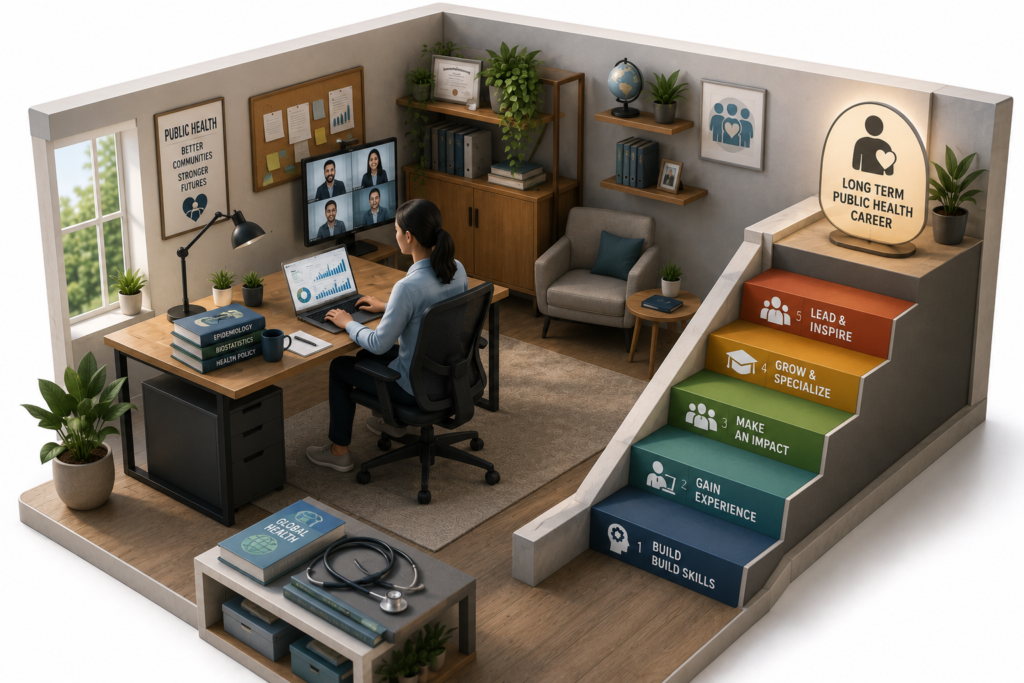
Remote work in public health isn’t just a stopgap option. Plenty of people build full careers this way, moving from entry level research or education roles into program management, policy analysis, or specialized epidemiology work over several years. The field rewards people who stay current with health trends and keep building practical experience, even in a remote setting.
If you’re early in this path, it also helps to think holistically about how your own habits and daily choices connect to the work you’re doing. Public health, at its core, comes down to helping people build better long term habits, something covered in more depth in Health Is Wealth, which looks at how everyday health decisions add up over time.
Frequently Asked Questions
Are remote public health jobs actually full time, or mostly part time and contract work? Both exist. Full time remote roles are common in program coordination, policy, and data analysis. Part time and contract roles show up more often in health education, outreach, and grant-funded short term projects.
Do I need a master’s degree in public health to work remotely in this field? Not always. Many entry level roles, especially in education and outreach, only require a bachelor’s degree. Research, epidemiology, and senior policy roles more often expect an MPH or related graduate degree.
What’s the difference between a remote and hybrid public health job listing? Remote generally means the work is done entirely online with no regular office requirement. Hybrid means most work happens remotely but includes scheduled in-person meetings, site visits, or occasional office days.
Is Washington DC really the best place to look for public health jobs? It’s one of the strongest markets, largely because of the concentration of federal agencies and national health nonprofits based there, but it’s not the only option. Many state health departments and universities hire remotely regardless of where you’re physically located.
How competitive are entry level remote public health jobs right now? Fairly competitive, since remote roles tend to draw applicants from a wider geographic pool than local, in-person positions. Tailoring your resume to the specific listing and highlighting relevant internships or coursework makes a real difference.
Final Thought
Public health jobs remote aren’t a niche corner of the job market anymore, they’re a real and growing part of how the field operates. Whether you’re just starting out or looking to move an existing public health career into a remote setup, the roles are there. It comes down to knowing where to search, reading listings carefully, and building the specific skills that remote employers actually care about.
If you’re working on building healthier habits alongside your career search, it’s worth checking out Health Is Wealth for a broader look at how daily health choices tie into long term wellbeing.
