
Bloating after meals, irregular digestion, that heavy feeling that shows up for no clear reason. A lot of people deal with this on a regular basis and eventually start looking at the supplement aisle for answers. The problem is that aisle is packed with options, and most labels sound convincing whether the product works or not.
This guide breaks down digestive health supplements in plain terms. What probiotics actually do, when fiber helps, what digestive enzymes are for, and how to tell a decent product from marketing dressed up as science. Gut health is also just one piece of the bigger picture, and it ties closely into everyday habits covered in Health Is Wealth.
What Are Digestive Health Supplements
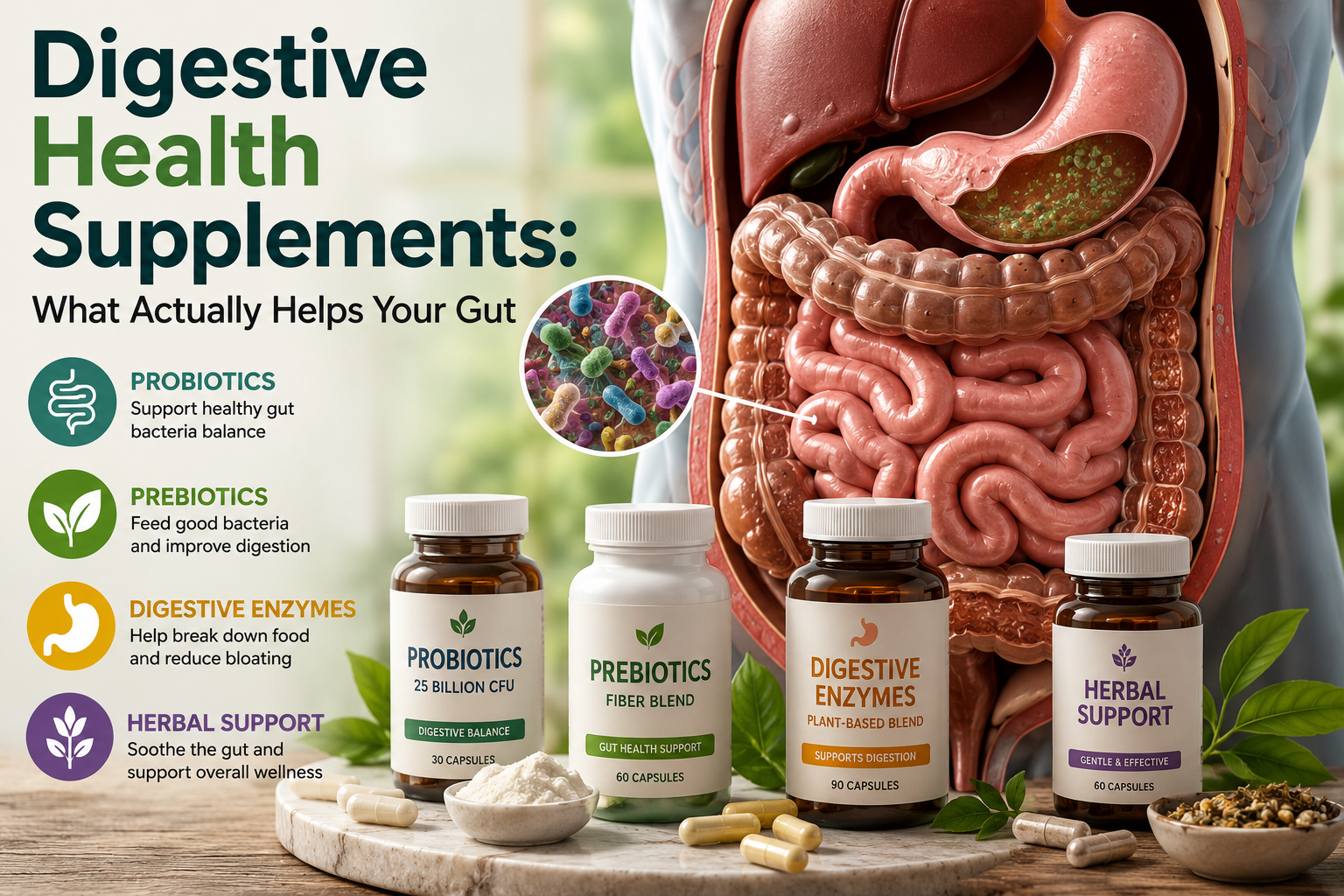
Digestive health supplements are products meant to support how your body breaks down food, absorbs nutrients, and keeps your gut bacteria balanced. They generally fall into a few categories.
- Probiotics add live beneficial bacteria to your gut
- Prebiotics feed the bacteria already living there
- Digestive enzymes help break down proteins, fats, and carbs during digestion
- Fiber supplements support regularity and feed gut bacteria at the same time
None of these work exactly the same way, and none of them are a fix for every digestive complaint. Knowing which category matches your actual issue matters more than picking whatever has the flashiest label.
Dietary Supplements for Digestion Where to Start
If you’re new to this, it helps to think about what’s actually bothering you before buying anything. Someone dealing with constipation needs a different approach than someone dealing with bloating after specific meals, and both need something different from someone recovering their gut bacteria after a course of antibiotics.
A rough starting point:
- Irregular bowel movements often respond well to fiber
- Bloating tied to certain foods sometimes points to a digestive enzyme gap
- General gut imbalance, especially after illness or antibiotics, is where probiotics tend to help most
This isn’t a diagnosis, and if digestive issues are frequent or severe it’s worth talking to a doctor before assuming a supplement will fix it.
Best Digestive Enzyme Supplements and How They Work
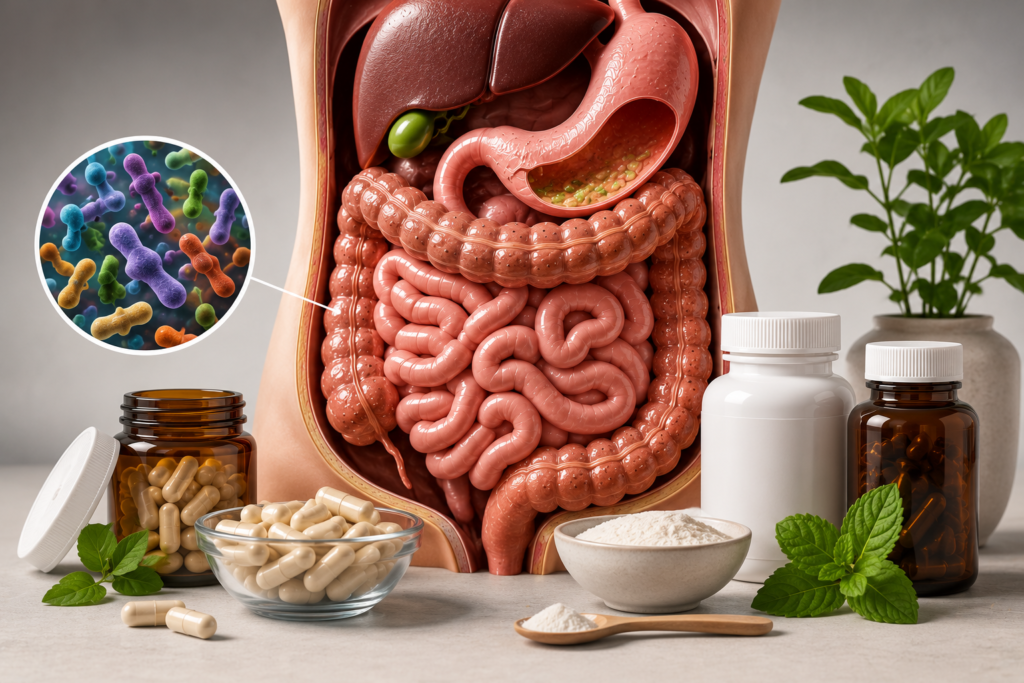
Digestive enzyme supplements are built around the same enzymes your body already produces, just in higher concentrations. They typically include a mix of the following.
Common Enzyme Types
- Amylase breaks down carbohydrates
- Protease breaks down proteins
- Lipase breaks down fats
- Lactase helps digest dairy for people with lactose sensitivity
The best digestive enzyme supplements usually combine several of these rather than isolating just one, since a typical meal contains a mix of protein, fat, and carbs that all need to be broken down together. People who feel heavy or bloated shortly after eating, especially after rich or fatty meals, are often the ones who notice the biggest difference with enzyme supplements.
Probiotic Supplement for Digestive Health What the Research Says
Probiotics get the most attention in this category, and for good reason. Market research from Grand View Research projects the global probiotics market to grow from around $86.8 billion in 2025 to nearly $133 billion by 2029, which says a lot about how many people are turning to them for gut support.
How Probiotic Supplements for Digestive Health Actually Work
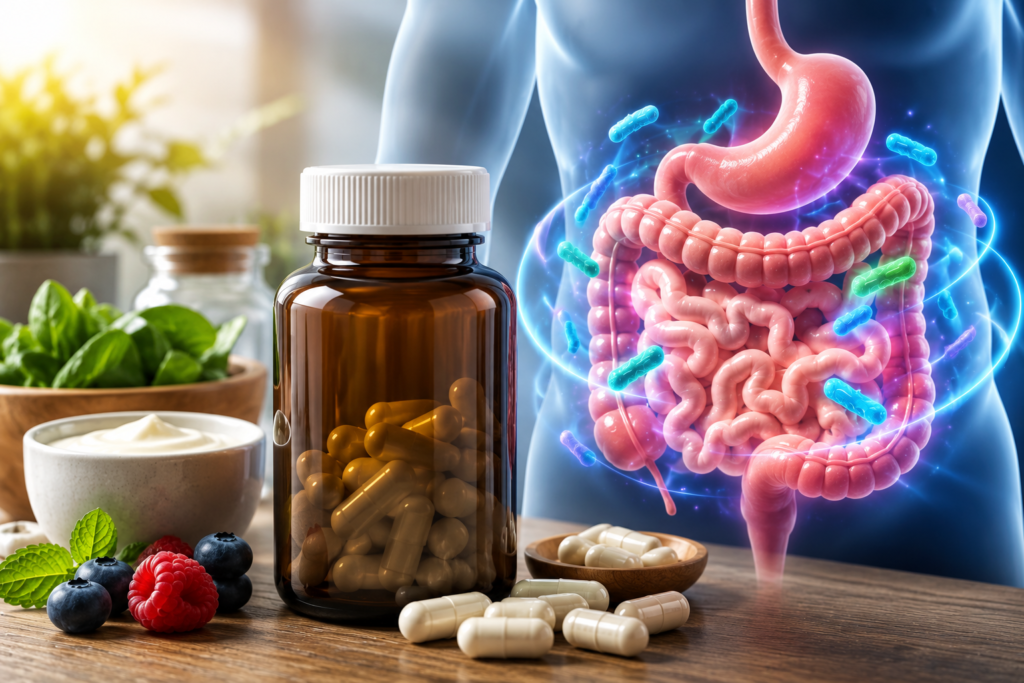
Probiotic strains work by adding beneficial bacteria back into your gut, where they help break down food, support your immune system, and crowd out less helpful bacteria. Not all strains do the same job though. Some are better studied for general digestion, others for specific issues like occasional bloating or gas.
When shopping for a probiotic supplement for digestive health, look for a few things. The National Institutes of Health fact sheet on probiotics is a solid starting point for understanding which strains have actual research behind them before comparing brands.
- A listed CFU count, ideally in the billions, not just “probiotic blend”
- Named strains rather than a vague “proprietary blend”
- Third party testing or a certification mark on the label
- Storage instructions followed correctly, since some strains lose potency if left in a hot car or a sunny kitchen shelf
Digestive Health Supplements Probiotics vs Prebiotics Know the Difference
People mix these two up constantly. Probiotics are the live bacteria themselves. Prebiotics are the fiber and plant compounds that feed those bacteria once they’re in your gut. A growing number of products now combine both, sometimes called synbiotics, which pairs a probiotic strain with a prebiotic fiber source in the same capsule or gummy.
Recent formulation trends have leaned this direction too, with several major supplement brands releasing combined probiotic and prebiotic fiber products in the past year as demand for gut focused nutrition keeps climbing.
Fiber Supplements for Digestive Health
Fiber is one of the most overlooked digestive health supplements, mostly because it doesn’t sound exciting compared to probiotics. It should get more attention than it does.
There are two broad types.
Soluble Fiber
Dissolves in water and forms a gel like substance in the gut. It slows digestion slightly and helps regulate blood sugar and cholesterol, along with supporting regularity.
Insoluble Fiber
Doesn’t dissolve and adds bulk to stool, which helps move things through the digestive tract more consistently. This is the type most associated with relieving constipation.
Some fiber supplements now combine both types, and a few even include a small amount of probiotic culture alongside the fiber to support gut bacteria at the same time. If you’re increasing fiber intake through a supplement, doing it gradually and drinking enough water matters. Jumping straight to a high dose can cause the exact bloating you were trying to avoid.
Supplements for Bloating What Actually Helps
Bloating is one of the most common reasons people start looking at digestive supplements in the first place. A few categories tend to help the most.
- Digestive enzymes, particularly for bloating tied to specific foods like dairy or beans
- Peppermint oil capsules, which some people find helpful for general digestive discomfort
- Low dose probiotics, introduced slowly rather than at full strength right away
- Soluble fiber, taken consistently rather than as a one time fix
Bloating that’s constant, painful, or paired with other symptoms is worth mentioning to a doctor rather than treating only with supplements.
How to Find Quality Digestive Health Supplements
Not every product on the shelf is worth buying. A few checks make the difference between a decent supplement and a waste of money.
- Check for third party testing marks like USP or NSF
- Avoid products with vague “proprietary blends” that hide actual ingredient amounts
- Look for clear dosing information rather than marketing language
- Check expiration dates, especially for probiotics, since live bacteria counts drop over time
If you’re managing supplements for an older family member or someone receiving in home support, it’s also worth reading through how quality home health care approaches daily wellness routines, since digestive support is often just one part of a bigger care plan.
Frequently Asked Questions
What is the best supplement for digestive health? There isn’t one single best option since it depends on the issue. Probiotics tend to help general gut balance, fiber helps regularity, and digestive enzymes help with bloating tied to specific foods.
What supplements are good for digestive health? Probiotics, prebiotics, digestive enzymes, and fiber supplements are the main categories worth considering, chosen based on the specific digestive issue you’re dealing with.
How to find quality digestive health supplements online? Look for third party testing marks, named strains or ingredients instead of vague blends, clear dosing information, and reviews from verified buyers rather than only relying on the product description.
Is Advanced Digestive Health Benefiber dietary supplement healthy? Benefiber is a wheat dextrin based soluble fiber supplement generally considered safe for most people when used as directed. As with any supplement, it’s worth checking with a doctor if you have an existing digestive condition or are taking other medications.
What are digestive health supplements? They’re products designed to support digestion, gut bacteria balance, and nutrient absorption, usually falling into the categories of probiotics, prebiotics, digestive enzymes, and fiber.
Final Thought
Digestive health supplements can genuinely help, but only when they’re matched to the actual problem instead of picked at random off a shelf. Start with what your body is telling you, whether that’s bloating, irregularity, or general gut discomfort, and choose a category that fits. If symptoms stick around or feel severe, a conversation with a doctor is worth more than another bottle of capsules.