

Last updated: October 25, 2026
Nutrition figures come from USDA FoodData Central values for cooked skinless chicken breast.
Grilled chicken breast is one of the most popular foods for people who care about their health. It is lean, high in protein, and easy to cook in many ways. But how many calories does it actually have? The answer depends on the size of the piece. It also depends on whether the skin is left on and how it is prepared.
This article breaks down the calories in grilled chicken breast in a clear and simple way. You will find nutrition tables, comparisons with other cooking methods, common mistakes people make, and tips to keep your meals healthy without giving up flavor.
Quick answer. A 3 ounce serving of cooked skinless grilled chicken breast has about 128 to 140 calories. USDA lists grilled chicken breast at about 151 calories per 100 grams and roasted chicken breast at about 165, so most of the numbers in this guide use 165 as a safe upper estimate. A 100 gram serving has about 31 grams of protein.
Table of Contents
Key Takeaways
- A 3 ounce serving of grilled skinless chicken breast has about 140 calories.
- A 100 gram serving has about 165 calories.
- Grilling is one of the lowest calorie cooking methods for chicken because it needs little or no added oil.
- Skin, marinades, and sauces can add extra calories without you noticing.
- Grilled chicken breast is a strong source of protein. This supports muscle and helps you feel full.
- One ounce of cooked chicken breast has about 47 calories and 9 grams of protein.
- Raw chicken has about 120 calories per 100 grams while cooked chicken has about 165, because cooking removes water.
How Many Calories Are In Grilled Chicken Breast
The calorie count of grilled chicken breast changes based on portion size. Below is a simple breakdown using data from the USDA FoodData Central database for cooked, skinless, boneless chicken breast.
| Serving Size | Calories | Protein | Fat |
|---|---|---|---|
| 3 oz (85g) | 140 | 26g | 3g |
| 4 oz (113g) | 187 | 35g | 4g |
| 100g | 165 | 31g | 3.6g |
| 1 whole breast, cooked (about 172g) | 284 | 53g | 6g |
These numbers are for chicken breast that has no skin and no added oil or sauce. If you add butter, oil, breading, or a sugary marinade, the calorie count will go up. If you use the USDA value for grilled chicken breast (about 151 calories per 100 grams), a 3 ounce serving comes to about 128 calories.
Calories in One Grilled Chicken Breast by Size
Chicken breasts come in different sizes, so the calories in one piece can vary a lot. These values are for cooked, skinless chicken breast based on 165 calories per 100 grams.
| Size | Cooked weight | Calories | Protein |
| Small breast | About 120g | 198 | 37g |
| Medium breast | About 172g | 284 | 53g |
| Large breast | About 220g | 363 | 68g |
| 1 cup chopped or diced | About 140g | 231 | 43g |
| 2 medium breasts | About 344g | 568 | 107g |
Grilled Chicken Breast Calories Per Ounce
Most people weigh chicken in ounces at home, so a per ounce view is the easiest way to log a meal. The table below is calculated from the USDA value of 165 calories and 31 grams of protein per 100 grams of cooked skinless chicken breast.
| Cooked weight | Grams | Calories | Protein |
|---|---|---|---|
| 1 oz | 28g | 47 | 9g |
| 2 oz | 57g | 94 | 18g |
| 3 oz | 85g | 140 | 26g |
| 4 oz | 113g | 187 | 35g |
| 5 oz | 142g | 234 | 44g |
| 6 oz | 170g | 281 | 53g |
| 7 oz | 198g | 327 | 61g |
| 8 oz | 227g | 374 | 70g |
Weigh the chicken after cooking and before adding any sauce. If you only know the raw weight, use the raw and cooked section below to convert it.
Raw vs Cooked Chicken Breast Calories
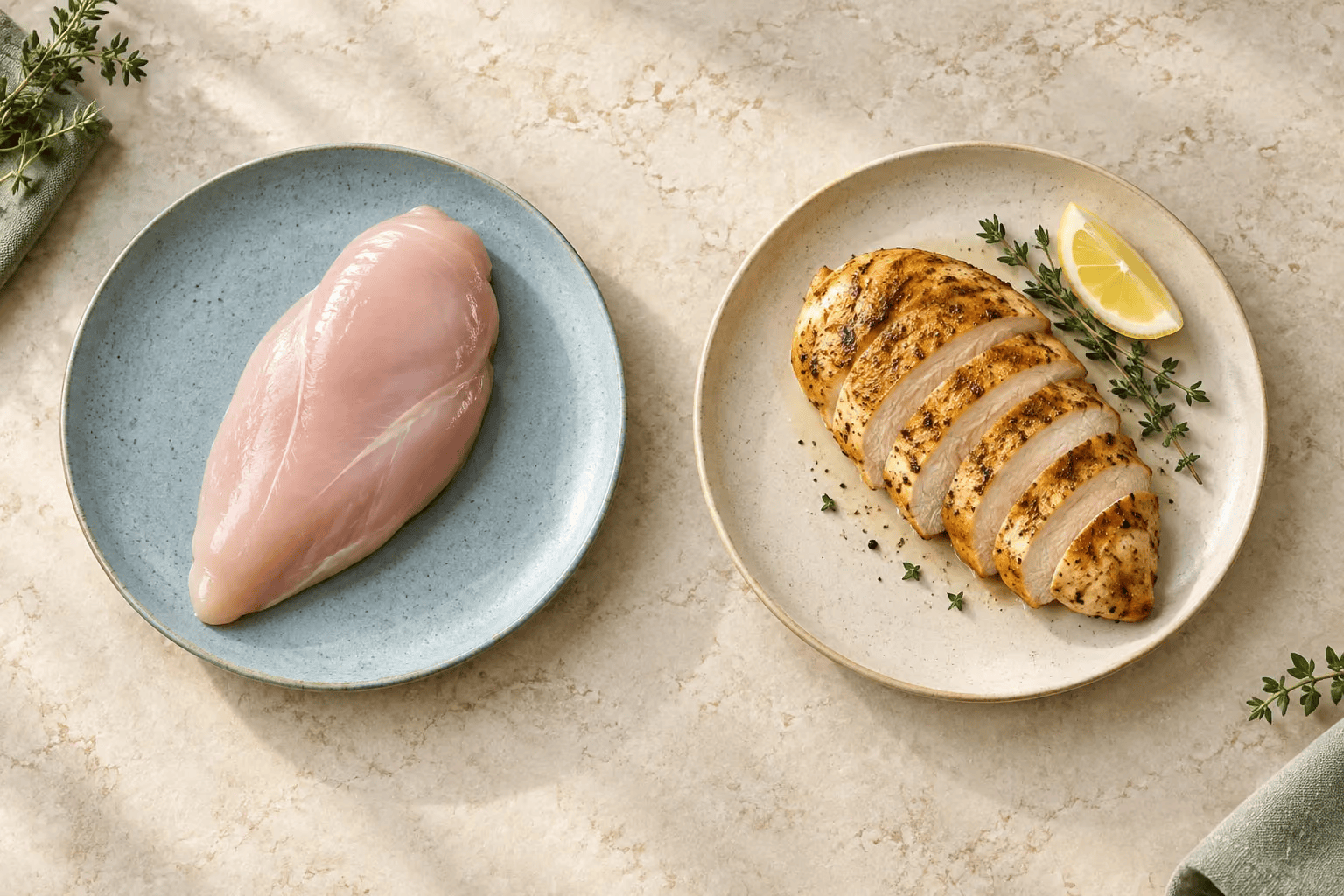
Many websites show different calorie numbers because some use raw weight and some use cooked weight. Chicken loses roughly a quarter of its weight as water during cooking, so cooked chicken has more calories per gram even though the total calories in the whole piece stay almost the same.
This is why a piece weighing about 4 ounces raw becomes about 3 ounces cooked and still has around 140 calories. Always check whether a number refers to raw or cooked chicken before you log it. The exact weight loss depends on cooking time and heat, so treat the 25 percent figure as a rough guide.
| Type | Calories per 100g | Protein per 100g | Fat per 100g |
|---|---|---|---|
| Raw skinless chicken breast | About 120 | About 22g | About 2.6g |
| Cooked skinless chicken breast | 165 | 31g | 3.6g |
Grilled Chicken Breast: With Skin vs Without Skin
Many people do not realize how much of a difference the skin makes. Chicken skin is high in fat, so leaving it on during grilling adds a noticeable amount of calories.
| Type | Calories per 100g | Fat per 100g |
|---|---|---|
| Skinless grilled chicken breast | 165 | 3.6g |
| Grilled chicken breast with skin | 197 | 7.8g |
If your main goal is to manage weight or reduce fat intake, removing the skin before or after cooking is a simple way to lower calories while still enjoying the same amount of chicken.
Calories by Cooking Method
The way you cook chicken breast changes the final calorie count. Grilling tends to be one of the healthier options because fat drips away during cooking and little to no oil is usually needed.
| Cooking Method | Calories per 100g (approx) | Notes |
|---|---|---|
| Grilled (skinless) | 165 | Excess fat drips off during cooking |
| Baked (skinless) | 165–175 | Similar to grilling, depends on oil used |
| Boiled or poached | 150 | Very low fat, no browning |
| Pan fried in oil | 200–220 | Absorbs oil during cooking |
| Deep fried and breaded | 250–380 | Breading and oil add significant calories; varies widely by recipe and portion |
If you are comparing meals at a restaurant, grilled chicken is almost always the lower calorie choice compared to fried or breaded chicken.
If you want a deeper look at air frying and slow cooking and the health side of high heat cooking, read our full comparison of grilled chicken breast vs other cooking methods.
Full Nutrition Facts For Grilled Chicken Breast
Beyond calories, grilled chicken breast offers a strong nutritional profile. Here is what a standard 100 gram serving of skinless grilled chicken breast typically contains.
| Nutrient | Amount per 100g |
|---|---|
| Calories | 165 |
| Protein | 31g |
| Total Fat | 3.6g |
| Saturated Fat | 1g |
| Carbohydrates | 0g |
| Sodium | 74mg (varies with seasoning) |
| Cholesterol | 85mg |
Chicken breast also provides B vitamins such as niacin and B6, along with minerals like phosphorus and selenium, which support energy metabolism and immune health.
Grilled Chicken Breast vs Chicken Thigh Calories
Chicken thigh is richer and juicier than breast, and the difference shows up in the fat and calorie numbers. Skinless thigh meat has noticeably more fat per 100 grams, which is why many people choose breast when they want the leanest option.
| Cut, cooked and skinless | Calories per 100g | Protein per 100g | Fat per 100g |
|---|---|---|---|
| Chicken breast | 165 | 31g | 3.6g |
| Chicken thigh | About 209 | About 26g | About 11g |
Thigh still fits a balanced diet. It costs less in many places and stays moist on the grill, so the better choice depends on your goals and your taste.
What Affects The Calorie Count Of Grilled Chicken Breast
Several factors can raise or lower the number of calories in your grilled chicken, even if the base ingredient stays the same.
- Skin on or off: Skin adds fat and calories.
- Marinades: Oil based or sugary marinades can add 30 to 100 extra calories per serving.
- Cooking oil or butter: Brushing the grill or chicken with oil adds calories even if it is a small amount.
- Portion size: A bigger piece of chicken naturally has more calories even with the same cooking method.
- Sauces and glazes: Barbecue sauce, honey glaze, or teriyaki sauce can add sugar and calories on top of the chicken itself.
Being aware of these factors helps you estimate your meal more accurately, especially if you are tracking calories for weight loss or muscle building goals.
Benefits Of Eating Grilled Chicken Breast
Grilled chicken breast is popular for good reason. It offers several benefits when eaten as part of a balanced diet.
- High in protein: Protein helps repair muscle and keeps you feeling full for longer. This can reduce snacking between meals.
- Low in fat compared to other cuts: Chicken breast has less fat than thighs, wings, or drumsticks.
- Versatile: It pairs well with vegetables, grains, salads, and sauces, making it easy to include in different types of meals.
- Supports weight management goals: Because it is filling and relatively low in calories, it fits well into calorie controlled diets.
- Naturally free of carbohydrates: This makes it a good option for people following lower carb eating patterns.
Protein rich foods like chicken breast are widely recognized in nutrition science for supporting weight management, largely because protein tends to increase feelings of fullness compared to foods higher in fat or refined carbohydrates.
Common Mistakes People Make With Grilled Chicken Breast
- Guessing portion sizes instead of measuring: A small piece of chicken can easily be double the recommended serving size.
- Forgetting about marinade calories: Many marinades contain oil, honey, or sugar that adds up quickly.
- Leaving the skin on without realizing it: This can add 30 or more extra calories per 100 grams.
- Drowning grilled chicken in sauce: A few tablespoons of barbecue sauce can add 50 to 100 calories.
- Overcooking the chicken: This does not change calories much, but it can dry out the meat and lead people to add extra sauce or butter to make it taste better.
Myths vs Facts About Grilled Chicken Breast Calories
| Myth | Fact |
|---|---|
| Grilled chicken has almost no calories | A 100g serving still has about 165 calories, mainly from protein |
| All grilled chicken has the same calorie count | Calories vary based on skin, marinade, oil, and portion size |
| Chicken breast has no nutritional value besides protein | It also provides B vitamins, selenium, and phosphorus |
| Eating only grilled chicken guarantees weight loss | Weight loss depends on total daily calories, not one single food |
| Marinating chicken never changes its calorie count | Oil and sugar based marinades can add noticeable calories |
Tips To Keep Grilled Chicken Breast Low In Calories
- Remove the skin before or after grilling.
- Use herbs, spices, lemon juice, or vinegar based marinades instead of oil heavy ones.
- Measure your portion with a kitchen scale or your palm as a rough guide.
- Choose sauces in small amounts or serve them on the side so you control how much you use.
- Pair grilled chicken with nutrient-rich vegetables and whole grains instead of high calorie sides like creamy pasta.
Sample Meal Ideas Using Grilled Chicken Breast
- Grilled chicken breast with a large mixed salad and a light vinaigrette.
- Sliced grilled chicken over brown rice with steamed broccoli.
- Grilled chicken wrapped in a whole grain tortilla with lettuce, tomato, and salsa.
- Grilled chicken breast with roasted sweet potato and green beans.
These combinations help balance protein, fiber, and healthy carbohydrates while keeping the meal within a reasonable calorie range. For more ideas, see our list of high protein snacks for weight loss.
How Grilled Chicken Breast Fits Into A Healthy Diet
Grilled chicken breast can support many different eating patterns, including high protein diets, general weight management plans, and muscle building nutrition plans. Because it is low in fat and free of carbohydrates, it leaves room in your daily calorie budget for vegetables, whole grains, fruit, and healthy fats from other sources.
If you are working toward a specific health or fitness goal, it can help to speak with a registered dietitian or healthcare provider who can guide portion sizes and overall meal planning based on your personal needs. You can also explore personalized meal plans built around your specific goals.
Frequently Asked Questions
How many calories are in a grilled chicken breast?
A standard 3 ounce serving of grilled skinless chicken breast has about 128 to 140 calories. A larger 4 ounce serving has roughly 170 to 187 calories.
Is grilled chicken breast good for weight loss?
Yes. It is high in protein and low in fat, which can help you feel full while keeping your total calorie intake in check. Weight loss still depends on your overall daily calories, not one food alone.
Does grilling reduce calories in chicken compared to frying?
Yes. Grilling usually results in fewer calories than frying because little or no oil is needed and extra fat can drip away during cooking. You can also see how air frying and baking compare with grilling.
How many calories are in grilled chicken breast with skin?
Grilled chicken breast with the skin left on has about 197 calories per 100 grams, compared to about 165 calories for the skinless version.
Does marinating chicken add calories?
It can. Marinades that contain oil, sugar, or honey add extra calories. Marinades based on herbs, spices, lemon juice, or vinegar add very little.
How much protein is in grilled chicken breast?
A 100 gram serving of grilled skinless chicken breast has about 31 grams of protein, making it one of the most efficient sources of lean protein available.
How many calories are in 6 oz of grilled chicken breast?
About 281 calories and 53 grams of protein for cooked skinless chicken breast, based on USDA values.
How many calories are in one ounce of grilled chicken breast?
About 47 calories and 9 grams of protein for cooked skinless chicken breast.
Should I weigh chicken raw or cooked for calorie counting?
Either works as long as you use the matching number. Raw chicken has about 120 calories per 100 grams and cooked has about 165. Mixing the two causes errors.
Why do different websites show different calories for grilled chicken breast?
Most differences come from raw versus cooked weights, different database entries, and whether skin or bone is included. Even USDA lists slightly different values, about 151 calories per 100 grams for grilled chicken breast and 165 for roasted, which is why you may see 128 or 140 calories for a 3 ounce serving.
How many calories are in a piece of grilled chicken?
One medium skinless grilled chicken breast of about 172 grams has around 284 calories. A small breast has about 198 calories and a large one about 363 calories.
How many calories are in a cup of grilled chicken?
One cup of chopped or diced grilled chicken breast weighs about 140 grams and has around 231 calories and 43 grams of protein.
Conclusion
Grilled chicken breast is a simple, versatile, and nutritious food that fits well into most healthy eating plans. A 3 ounce serving has about 140 calories, while a 100 gram serving has about 165 calories, mostly from protein with very little fat. The exact number can shift depending on whether you leave the skin on, how you season it, and how large your portion is. By paying attention to these small details, you can enjoy grilled chicken breast as a reliable and satisfying part of your diet.
This article is for general informational purposes only and is not a substitute for professional medical or nutritional advice. Please consult a registered dietitian or healthcare provider for guidance specific to your needs.