

Last updated: October 23, 2026. This article is for general information and does not replace advice from a doctor or qualified health professional.
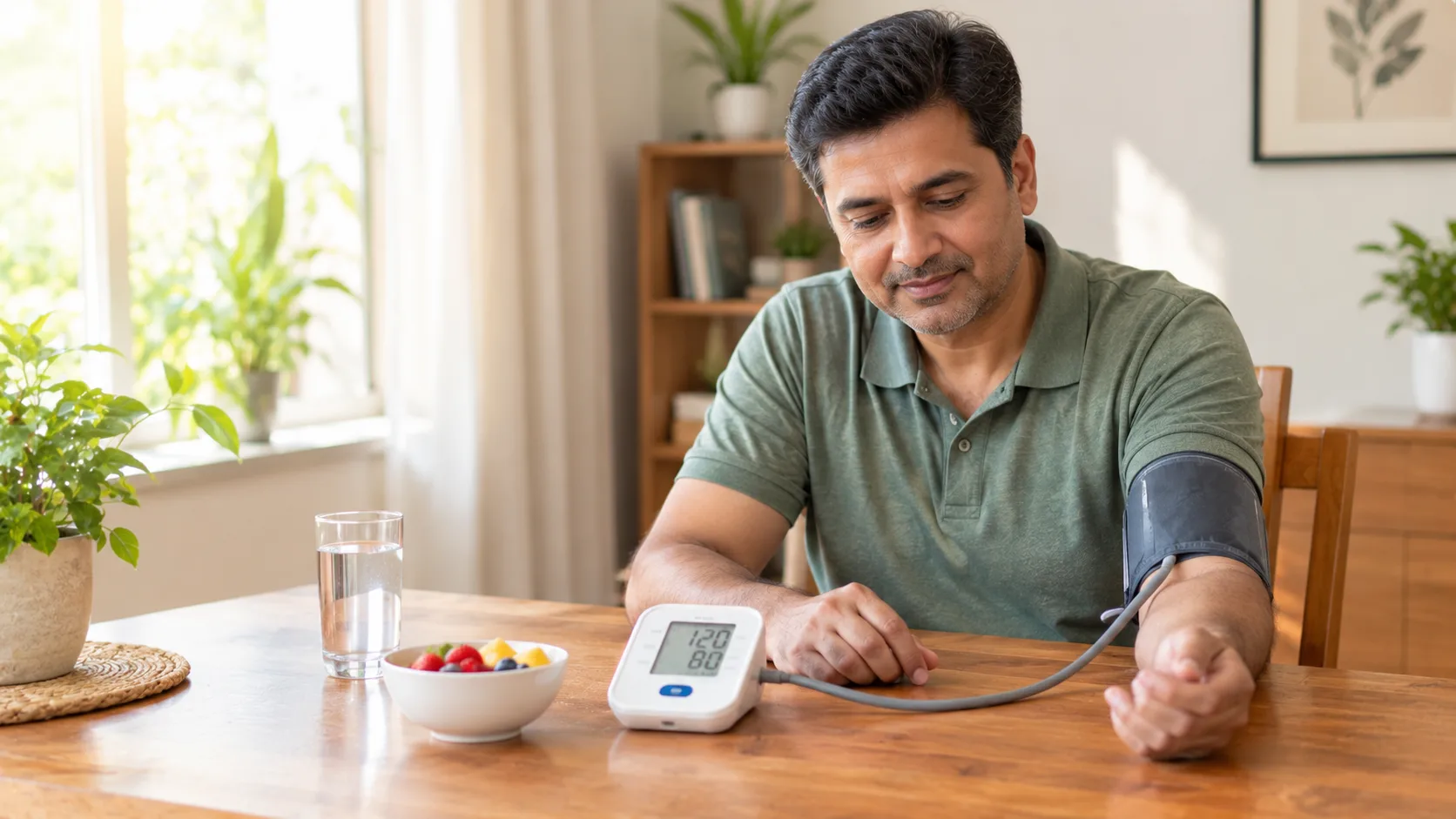
Quick answer: The blood pressure meaning in Hindi is रक्तचाप (raktchaap). In simple words blood pressure is the force of blood pushing against the walls of your arteries as the heart pumps it around the body. High blood pressure is called उच्च रक्तचाप and low blood pressure is called निम्न रक्तचाप.
Almost everyone has heard the words BP high hai or BP low ho gaya at home or at the doctor’s clinic. But many people are not sure what blood pressure really means or what the two numbers on a BP machine show. In this article we explain the blood pressure meaning in Hindi in plain words, show what normal and high readings look like and share simple habits that help keep blood pressure in a healthy range.
What Is the Blood Pressure Meaning in Hindi
In Hindi blood pressure is called रक्तचाप. The word comes from two parts. रक्त means blood and चाप means pressure. Together they mean the pressure of the blood. In daily speech most people simply say बीपी or ब्लड प्रेशर.
| English word | Hindi word | Simple meaning |
|---|---|---|
| Blood pressure | रक्तचाप | Force of blood on the walls of the arteries |
| High blood pressure (Hypertension) | उच्च रक्तचाप | Blood pressure that stays higher than normal |
| Low blood pressure (Hypotension) | निम्न रक्तचाप | Blood pressure that is lower than normal |
| Systolic pressure | सिस्टोलिक दबाव | Pressure when the heart beats (top number) |
| Diastolic pressure | डायस्टोलिक दबाव | Pressure when the heart rests between beats (bottom number) |
| Artery | धमनी | Blood vessel that carries blood away from the heart |
Blood Pressure Meaning in Hindi Explained
ब्लड प्रेशर का हिंदी अर्थ है रक्तचाप। जब हमारा दिल धड़कता है तो वह खून को धमनियों में आगे धकेलता है। खून जिस ताकत से धमनियों की दीवारों पर दबाव डालता है उसे रक्तचाप कहते हैं। अगर यह दबाव लंबे समय तक सामान्य से ज़्यादा रहे तो उसे उच्च रक्तचाप या हाई बीपी कहते हैं। अगर यह सामान्य से कम हो तो उसे निम्न रक्तचाप या लो बीपी कहते हैं।
What Do the Two Numbers Mean
A blood pressure reading always has two numbers, such as 120/80. It is measured in millimeters of mercury, written as mm Hg.
- The top number is systolic pressure (सिस्टोलिक). It shows the pressure in your arteries when the heart beats and pushes blood out.
- The bottom number is diastolic pressure (डायस्टोलिक). It shows the pressure in your arteries when the heart rests between beats.
So a reading of 120/80 is read as 120 over 80. Both numbers matter. A doctor looks at both when deciding if your blood pressure is healthy.
Blood Pressure Chart for Adults
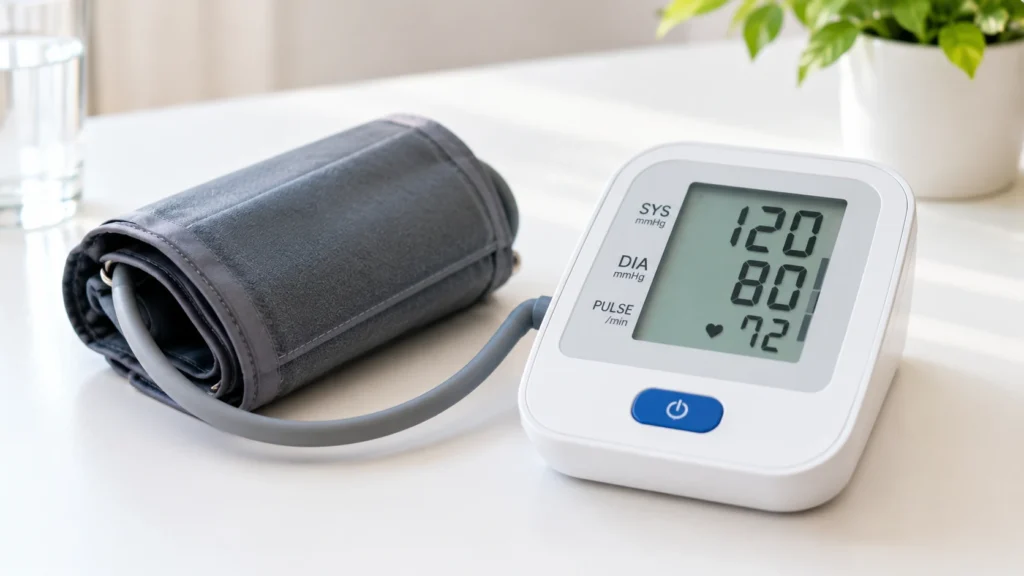
The table below follows the 2025 American Heart Association and American College of Cardiology guideline, as listed in the MSD Manual.
| Category | Hindi meaning | Top number (systolic) | Bottom number (diastolic) |
|---|---|---|---|
| Normal | सामान्य | Less than 120 | and less than 80 |
| Elevated | बढ़ा हुआ | 120 to 129 | and less than 80 |
| Stage 1 high blood pressure | उच्च रक्तचाप चरण 1 | 130 to 139 | or 80 to 89 |
| Stage 2 high blood pressure | उच्च रक्तचाप चरण 2 | 140 or higher | or 90 or higher |
Some countries and doctors still use 140/90 as the main cut-off for high blood pressure. One single high reading does not mean you have high blood pressure. A doctor usually checks it on different days before making a diagnosis.
A reading above 180/120 is very high. If it comes with chest pain, breathlessness, severe headache, weakness on one side of the body, confusion or blurred vision, get emergency medical help right away.
What Is High Blood Pressure (उच्च रक्तचाप)
High blood pressure, also called hypertension, means the pressure in your arteries stays higher than normal most of the time. Over the years this extra force can damage the heart, brain, kidneys and eyes.
It is very common. According to the World Health Organization’s Global Report on Hypertension 2025, about 1.4 billion adults aged 30 to 79 had high blood pressure in 2024. Fewer than 1 in 5 of them had it under control and about 46% did not know they had it. You can read more on the WHO hypertension fact sheet.
Why High BP Is Called a Silent Killer
Most people with high blood pressure feel completely normal. There is often no pain and no warning sign. This is why doctors call it a silent killer. The only way to know your blood pressure is to measure it.
When symptoms do appear they may include headache, dizziness, blurred vision or a pounding feeling in the chest. These signs usually appear only when blood pressure is very high, so do not wait for them.
Common Causes and Risk Factors
| Risk factor | Can you change it |
|---|---|
| Too much salt in food | Yes |
| Being overweight | Yes |
| Not enough physical activity | Yes |
| Smoking or chewing tobacco | Yes |
| Too much alcohol | Yes |
| Long-term stress and poor sleep | Yes |
| Older age | No |
| Family history of high BP | No |
The good news is that most of these risk factors can be changed with daily habits.
Health Problems Linked to High BP
When high blood pressure is not treated it can lead to serious problems. Mayo Clinic Health System lists heart attack, heart failure, stroke, kidney failure, vision loss and vascular dementia among them.
What Is Low Blood Pressure (निम्न रक्तचाप)
Low blood pressure, also called hypotension, usually means a reading lower than 90/60. Many healthy people have a low reading and feel fine. It becomes a concern when it causes symptoms such as:
- Dizziness or light-headedness, especially when standing up quickly
- Fainting
- Blurred vision
- Tiredness and weakness
- Nausea
Low blood pressure can happen because of dehydration, long hours without food, some medicines or other health problems. If you often feel dizzy or faint, speak to a doctor.
High BP vs Low BP: Quick Comparison
| Point | High BP (उच्च रक्तचाप) | Low BP (निम्न रक्तचाप) |
|---|---|---|
| Medical name | Hypertension | Hypotension |
| Reading | 130/80 or higher (140/90 in some guidelines) | Usually lower than 90/60 |
| Common signs | Often none | Dizziness, fainting, tiredness |
| Main risk | Heart disease, stroke, kidney damage | Falls and fainting |
How to Check Blood Pressure Correctly at Home
A home BP machine can help you track your numbers. Follow these steps for a more accurate reading.
- Rest first. Sit quietly for 5 minutes before you measure.
- Avoid tea, coffee and smoking for at least 30 minutes before checking.
- Sit properly. Keep your back supported and feet flat on the floor. Do not cross your legs.
- Place the cuff on bare skin on your upper arm at the level of your heart.
- Stay still and do not talk during the reading.
- Take two readings one minute apart and write both down.
- Check at the same time each day and share the record with your doctor.
Regular checkups also help catch problems early. Our guide to blood testing explains other simple tests your doctor may suggest.
Simple Habits to Keep Blood Pressure Healthy

Small daily changes can make a real difference to your blood pressure.
- Eat less salt. Cut down on pickles, papad, namkeen, chips and packaged foods. The WHO advises adults to eat less than 5 grams of salt a day, which is about one teaspoon.
- Eat more fresh foods. Fill your plate with vegetables, fruits, dal, whole grains and low-fat dairy. Our list of nutrient dense foods is a good place to start.
- Move every day. Aim for about 150 minutes of brisk walking or other activity each week. Learn more about what supports physical fitness.
- Keep a healthy weight. Even a small amount of weight loss can help lower blood pressure.
- Quit smoking and tobacco. Tobacco narrows blood vessels and harms the heart.
- Limit alcohol. Too much alcohol raises blood pressure.
- Manage stress. Short breathing breaks, prayer and time outdoors can help. Try these stress management techniques on busy days.
- Sleep well. Most adults need 7 or more hours of sleep each night.
- Take medicines as prescribed. If your doctor gives you BP medicine, do not stop it on your own even when you feel fine.
How to Use Blood Pressure in a Sentence
- My grandfather checks his blood pressure every morning.
- The doctor said my blood pressure is normal at 118/76.
- Eating less salt can help lower high blood pressure.
- डॉक्टर ने कहा कि मेरा रक्तचाप सामान्य है।
- ज़्यादा नमक खाने से उच्च रक्तचाप का खतरा बढ़ सकता है।
Frequently Asked Questions
What is the blood pressure meaning in Hindi?
Blood pressure in Hindi means रक्तचाप. It is the force of blood pushing against the walls of the arteries.
What is high blood pressure called in Hindi?
High blood pressure is called उच्च रक्तचाप in Hindi. In daily speech people also say हाई बीपी.
What is low blood pressure called in Hindi?
Low blood pressure is called निम्न रक्तचाप in Hindi. People also call it लो बीपी.
What is normal blood pressure for adults?
A reading below 120/80 mm Hg is considered normal for most adults. Your doctor may set a different target based on your age and health.
Can high blood pressure be controlled without medicine?
In some people with mildly raised blood pressure, eating less salt, exercising, losing extra weight and quitting tobacco can bring it down. Many people still need medicine. Always follow your doctor’s advice.
How often should I check my blood pressure?
Mayo Clinic Health System suggests a check once a year for adults aged 40 and above or anyone with risk factors, and every two years for younger adults without risk factors. People with high blood pressure may need to check more often.
Final Thoughts
The blood pressure meaning in Hindi is रक्तचाप, the force of blood on the walls of your arteries. High blood pressure is उच्च रक्तचाप and low blood pressure is निम्न रक्तचाप. Because high BP often has no symptoms, regular checking is the only way to know where you stand.
Start with one small step this week, such as cutting down on salt or taking an evening walk. Good blood pressure is a big part of good health, and as our elders say, health is wealth. If you are not sure whom to see for a checkup, our guide to health care providers can help.