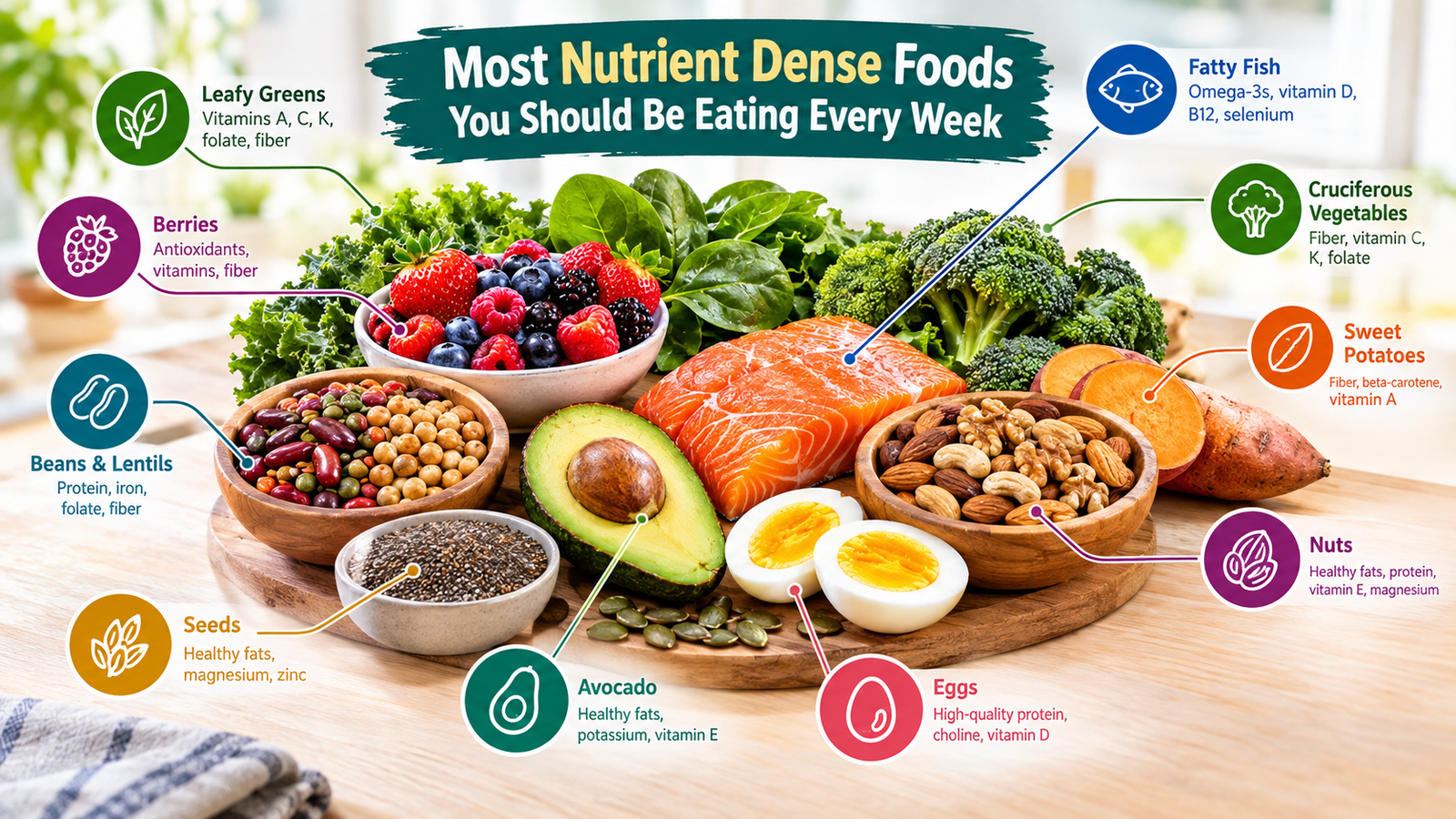

Quick answer: The most nutrient dense foods include leafy greens such as spinach and watercress, oily fish, eggs, lentils and beans, berries, nuts and seeds, cruciferous vegetables like broccoli and orange vegetables like sweet potato. These foods give you a large amount of vitamins, minerals, fiber and protein for a small number of calories.
Not all calories are equal. A bowl of dal and a packet of chips may have similar calories, but one feeds your body with protein, fiber and iron while the other gives you mostly oil and salt. This idea is called nutrient density, and it is one of the simplest ways to judge the quality of your food.
This guide explains what nutrient density means, lists the most nutrient dense foods you should be eating every week, shows what each one offers and shares easy ways to add them to your meals.
What Is Nutrient Density
Nutrient density means how many vitamins, minerals, protein, fiber and other helpful compounds a food gives you compared with its calories. A nutrient dense food gives a lot of nutrition for relatively few calories.
Take almonds and a chocolate bar as an example. Both are high in calories, but almonds also give you protein, fiber, healthy fats, vitamin E and magnesium. The chocolate bar mostly gives sugar and fat. This is why some foods keep you full and nourished while others leave you hungry again soon after.
Why Nutrient Density Matters More Than Calorie Counting
- You get more from every bite. Nutrient dense foods help you meet your vitamin and mineral needs without overeating.
- You stay full longer. Foods rich in protein and fiber are more filling than processed snacks with the same calories.
- It helps people with small appetites. Older adults, children and people recovering from illness need more nutrition from smaller meals.
- It avoids empty calories. Counting calories alone can lead to low calorie foods that offer very little real nutrition.
How Nutrient Density Is Measured
Scientists use scoring systems to rank foods by the nutrients they give per calorie. One well known example is a 2014 study published by the CDC in its journal Preventing Chronic Disease. It scored fruits and vegetables on 17 important nutrients, including potassium, fiber, protein, calcium, iron, folate, zinc and vitamins A, B6, B12, C, D, E and K. Forty-one foods qualified as powerhouse fruits and vegetables.
| Rank | Food | Score out of 100 |
|---|---|---|
| 1 | Watercress | 100 |
| 2 | Chinese cabbage | 92 |
| 3 | Chard | 89 |
| 4 | Beet greens | 87 |
| 5 | Spinach | 86 |
| 6 | Chicory | 73 |
| 7 | Leaf lettuce | 71 |
| 8 | Parsley | 66 |
| 9 | Romaine lettuce | 63 |
| 10 | Collard greens | 62 |
Leafy greens took the top ten places. This study only ranked fruits and vegetables, so foods like fish, eggs and lentils were not included, even though they are also very nutrient dense. For detailed nutrient numbers of almost any food, you can search the USDA FoodData Central database.
The Most Nutrient Dense Foods to Eat Every Week
1. Leafy Greens
Spinach (palak), watercress, chard, methi (fenugreek leaves), sarson (mustard greens) and kale are some of the most nutrient dense foods in the world. They are rich in vitamin K, vitamin A, folate and fiber, and they contain iron and calcium, all for very few calories. Add them to dal, parathas, smoothies, omelettes or salads. Cooking spinach lightly with a squeeze of lemon helps your body absorb more of its iron.
2. Oily Fish
Salmon, sardines, mackerel and rohu or other local oily fish give you high quality protein, omega-3 fats, vitamin D and vitamin B12. Omega-3 fats support the heart and brain. Health organizations commonly recommend fish about twice a week. Canned sardines and salmon are affordable and quick options.
3. Eggs
Eggs are cheap, quick to cook and packed with protein, vitamin B12, vitamin D, selenium and choline. Choline supports brain health, and many people do not get enough of it. Eggs work for any meal, from a breakfast omelette to an egg curry at dinner.
4. Lentils, Beans and Chickpeas
Dal, rajma, chana and lobia are some of the best value foods you can buy. They give you plant protein, fiber, iron, folate and potassium. Because they digest slowly, they help keep blood sugar steady and keep you full for hours. Dried pulses last for months, and canned ones save cooking time.
5. Berries and Vitamin C Fruits
Strawberries, blueberries and raspberries are rich in fiber, vitamin C and antioxidants while being lower in sugar than many fruits. Local fruits such as guava, amla and oranges are also excellent vitamin C sources and often cheaper. Frozen berries keep most of their nutrients and are useful when fresh ones are expensive.
6. Nuts and Seeds
Almonds, walnuts, pumpkin seeds, chia seeds and flax seeds give you healthy fats, fiber, protein, magnesium and zinc. Walnuts, chia and flax also provide plant omega-3. They are high in calories, so a small handful is enough.
7. Cruciferous Vegetables
Broccoli, cauliflower, cabbage and Brussels sprouts give you vitamin C, vitamin K, folate and fiber, along with natural plant compounds that are being studied for their health benefits. Steam, roast or stir-fry them lightly rather than boiling for a long time, which can wash out some vitamins.
8. Sweet Potatoes and Orange Vegetables
Sweet potatoes, carrots and pumpkin are rich in beta-carotene, which the body turns into vitamin A for eye health, skin and immunity. They also give fiber and natural sweetness. Use them in place of white bread or refined snacks a few times a week.
9. Plain Yogurt and Dairy
Plain dahi, yogurt and milk give you protein, calcium, vitamin B12 and, in the case of dahi with live cultures, helpful bacteria for your gut. Choose plain versions without added sugar. Learn more about how fermented foods like dahi support the gut and mood in our guide to gut-brain axis foods.
10. Whole Grains
Oats, brown rice, whole wheat atta, barley and millets such as bajra and ragi give you fiber, B vitamins, iron and magnesium. They are more nutrient dense than white rice and maida because the outer layers of the grain are kept. Our list of high fiber breakfast foods shows easy ways to use them.
Nutrient Dense Foods Comparison Table
| Food | Standout nutrients | Best way to eat it | Budget |
|---|---|---|---|
| Spinach (palak) | Vitamin K, vitamin A, folate | Palak dal, smoothies, omelettes | Low |
| Salmon or sardines | Omega-3, vitamin D, protein | Grilled, baked or canned | Medium to high |
| Eggs | Protein, choline, B12 | Boiled, omelette, egg curry | Low |
| Lentils (dal) | Plant protein, fiber, iron | Dal, soups, salads | Low |
| Berries or guava | Vitamin C, fiber, antioxidants | Snacks, breakfast topping | Low to medium |
| Almonds and walnuts | Healthy fats, magnesium, vitamin E | Small handful as a snack | Medium |
| Broccoli | Vitamin C, vitamin K, fiber | Stir-fry or steamed | Medium |
| Sweet potato | Beta-carotene, fiber, potassium | Roasted or boiled with chaat masala | Low |
| Plain dahi | Protein, calcium, B12 | With meals or as raita | Low |
| Oats | Fiber, magnesium, iron | Porridge or overnight oats | Low |
Nutrient Dense Foods for Different Goals
| Your goal | Best choices | Why |
|---|---|---|
| Weight management | Leafy greens, lentils, eggs, vegetables | High in fiber and protein, so you feel full on fewer calories |
| Muscle building | Eggs, fish, chicken, dal, dahi | Rich in protein for muscle repair |
| Heart health | Oily fish, nuts, leafy greens, oats | Omega-3, fiber and healthy fats |
| Vegetarian diet | Dal, chana, paneer, dahi, nuts, seeds | Cover protein, iron and calcium without meat |
| Tight budget | Eggs, dal, seasonal greens, oats, bananas | Cheap foods with lots of nutrients |
If you are vegetarian, our guide to healthy vegetarian foods covers protein, iron and vitamin B12 in more detail. If you want a lean protein option, see our grilled chicken breast calories guide.
Sample Nutrient Dense Day
| Meal | What to eat |
|---|---|
| Breakfast | Oats with dahi, berries or banana and a spoon of chia seeds |
| Mid-morning | A guava or orange and a few almonds |
| Lunch | Palak dal, brown rice or roti, and a cucumber and tomato salad |
| Evening snack | Two boiled eggs or roasted chana |
| Dinner | Grilled fish or paneer with roasted broccoli and sweet potato |
Batch cooking makes this much easier on busy days. Our easy meal prep ideas show how to cook dal, vegetables and grains for the whole week.
Myths and Facts About Nutrient Dense Foods
| Myth | Fact |
|---|---|
| Nutrient dense food is bland | Berries, eggs, roasted vegetables and spiced dal are full of flavor |
| Only vegetables count | Fish, eggs, pulses, dairy and nuts are also very nutrient dense |
| Healthy food is always expensive | Dal, eggs, oats and seasonal greens are some of the cheapest foods available |
| Frozen vegetables have no nutrition | Frozen produce is usually frozen soon after harvest and keeps most of its nutrients |
| You need supplements to be healthy | Most people can meet their needs with a varied diet. High dose supplements can even cause harm. See our guide on vitamins and supplements that may harm your health |
Easy Tips to Eat More Nutrient Dense Foods
- Add greens everywhere. Put a handful of spinach or methi into dal, parathas, eggs or smoothies.
- Keep pulses ready. Store dried or canned chana, rajma and lentils for quick meals.
- Swap refined for whole. Choose brown rice, whole wheat roti, oats or millets instead of white rice and maida a few times a week.
- Snack smarter. Replace chips and biscuits with fruit, roasted chana, makhana or a few nuts.
- Eat the rainbow. Try to include at least three colors of vegetables and fruit each day.
- Cook gently. Steam, roast or stir-fry vegetables rather than boiling them for a long time.
Common Mistakes to Avoid
| Mistake | Better choice |
|---|---|
| Eating the same few foods every day | Rotate different vegetables, pulses and fruits through the week |
| Overcooking vegetables | Cook lightly to keep more vitamins |
| Eating large portions of nuts and oils | They are nutrient dense but high in calories, so keep portions small |
| Trusting every “healthy” packaged snack | Read labels for added sugar, salt and refined flour |
| Not planning meals | Plan and prep ahead so healthy options are ready on busy days |
Frequently Asked Questions
What are the most nutrient dense foods?
Leafy greens such as spinach and watercress, oily fish, eggs, lentils and beans, berries, nuts and seeds, cruciferous vegetables, sweet potatoes, plain dahi and whole grains are among the most nutrient dense foods.
What is the single most nutrient dense vegetable?
In the 2014 study published by the CDC, watercress scored highest among fruits and vegetables, followed by Chinese cabbage, chard, beet greens and spinach.
Is nutrient dense the same as low calorie?
Not always. Nuts and oily fish are high in calories but still nutrient dense because they give a lot of vitamins, minerals and healthy fats.
Can vegetarians get enough nutrients?
Yes. Dal, chana, rajma, paneer, dahi, nuts, seeds, whole grains and leafy greens can cover most needs. Vitamin B12 needs special attention, so include dairy, eggs or fortified foods.
Are frozen vegetables as nutritious as fresh ones?
In most cases, yes. Frozen vegetables are usually frozen soon after harvest, which helps keep their vitamins and minerals.
Are nutrient dense foods expensive?
Some, like salmon, can be costly, but many of the best options, such as eggs, dal, oats, bananas, guava and seasonal greens, are cheap.
Do nutrient dense foods help with weight loss?
They can help because many are high in fiber and protein, which keep you full. Weight loss still depends on your total calories and activity.
How many nutrient dense foods should I eat each day?
There is no fixed number. A simple goal is to include at least one or two nutrient dense foods in every meal.
Final Thoughts
Eating the most nutrient dense foods is one of the simplest ways to improve your diet without strict rules. Leafy greens, fish, eggs, pulses, berries, nuts, seeds, colorful vegetables, dahi and whole grains give your body far more nutrition per calorie than processed snacks.
Start small this week. Add spinach to your dal, swap one packaged snack for fruit or nuts and include eggs or pulses in more meals. These simple changes add up to better health over time.


One Comment