
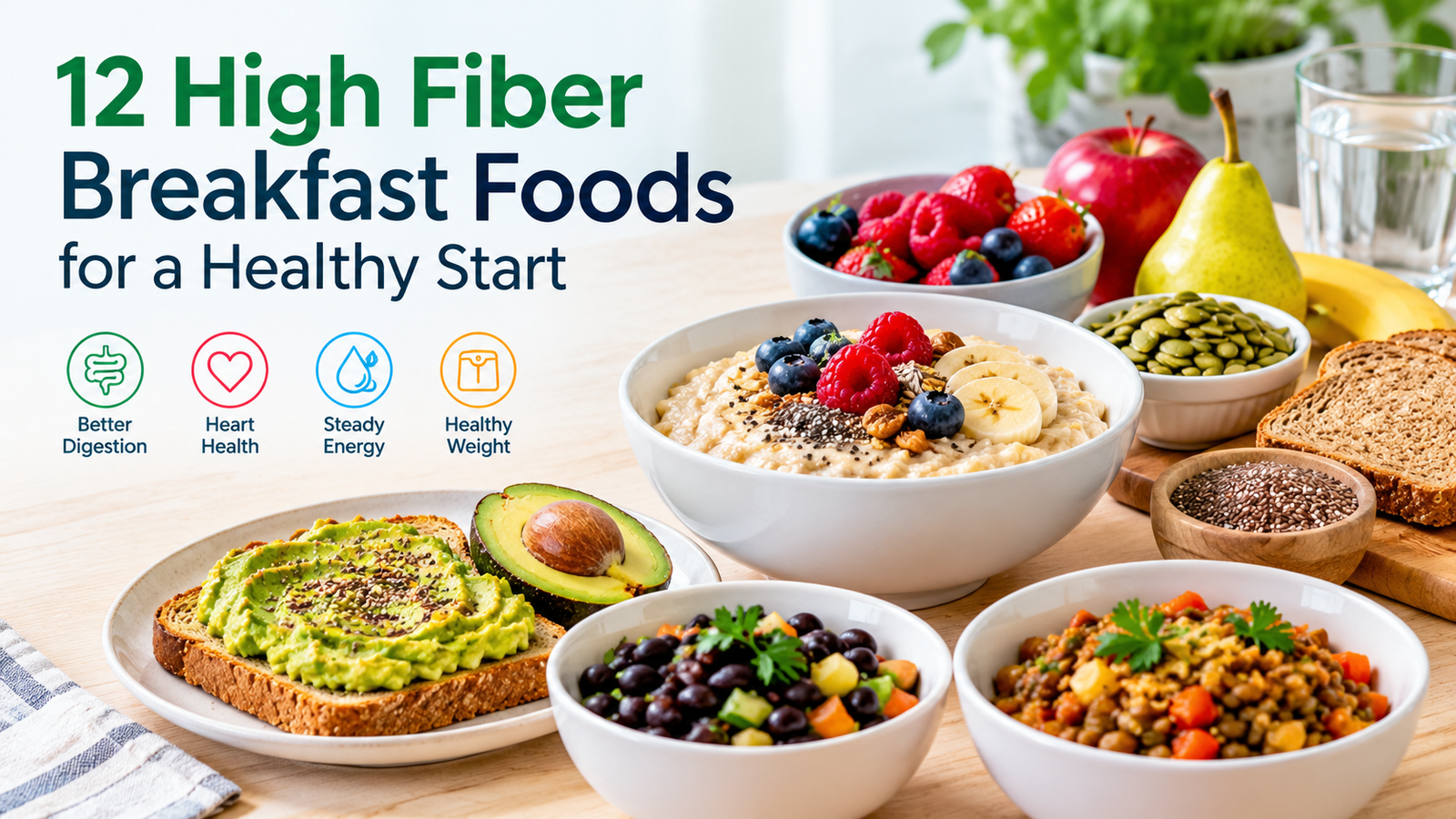

Starting your day with a nutritious breakfast is a simple way to build healthier eating habits. Including high fiber breakfast foods such as oatmeal, berries, chia seeds, whole grain bread, and fresh fruit can support digestive health and help you feel satisfied after meals.
Dietary fiber is an important part of a balanced diet. It supports regular bowel movements and contributes to overall digestive health. Fortunately, adding more fiber to your breakfast does not require expensive ingredients or complicated recipes.
In this guide, you will discover 12 high fiber breakfast foods, their nutritional benefits, and simple ways to include them in your daily routine.
What Are High Fiber Breakfast Foods?
High fiber breakfast foods are plant based foods that provide dietary fiber. Fiber is a type of carbohydrate that the body does not fully digest. It is naturally found in fruits, vegetables, whole grains, nuts, seeds, and legumes.
There are two main types of dietary fiber.
Soluble fiber dissolves in water and forms a gel like substance. It is found in foods such as oats, apples, beans, and citrus fruits.
Insoluble fiber helps add bulk to stool and supports regular bowel movements. Whole grains, vegetables, nuts, and seeds are common sources.
Eating a variety of fiber rich foods can help you meet your daily nutritional needs and support a balanced diet.
For more information about dietary fiber and its food sources, visit the USDA’s guide to dietary fiber.
12 Best High Fiber Breakfast Foods
1. Oatmeal
Oatmeal is one of the easiest high fiber breakfast foods to prepare. Oats contain beta glucan, a type of soluble fiber that can help support healthy cholesterol levels.
You can prepare oatmeal with water or milk and add fruit, nuts, or seeds for extra flavor and nutrients.
To make a nutritious breakfast, cook rolled oats and top them with sliced bananas, fresh berries, or chia seeds. Choose plain oats more often than heavily sweetened varieties to limit added sugar.
You can also explore our guide to whole grain foods for more ideas on including fiber rich ingredients in your daily meals.
2. Chia Seeds
Chia seeds provide dietary fiber, plant based omega 3 fatty acids, and other important nutrients. When mixed with liquid, they absorb water and develop a gel like texture.
You can add chia seeds to oatmeal, yogurt, smoothies, or overnight oats. Chia pudding is another convenient option for a quick morning meal.
Start with a small serving and increase your intake gradually if you are not used to eating much fiber. Drink enough fluids throughout the day.
3. Raspberries
Raspberries are a flavorful fruit that provides dietary fiber, vitamin C, and beneficial plant compounds. They add natural sweetness and texture to many breakfast dishes.
You can enjoy raspberries with oatmeal, plain yogurt, whole grain cereal, or homemade smoothies. Both fresh and frozen raspberries can be nutritious choices.
Adding berries to breakfast is an easy way to increase fruit intake and introduce more variety into your diet.
4. Pears
Pears provide dietary fiber and water, making them a convenient addition to a balanced breakfast. Eating pears with their skin provides more fiber than eating peeled pears.
Enjoy a pear alongside oatmeal, yogurt, or whole grain toast. You can also slice it into a breakfast bowl with nuts or seeds.
Pairing fruit with a protein source, such as eggs or yogurt, can help create a more balanced meal.
5. Apples
Apples are a convenient source of dietary fiber. Much of their fiber is found in or near the skin, so washing the apple and eating it unpeeled can help you obtain more fiber.
You can add sliced apples to oatmeal, serve them with peanut butter, or mix chopped apples into plain yogurt.
Whole apples are generally a better source of fiber than apple juice because juicing removes much of the fruit’s fiber.
6. Whole Grain Bread
Whole grain bread can provide more dietary fiber than bread made primarily from refined flour. It is also a versatile base for sweet and savory breakfast meals.
Look for bread that lists whole grain ingredients near the beginning of the ingredient list. Check the nutrition label because fiber content varies between products.
You can pair whole grain toast with eggs, peanut butter, avocado, or hummus for a nutritious breakfast.
7. Avocado
Avocado contains dietary fiber and unsaturated fats that can contribute to a balanced eating pattern. Its creamy texture makes it a popular choice for savory breakfasts.
Spread mashed avocado on whole grain toast or serve it with eggs, tomatoes, and other vegetables.
Combining avocado with whole grains and a protein source can create a satisfying meal with a variety of nutrients.
8. Flaxseeds
Flaxseeds contain dietary fiber, plant based omega 3 fatty acids, and other nutrients. Ground flaxseeds are particularly convenient because they can be mixed into different foods.
Add ground flaxseeds to oatmeal, smoothies, yogurt, or homemade whole grain pancakes.
Store flaxseeds according to the package instructions. Keeping ground flaxseeds in an airtight container in the refrigerator can help maintain their freshness.
9. Black Beans
Black beans provide dietary fiber and plant based protein. They are a useful option for people who prefer savory breakfast meals.
Add cooked black beans to breakfast wraps, scrambled eggs with vegetables, or a breakfast bowl with tomatoes and avocado.
Canned beans are convenient for busy mornings. Draining and rinsing them can help reduce some of the sodium.
10. Lentils
Lentils are a nutritious source of dietary fiber, plant based protein, iron, and other nutrients. They are especially useful for savory breakfasts and can be included in many South Asian meals.
Serve cooked lentils with vegetables, add them to a breakfast bowl, or enjoy a small portion of lentil soup in the morning.
Lentils are an affordable ingredient that can help add more plant based foods and fiber to your daily diet.
11. Pumpkin Seeds
Pumpkin seeds provide dietary fiber, protein, unsaturated fats, magnesium, and other nutrients. Their crunchy texture makes them an easy addition to breakfast.
Sprinkle pumpkin seeds over oatmeal, yogurt, or fruit bowls. You can also combine them with other seeds and chopped nuts.
Choose a portion that suits your nutritional needs, as seeds are nutrient dense and contain a substantial amount of energy.
12. High Fiber Breakfast Cereal
Some breakfast cereals provide useful amounts of dietary fiber, particularly those made with whole grains or bran. However, nutritional quality varies between products.
When choosing a cereal, check its fiber content, added sugar, whole grain ingredients, and serving size.
Pair cereal with milk or fortified soy milk and add fresh fruit for a more balanced breakfast. You can also combine plain cereal with oatmeal to increase variety.
How Much Fiber Should You Eat at Breakfast?
Your daily fiber needs depend on your age, sex, energy requirements, and overall health. Many adults need approximately 25 to 38 grams of fiber per day, although individual recommendations vary.
You do not need to obtain all your daily fiber at breakfast. Instead, include fiber rich foods throughout the day.
For example, a breakfast containing oatmeal, berries, and chia seeds can provide fiber from several different sources. The exact amount depends on the ingredients and portion sizes.
If your current fiber intake is low, increase it gradually. Adding too much fiber too quickly may cause gas, bloating, or abdominal discomfort. Drinking adequate fluids can also help support normal digestion.
The National Institute of Diabetes and Digestive and Kidney Diseases provides additional guidance on dietary fiber, fluids, and digestive health.
Easy High Fiber Breakfast Ideas
You can prepare a fiber rich breakfast without spending too much time in the kitchen.
Explore more healthy breakfast ideas to add variety to your morning meals.
Berry and Chia Oatmeal
Prepare oatmeal with milk or water and add fresh or frozen berries and chia seeds. This combination provides fiber from oats, fruit, and seeds.
Whole Grain Toast With Eggs and Avocado
Serve whole grain toast with eggs and avocado. Add tomatoes or other vegetables to increase variety and provide additional nutrients.
Yogurt With Fruit and Seeds
Combine plain yogurt with chopped apples or pears, berries, and ground flaxseeds. Choose a yogurt with little or no added sugar if it suits your preferences.
Savory Lentil Breakfast Bowl
Serve cooked lentils with tomatoes, spinach, and eggs or another protein source. Season with herbs and spices for a flavorful breakfast.
Whole Grain Cereal With Fruit
Choose a whole grain cereal that provides dietary fiber and pair it with milk or fortified soy milk. Add sliced banana, berries, or pear for extra fruit.
Peanut Butter and Banana Toast
Spread peanut butter on whole grain toast and add banana slices. This combination provides fiber from the bread and fruit, along with protein and fats from the peanut butter.
Benefits of Eating High Fiber Breakfast Foods
Including fiber rich foods in breakfast can contribute to several aspects of health when combined with an overall balanced diet.
Learn more about digestive health and everyday habits that support normal digestion.
Supports Digestive Health
Dietary fiber supports normal digestive function. Some types add bulk to stool, while others retain water or are fermented by beneficial gut bacteria.
Regularly eating oats, beans, fruit, vegetables, and whole grains can help you meet your daily fiber needs.
Helps Maintain Regular Bowel Movements
Fiber can help support bowel regularity. Its effects depend on the type and amount of fiber, fluid intake, and individual digestive health.
Increase your fiber intake gradually and drink adequate fluids. If digestive symptoms persist, consult a qualified healthcare professional.
Helps You Feel Satisfied
Fiber rich foods can contribute to meal satisfaction. When combined with protein and healthy fats, a fiber rich breakfast may help you feel satisfied after eating.
Individual responses vary, so choose meals and portions that meet your nutritional needs.
Supports Heart Health
Certain soluble fibers, including beta glucan found in oats, can help lower LDL cholesterol as part of an appropriate diet.
Whole grains, legumes, fruit, nuts, and seeds can also contribute to an overall heart healthy eating pattern.
Supports Healthy Blood Sugar Management
Fiber can influence how quickly carbohydrates are digested and absorbed. Choosing whole fruit, legumes, and whole grains instead of relying mainly on refined and sugary breakfast products can be part of a balanced diet.
People with diabetes or other medical conditions may benefit from individualized dietary guidance from a qualified healthcare professional.
Common Mistakes to Avoid
Making a few simple adjustments can help you add more fiber to your breakfast comfortably.
Increasing fiber too quickly may cause digestive discomfort, so make gradual changes.
Forgetting to drink enough fluids can make it harder to tolerate an increase in fiber intake.
Choosing products based only on packaging can be misleading. Terms such as multigrain do not necessarily mean a product is high in fiber, so check the nutrition label.
Relying on one food may limit variety. Include different fruits, vegetables, whole grains, legumes, nuts, and seeds throughout the day.
Adding large amounts of sugar to breakfast can reduce the nutritional quality of an otherwise balanced meal. Choose options that fit your dietary needs.
If you have a digestive condition or have been advised to follow a low fiber diet, consult your healthcare professional before substantially increasing fiber intake.
Frequently Asked Questions
What are the best high fiber breakfast foods?
Oatmeal, chia seeds, raspberries, pears, apples, whole grain bread, avocado, flaxseeds, beans, lentils, pumpkin seeds, and selected whole grain cereals are useful options.
Is oatmeal a good high fiber breakfast?
Yes. Oatmeal contains soluble fiber, including beta glucan. Adding fruit, seeds, or nuts can provide additional nutrients and variety.
Which fruits are high in fiber for breakfast?
Raspberries, pears, apples, and many other whole fruits provide dietary fiber. Whole fruit generally contains more fiber than fruit juice.
Can I eat high fiber breakfast foods every day?
Most people can include a variety of fiber rich foods in their daily meals. Increase your intake gradually and drink adequate fluids. Individual needs may differ if you have a digestive condition or follow a medically prescribed diet.
Do high fiber breakfast foods help with weight management?
Fiber rich foods can contribute to meal satisfaction and support a balanced eating pattern. However, no single food guarantees weight loss or a particular health outcome.
How can I add more fiber to breakfast without cooking?
Try whole fruit, plain yogurt with berries and ground flaxseeds, whole grain bread with peanut butter, or a suitable high fiber cereal. Overnight oats can also be prepared in advance and refrigerated.
Can I get enough fiber from breakfast alone?
Breakfast can contribute to your daily fiber intake, but most people benefit from eating fiber rich foods throughout the day. Include fruit, vegetables, whole grains, legumes, nuts, and seeds as appropriate.
Conclusion
Adding high fiber breakfast foods to your morning routine is a practical way to support digestive health and build balanced eating habits. Oatmeal, chia seeds, berries, pears, apples, whole grain bread, avocado, lentils, and beans all offer useful ways to increase dietary fiber.
Start with foods you enjoy and make small, manageable changes. You might add berries to oatmeal, choose whole grain toast, or prepare overnight oats for busy mornings.
Remember to increase fiber gradually, drink adequate fluids, and include a variety of nutritious foods throughout the day. A balanced breakfast does not need to be complicated. With simple ingredients and consistent habits, you can make fiber a regular part of your daily nutrition.



2 Comments