
Quick answer: Healthy egg breakfast ideas include a vegetable omelette, egg bhurji with tomato and spinach, boiled eggs with fruit and nuts, egg muffins for meal prep, shakshuka and an egg and whole grain toast plate. Cook eggs with little oil, pair them with vegetables and a whole grain, and most healthy adults can enjoy one or two eggs most days.
Starting your day with a healthy egg breakfast is one of the simplest ways to give your body steady energy and keep hunger away until lunch. Eggs are affordable, versatile and packed with nutrients that support everything from muscle repair to brain function. This is why many nutrition experts see them as a breakfast staple worth building a routine around.
This guide covers the nutrition behind eggs, quick and meal prep friendly breakfast ideas, options for weight loss, muscle building and low carb diets, desi egg breakfasts and answers to the questions people ask most often.
Table of Contents
What Is a Healthy Egg Breakfast
A healthy egg breakfast is built around eggs as the main protein source, paired with nutrient dense foods like vegetables, whole grains and healthy fats. It follows the same idea as building a nutrient rich plate at any meal. The goal is not just to eat eggs, but to combine them so the meal gives you balanced protein, fiber, vitamins and minerals rather than empty calories.
Eggs fit this role well. They are naturally low in carbohydrates, rich in high quality protein and contain nutrients many people fall short on, including vitamin D, choline and vitamin B12. Paired with the right foods, an egg breakfast can help keep blood sugar steady and curb mid-morning cravings without complicated recipes.
Why Eggs Are Considered a Nutritional Powerhouse
A single large egg contains all nine essential amino acids that the body cannot make on its own. This makes eggs one of the most efficient protein sources available. For anyone trying to preserve muscle, recover from workouts or simply feel full for longer, this matters.
| Nutrient in eggs | Why it matters |
|---|---|
| High quality protein (about 6 g per large egg) | Builds and repairs muscle and keeps you full |
| Vitamin D | Supports bones, immunity and muscles |
| Choline | Supports brain and liver health |
| Vitamin B12 | Supports nerves and red blood cells |
| Lutein and zeaxanthin | Support eye health |
The yolk, which many dieters avoid, is where most of these nutrients are found. Skipping the yolk means missing much of what makes an egg nutritious, unless your doctor has advised you to limit yolks.
Eggs and Cholesterol: What Research Says
For years, the cholesterol in eggs was treated as a major concern, and many people stuck to egg whites only. Newer research has changed this view. For most healthy people, saturated fat and the overall diet affect blood cholesterol more than the cholesterol in eggs. Mayo Clinic says most healthy people can eat up to seven eggs a week without raising their risk of heart disease, and the Harvard T.H. Chan School of Public Health describes moderate egg eating as compatible with a healthy diet for most people.
People with diabetes, high cholesterol, heart disease or kidney disease may need a personal limit. For a full breakdown by health condition, see our guide on how many eggs you can eat a day.
Health Benefits of Starting Your Day With Eggs
One of the biggest benefits of an egg breakfast is that it keeps you full. Protein takes longer to digest than refined carbohydrates, so eggs can help you feel satisfied for more of the morning. Some studies have found that people who eat eggs for breakfast feel less hungry and eat less later in the day than those who eat cereal or pastries, which can help with weight management.
Eggs also support steady energy because they do not cause the sharp blood sugar spike and crash that often follows a sugary breakfast. This can mean better focus and fewer energy dips during the morning, which is especially helpful for students and busy professionals.
Choosing the Right Eggs for Your Breakfast
| Label | What it means |
|---|---|
| Cage free | Hens are not kept in cages, but may still be indoors in crowded spaces |
| Free range | Hens have some outdoor access |
| Pasture raised | Hens get the most outdoor space and time. Some research links this to slightly higher omega-3 levels |
| Organic | Hens eat organic feed and are raised without certain antibiotics or hormones |
| Omega-3 enriched | Hens are fed flax or fish oil so the eggs contain more omega-3 fats |
| Brown or white shell | Depends only on the breed of hen. Nutrition is almost the same |
If budget is a concern, regular eggs are still a healthy choice and give the same core nutrition. How you cook your eggs and what you eat with them matters more than the label on the tray.
Simple and Quick Egg Breakfast Ideas
1. Scrambled Eggs on Whole Grain Toast
Cook eggs slowly over low heat with a splash of milk so they stay soft. Serve with a slice of whole grain toast and half an avocado or a few tomato slices for fiber and healthy fats.
2. Boiled Eggs With Fruit and Nuts
Two boiled eggs with a piece of fruit and a small handful of nuts take almost no cooking and travel well when you need to eat on the go.
3. Vegetable Omelette
Whisk two eggs and fold in spinach, diced tomato, onion and a little cheese. You get protein, fiber and vitamins in under ten minutes.
4. Egg Breakfast Wrap
Wrap scrambled eggs in a whole wheat roti or tortilla with beans, lettuce and salsa or chutney for a filling, handheld breakfast.
Desi Egg Breakfast Ideas
| Idea | How to make it healthier |
|---|---|
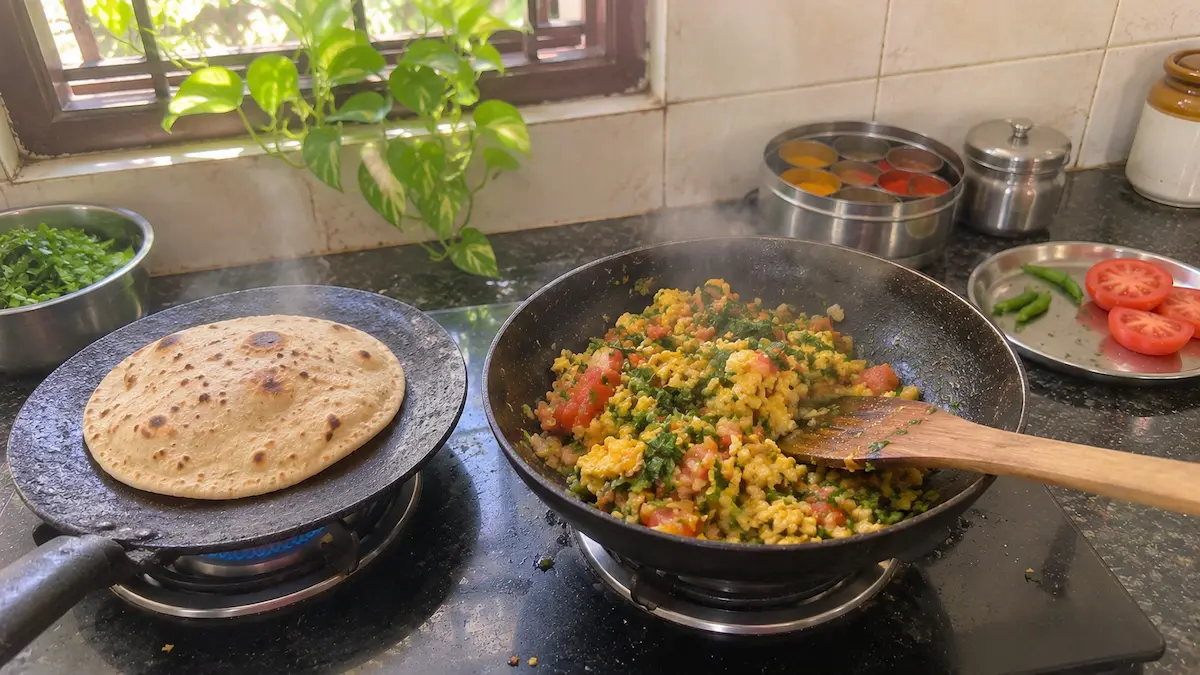
| Egg bhurji | Cook in a teaspoon of oil with lots of onion, tomato, capsicum and spinach. Serve with a whole wheat roti |
| Masala omelette | Add chopped onion, tomato, green chili and coriander. Use a non-stick pan |
| Anda paratha | Use whole wheat atta and very little ghee. Eat with dahi and salad |
| Boiled egg chaat | Chop boiled eggs with onion, tomato, cucumber, lemon and chaat masala |
| Egg and vegetable upma or poha | Add a scrambled or boiled egg on top for extra protein |
Meal Prep Friendly Egg Breakfast Recipes
If mornings are busy, preparing eggs ahead can save a lot of time. Egg muffins are made by whisking eggs with diced vegetables and a little cheese, then baking them in a muffin tin. Make a batch on the weekend and reheat them during the week.
Overnight egg bakes, also called breakfast casseroles, are good for families. Layer whole grain bread cubes, eggs, milk and vegetables with a little cheese in a baking dish, refrigerate overnight and bake in the morning.
Hard boiled eggs made in a batch can be eaten plain, sliced onto whole grain crackers or chopped into a quick breakfast salad.
For safe storage, keep cooked eggs in the fridge. Hard boiled eggs in their shells are best eaten within about a week, and cooked egg dishes such as muffins or bakes within 3 to 4 days. Our easy meal prep ideas have more tips for planning the week.
Healthy Egg Breakfast Ideas for Weight Loss
When the goal is weight loss, how you cook eggs matters as much as the eggs themselves. Poaching, boiling or using a non-stick pan with a little oil keeps calories low while keeping the protein that helps you feel full. Pairing eggs with high fiber vegetables instead of white bread or pastries adds volume without many calories.
A good weight loss plate might be two eggs cooked with very little oil, a generous serving of sautéed mushrooms and peppers and a small bowl of berries or papaya. Avoid large amounts of cheese, processed breakfast meats and sugary sauces. For more filling ideas, see our list of high protein snacks for weight loss.
Egg Breakfast Ideas for Muscle Building
For anyone building or maintaining muscle, eggs make it easy to get protein early in the day. Spreading protein across meals, rather than eating most of it at dinner, may help your body use it better. A muscle building breakfast might be three or four eggs scrambled with spinach, served with a bowl of oats topped with a spoon of peanut butter.
Adding Greek yogurt, hung curd or a little cottage cheese boosts protein without a large volume of food. Combining eggs with a complex carbohydrate such as oats or whole grain toast also helps refuel energy stores, which is useful if you train in the morning. Our high protein oatmeal ideas pair well with eggs.
Low Carb and Keto Friendly Egg Breakfast Options
Eggs suit low carb and keto eating because they contain almost no carbohydrates. A cheese and vegetable omelette with avocado on the side gives filling fat and fiber without added sugar or starch.
Another option is baked eggs in avocado halves, where an egg is cracked into the center of an avocado and baked until set. For something heartier, try an egg skillet with zucchini, mushrooms and a little shredded cheese.
Vegetarian and Plant Forward Egg Breakfast Combinations
For vegetarians who eat eggs, they are often the main protein source of the day. Shakshuka, where eggs are cooked in a spiced tomato and pepper sauce, is a naturally vegetarian dish full of vegetables and flavor. Serve it with whole grain bread or roti to scoop up the sauce.
A grain bowl topped with a soft boiled egg is another good choice. Start with cooked quinoa, brown rice or dalia, add fresh or roasted vegetables and a yogurt dressing, and top with the egg. For more fiber-rich morning ideas, see our list of high fiber breakfast foods.
Common Mistakes to Avoid With an Egg Breakfast
| Mistake | Better choice |
|---|---|
| Cooking eggs in a lot of butter, ghee or oil | Use a non-stick pan with a light coating of oil |
| Eating eggs with sugary pastries or processed meats | Pair eggs with vegetables, fruit and whole grains |
| Overcooking until rubbery | Cook over medium-low heat and take eggs off just before they look fully set |
| Always throwing away the yolk | Keep the yolk unless your doctor advises otherwise |
| Eating raw or runny eggs when at higher risk | Pregnant women, young children, older adults and people with weak immunity should eat eggs with a firm yolk |
| Eating the same breakfast every day | Rotate omelettes, bhurji, egg muffins and shakshuka to avoid boredom |
Tips for Building Your Own Egg Breakfast Routine
Start by choosing what fits your schedule. If mornings are rushed, batch cooked options like egg muffins or boiled eggs remove the need for daily cooking. If you have more time, enjoy a fresh omelette or bhurji.
It also helps to follow a simple formula instead of memorizing recipes: eggs + a vegetable or fruit + a whole grain + a little healthy fat. Rotate the ingredients based on what is in season or already in your kitchen. Our guide to the most nutrient dense foods has more ideas for what to add.
Frequently Asked Questions
Is eating eggs every day for breakfast healthy?
For most healthy adults, one or two eggs a day as part of a balanced diet is considered safe. People with diabetes, high cholesterol, heart disease or kidney disease should ask their doctor for a personal limit.
How many eggs should I eat for a healthy breakfast?
One or two eggs is a common amount for most adults. Active people may eat more, or add extra egg whites. See our guide on how many eggs you can eat a day for details by health condition.
Are egg whites healthier than whole eggs?
Egg whites are lower in calories and have no cholesterol, but the yolk contains most of the vitamins, minerals and healthy fats. Unless your doctor advises you to limit yolks, whole eggs are the more complete choice.
What can I eat with eggs for a balanced breakfast?
Pair eggs with vegetables, a whole grain such as oats, whole wheat toast or roti, and a little healthy fat like avocado or nuts.
Can an egg breakfast help with weight loss?
It can. Protein helps you feel full, which may reduce how much you eat later. Cook eggs with little fat and pair them with vegetables instead of refined carbs.
Is it safe to eat eggs if I have high cholesterol?
Often yes, in moderation, but people with high cholesterol should follow their doctor’s advice. The overall diet, especially saturated fat, matters more than eggs alone.
What is the healthiest way to cook eggs?
Boiling, poaching and gentle scrambling with little added fat are the healthiest methods.
Can I meal prep eggs for the whole week?
Yes. Hard boiled eggs in their shells keep in the fridge for about a week, and cooked egg dishes such as muffins for 3 to 4 days. Reheat gently for better texture.
Conclusion
Healthy egg breakfast ideas are practical, affordable and easy to adapt, whether your goal is weight loss, muscle building, steady energy or simply eating better. Eggs offer a rare mix of protein, vitamins and versatility that few other breakfast foods can match.
Choose gentle cooking methods, pair eggs with vegetables and whole grains, and rotate between quick options, desi favorites and meal prepped dishes. Start with one or two ideas from this guide and adjust them to your taste. Over time, this simple habit can become one of the easiest healthy routines you build.