
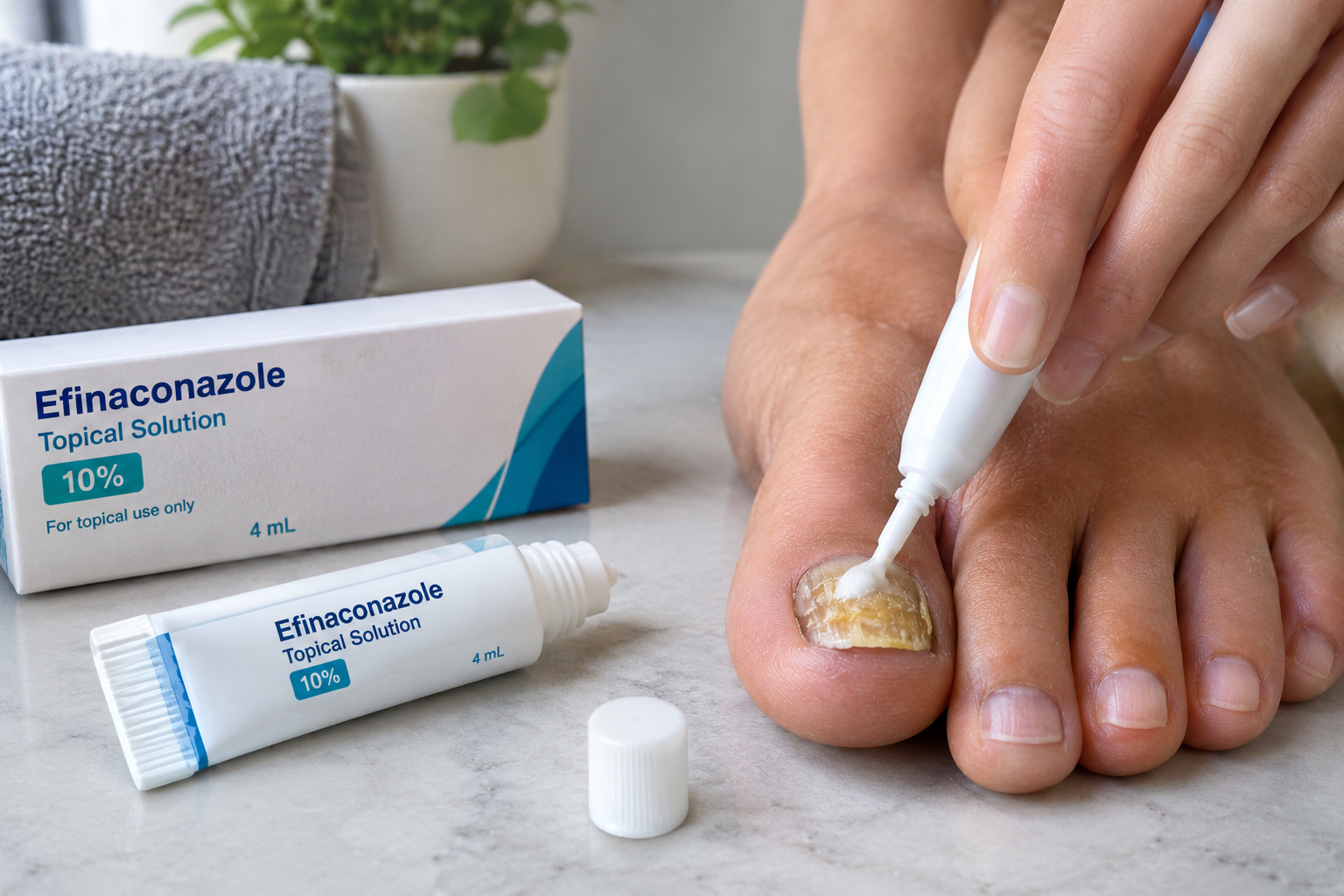

Searching for a nails fungal infection cream usually starts with a thick or yellow nail that will not go back to normal. Pharmacy shelves are full of creams and lacquers and ointments that promise a clear nail. The honest truth is more complicated, because nails are hard and cream often struggles to reach the infection underneath.
This article explains what nail fungus is and what kinds of products exist and what the research says about them. It covers ingredients and correct use and realistic timelines and safety. It also explains when a cream is not enough. The information is educational and does not replace advice from a doctor or pharmacist who can examine your nails.
Table of Contents
What Is Nail Fungus
Nail fungus is a common infection of the nail and the skin under it. The medical name is onychomycosis. It is caused mostly by fungi called dermatophytes and sometimes by yeasts or molds. Toenails are affected far more often than fingernails because shoes create a warm and damp place where fungus grows.
The infection often starts at the tip of the nail and moves toward the base. It is not usually dangerous but it can be painful and embarrassing and can spread to other nails and to the skin of the feet. It rarely goes away without treatment.
Signs and Symptoms
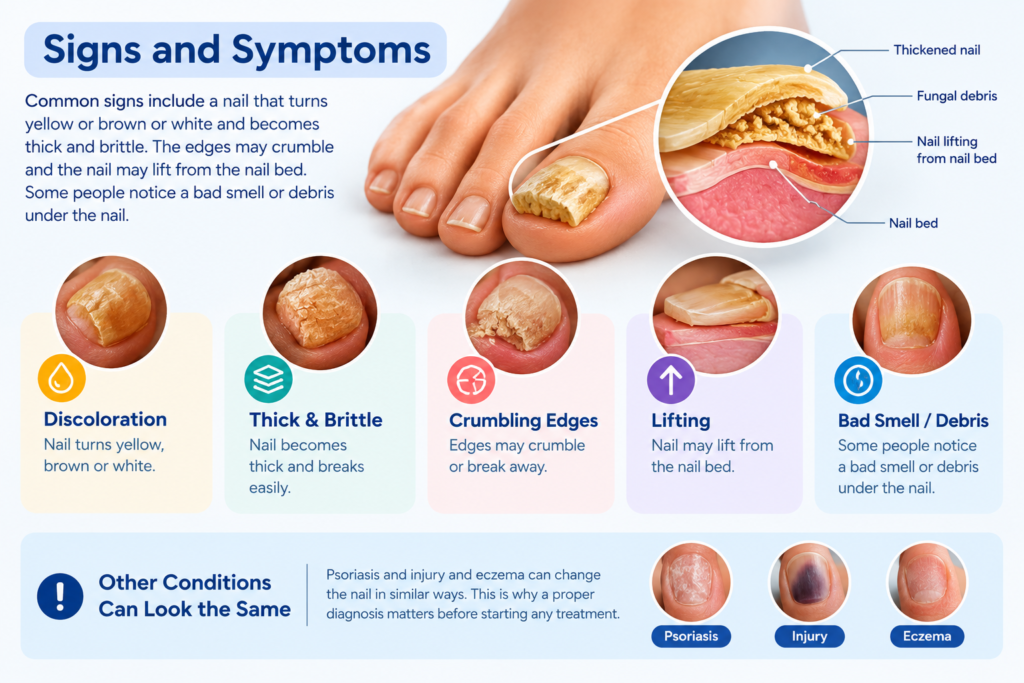
Common signs include a nail that turns yellow or brown or white and becomes thick and brittle. The edges may crumble and the nail may lift from the nail bed. Some people notice a bad smell or debris under the nail.
Other conditions can look the same. Psoriasis and injury and eczema can change the nail in similar ways. This is why a proper diagnosis matters before starting any treatment.
Causes and Risk Factors
Fungus spreads through damp floors and shared nail tools and tight shoes and sweaty socks. Small nail injuries make infection easier. Risk rises with age and with conditions such as diabetes and poor circulation and a weakened immune system.
Athlete foot is a common starting point. Fungus on the skin of the foot can move into the nail. Treating both the skin and the nail helps stop the cycle.
Do Creams Work for Nail Fungus
Ordinary antifungal creams work well for skin infections such as athlete foot but they have a hard time with nails. The nail plate is thick and tight and blocks most of the medicine. As a result a regular cream often cannot reach the fungus that lives under and inside the nail.
That does not mean topical treatment is useless. Special nail solutions and lacquers are designed to soak through the nail better than a plain cream. Even so results in studies are modest and treatment takes months. Complete cure rates for prescription topicals in trials were roughly in the range of 5 to 18 percent.
The table below compares common forms and how well each reaches the nail.
| Form | Designed for | Nail penetration | Typical use |
|---|---|---|---|
| Standard antifungal cream | Skin such as athlete foot | Low | Skin around the nail |
| Nail lacquer or paint | Nail plate | Better | Applied to the nail once or twice weekly or daily |
| Prescription nail solution | Nail plate | Better | Daily for many months |
| Urea based cream | Softening thick nails | Helps with preparation | Used alongside other treatment |
| Oral antifungal tablets | Whole body | High | Prescribed by a doctor |
Why Nails Are Hard to Treat
The nail plate is made of tough keratin and grows slowly. Fungus hides under the nail and in the nail bed where blood flow is limited. This protects it from both medicine and the immune system.
Because nails grow slowly the full result is only visible when healthy nail has grown out. Toenails can take twelve to eighteen months to fully replace themselves.
What a Cream Can and Cannot Do
A cream can help with mild infections that affect only the tip of the nail. It can also treat fungal skin around the nail and reduce the chance of spreading. It is less likely to clear a thick infection that covers most of the nail.
If many nails are involved or the nail is very thick a doctor may suggest tablets or a combined approach.
Types of Nail Fungus Treatments
Treatment depends on how severe the infection is and how many nails are affected and what other health conditions you have. The table below summarizes the main options.
| Option | How it is used | Usual duration | Notes |
|---|---|---|---|
| Over the counter cream | Applied to skin and nail edges | Weeks to months | Better for skin than nail |
| Nail lacquer or solution | Applied to the nail | Many months | Works best for mild cases |
| Oral antifungal tablets | Taken by mouth under medical advice | Weeks to months | Highest cure rates but needs medical checks |
| Laser or light therapy | Done in a clinic | Several sessions | Evidence is limited and results vary |
| Nail removal | Done by a doctor for severe cases | One procedure plus follow up | Used when other treatments fail |
Over the Counter Creams
Creams with ingredients such as clotrimazole and miconazole and terbinafine are sold without a prescription. They are best for fungal infection of the skin around the nail. They may help a mild nail infection slightly but should not be expected to clear a thick nail.
Check the label to see whether the product is meant for skin or for nails. If the label does not mention nails it was probably not designed for them.
Prescription Nail Solutions and Lacquers
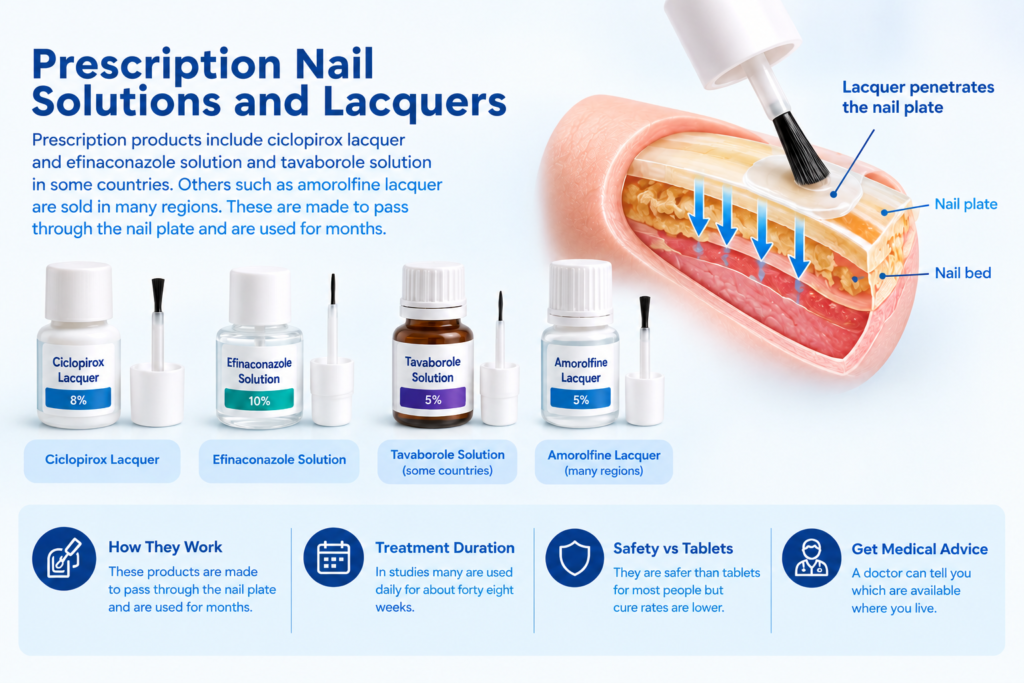
Prescription products include ciclopirox lacquer and efinaconazole solution and tavaborole solution in some countries. Others such as amorolfine lacquer are sold in many regions. These are made to pass through the nail plate and are used for months.
In studies many are used daily for about forty eight weeks. They are safer than tablets for most people but cure rates are lower. A doctor can tell you which are available where you live.
Oral Medicines
Tablets such as terbinafine and itraconazole reach the nail through the bloodstream and are the most effective treatment for many people. They are usually taken for a few months.
They can affect the liver and interact with other medicines so they need a doctor prescription and sometimes blood tests. Do not take them without medical advice.
Procedures and Devices
Laser treatment is offered by some clinics. Research so far is mixed and results vary. It can also be costly so ask a doctor about the evidence before paying.
For severe or painful infections a doctor may trim or remove part of the nail and apply medicine directly to the nail bed.
Ingredients to Look For in a Nails Fungal Infection Cream
Not every product contains something that works against nail fungus. Reading the active ingredient helps you choose wisely. The table below lists common ones.
| Ingredient | Common product type | Notes |
|---|---|---|
| Terbinafine | Cream and some solutions | Strong antifungal and widely used for skin infections |
| Clotrimazole | Cream | Good for athlete foot and skin around the nail |
| Miconazole | Cream and powder | Similar use to clotrimazole |
| Ciclopirox | Prescription nail lacquer | Designed for nail plate |
| Amorolfine | Nail lacquer in some countries | Used once or twice a week |
| Efinaconazole | Prescription nail solution | Applied daily for many months |
| Tavaborole | Prescription nail solution | Applied daily for many months |
| Urea | Cream | Softens thick nails and helps medicine reach the nail |
Active Ingredients Explained
Azole medicines such as clotrimazole and miconazole stop fungus from building its cell walls. Terbinafine works in a related way and kills many dermatophytes. Ciclopirox and amorolfine work differently and are made into lacquers that form a thin film on the nail.
All of them need steady use for a long time. Stopping early is a common reason infections come back.
Ingredients That Help Preparation
Urea cream softens thick and hard nail tissue. This can make trimming easier and may help medicine soak in. It is not an antifungal on its own so it works best alongside a proper treatment.
Avoid products with long lists of fragrances and strong chemicals since they can irritate the skin and do nothing for the fungus.
How to Use Antifungal Cream for Nails Correctly
Good habits make any treatment work better. Apply the product exactly as the label or your doctor says and do not skip days. Consistency matters more than quantity.
Preparing the Nail
Wash and dry the foot or hand well before each use. Trim the nail short and file the surface gently if the product label allows it. Use a separate file for infected nails and throw it away or clean it carefully after use.
Do not cut deep into the skin. Small cuts make infection easier.
Applying the Product
Apply a thin layer over the whole nail and the skin around it. Let it dry fully before putting on socks or shoes. For lacquers follow the weekly schedule on the pack since some need to be removed and reapplied.
Wash your hands after applying so you do not spread fungus to other nails.
Keeping Going
Continue until healthy nail has grown out or until your doctor says to stop. Many people quit when the nail looks a little better but the fungus may still be present. Take a photo each month to track progress.
If nothing improves after several months speak with a doctor because a different treatment may be needed.
How Long Does It Take to See Results
Nails grow slowly so patience is essential. A cream or lacquer does not repair the damaged part of a nail. It stops the fungus so that new healthy nail can grow in. You will only see a fully clear nail once the old one has been replaced.
| Nail | Time to grow out fully | What to expect |
|---|---|---|
| Fingernail | About four to six months | Faster improvement |
| Toenail | About twelve to eighteen months | Slow change |
| Big toenail | Often the slowest | May need the longest treatment |
Signs Treatment Is Working
A clear band of healthy nail growing from the base is the best sign. The nail may become less thick and less crumbly over time. Smell and debris usually reduce too.
Do not judge the result only by the old part of the nail. The new growth shows what is happening.
When Results Are Disappointing
If a nail stays thick and yellow after several months the infection may be too deep for a topical product. Another condition may also be present. A doctor can take a nail sample to confirm the cause and suggest tablets or another approach.
Side Effects and Safety
Topical antifungals are generally well tolerated. The most common side effects are mild redness and itching and burning at the site. Some solutions can cause temporary changes in how the nail looks.
Stop using a product and see a doctor if you get severe swelling or blistering or signs of an allergic reaction. Tell the doctor about any other medicines you take.
Pregnancy and Children
Always ask a doctor or pharmacist before using any antifungal product during pregnancy or breastfeeding or on a child. Some products are not suitable and a safe option may be available.
Do not use adult products on young children without advice since doses and skin sensitivity differ.
Diabetes and Circulation Problems
People with diabetes or poor circulation are at higher risk of complications from foot infections. A small problem can become serious. See a doctor early instead of treating at home for months.
Check your feet daily and report any wounds or color changes at once.
Home Remedies and What the Evidence Says
Many people try remedies such as tea tree oil and vinegar soaks and petroleum jelly with menthol. Some have shown mild effects in small studies but the evidence is limited and results are not consistent. None of them are proven to match prescription treatment.
| Remedy | What people claim | What the evidence suggests |
|---|---|---|
| Tea tree oil | Kills fungus | Small studies show some effect but it can irritate skin |
| Vinegar soaks | Changes nail acidity | Little reliable evidence |
| Menthol ointment | Clears nails | Very limited evidence |
| Baking soda | Dries the area | May help keep skin dry but does not cure infection |
| Garlic | Natural antifungal | Little reliable evidence for nails |
Using Home Remedies Safely
If you want to try one do not rely on it alone for a serious infection. Patch test first since essential oils can cause rashes. Never put strong chemicals on broken skin.
Home care is best seen as a supportive step such as keeping feet dry and clean.
When Remedies Delay Real Treatment
Spending many months on an unproven remedy can let the infection worsen. If the nail is getting worse or spreading book a visit sooner rather than later.
Latest Update on Nail Fungus Treatment
Research on nail treatment keeps moving. A topical terbinafine solution designed to carry the drug through the nail has been approved in a number of European countries and is sold in some of them. Studies reported good fungus clearing rates for a topical product but complete cures remained modest.
Treatments change and availability varies by country so check current information from a doctor or national health authority. Always confirm what is approved and sold where you live before choosing a product.
How to Judge Nail Fungus Cream Reviews
Online reviews can be helpful but they can also mislead. Nails take months to respond so a review written after two weeks says little about results. Look for reviews from people who used the product for several months.
The table below shows common claims and how to treat them.
| Claim | How to read it |
|---|---|
| Cured in one week | Not realistic since nails grow slowly |
| Works for every case | No treatment works for everyone |
| Natural so completely safe | Natural products can still irritate skin |
| Before and after photos only | Photos can be edited or taken months apart |
| Clinical studies mentioned | Check whether the study is real and about the product |
Red Flags to Avoid
Be careful with products that promise guaranteed results or very fast cures. Avoid sellers who hide ingredients or make medical claims without evidence. Buy from licensed pharmacies and check expiry dates.
Questions to Ask a Pharmacist
Ask whether the product is meant for nails or skin and how long you should use it. Ask about side effects and interactions with your medicines. A pharmacist can also help you decide when to see a doctor.
Prevention Tips
Preventing fungus is easier than treating it. Most steps are simple and low cost. Keeping feet clean and dry cuts the risk a lot.
| Habit | Why it helps |
|---|---|
| Dry feet well after washing | Fungus grows in damp skin |
| Change socks daily or when damp | Reduces moisture |
| Wear breathable shoes | Lets feet dry |
| Use sandals in public showers and pools | Avoids contact with fungus |
| Do not share nail tools or towels | Prevents spreading |
| Treat athlete foot early | Stops spread to nails |
| Clean nail tools after use | Removes fungus |
Footwear and Sock Care
Rotate shoes so each pair can dry fully between wears. Choose socks made from materials that pull moisture away. Antifungal powder inside shoes may help some people.
Nail Care Habits
Keep nails trimmed straight across and avoid biting or picking. Use clean tools and avoid salons that do not clean their equipment. Do not cover infected nails with polish for long periods since it traps moisture.
When to See a Doctor
See a doctor if the nail is painful or very thick or spreading or if several nails are affected. Seek care sooner if you have diabetes or poor circulation or a weak immune system.
A doctor can confirm the diagnosis with a nail sample and recommend a suitable treatment. This avoids months of treating the wrong problem.
Frequently Asked Questions
What is the best cream for nail fungus?
No single cream works for everyone. Prescription nail solutions and lacquers tend to work better than standard creams since they are made to pass through the nail.
Does antifungal cream cure toenail fungus?
It can help mild cases but complete cure is not common. Tablets prescribed by a doctor work better for many people.
How long does it take for nail fungus cream to work?
Fingernails often take four to six months and toenails twelve to eighteen months since healthy nail must grow out.
Can I use athlete foot cream on nail fungus?
It helps the skin around the nail but it rarely clears the nail itself.
Is nail fungus contagious?
Yes. It can spread through shared towels and nail tools and damp floors.
Can nail fungus go away on its own?
It rarely does. Without treatment it often stays or gets worse.
Are home remedies like tea tree oil effective?
Evidence is limited. They may help a little but are not proven to replace medical treatment.
When should I see a doctor?
See a doctor if the nail is painful or spreading or if you have diabetes or poor circulation.
Final Thoughts
A nails fungal infection cream can help in the right situation but it is not a quick fix. Plain creams are best for the skin around the nail. Nail specific solutions and lacquers work better but still need months of steady use and give modest cure rates.
Confirm the problem first and choose a product designed for nails and keep going until healthy nail grows out. If progress is slow or the infection is severe talk with a doctor about stronger options. Good foot hygiene will help protect your results for the long term.