
Last updated August 12 2026. Nutrition information in this article is checked against USDA FoodData Central and Harvard School of Public Health nutrition resources before publishing.
Not all calories are created equal. Two foods can have the exact same calorie count and still be worlds apart in how much they actually nourish your body. This is the idea behind nutrient density and it is quickly becoming one of the most useful ways to think about food quality rather than just counting calories.
This article walks through what nutrient density really means why it matters more than most people realize and which foods consistently rank among the most nutrient dense foods available. You will also find practical tips for building meals around these foods no matter your goals or dietary preferences.
Table of Contents
Key Takeaways
- Nutrient dense foods deliver a high amount of vitamins minerals and protein relative to their calorie count.
- Leafy greens fatty fish eggs legumes and berries are consistently ranked among the most nutrient dense foods.
- Eating more nutrient dense foods can help you feel full and satisfied on fewer calories.
- Nutrient density is not about eliminating entire food groups. It is about choosing foods that give your body more for less.
- Small swaps like adding spinach to a smoothie or choosing sardines over processed lunch meat can meaningfully raise the nutrient density of your diet.
What Is Nutrient Density
Nutrient density refers to how many vitamins minerals and other beneficial compounds a food provides compared to how many calories it contains. A food that is high in nutrient density gives your body a large amount of nutrition for a relatively small number of calories. Leafy greens are a classic example since a large serving of spinach or kale contains very few calories but delivers meaningful amounts of vitamin A vitamin K folate and iron.
This concept is different from simply looking at calories alone. A candy bar and a serving of almonds might have a similar calorie count but the almonds provide protein fiber healthy fats and minerals like magnesium while the candy bar mostly provides sugar and little else. Understanding nutrient density helps explain why some foods leave you satisfied and nourished while others leave you hungry again within an hour.
Why Nutrient Density Matters More Than Calorie Counting
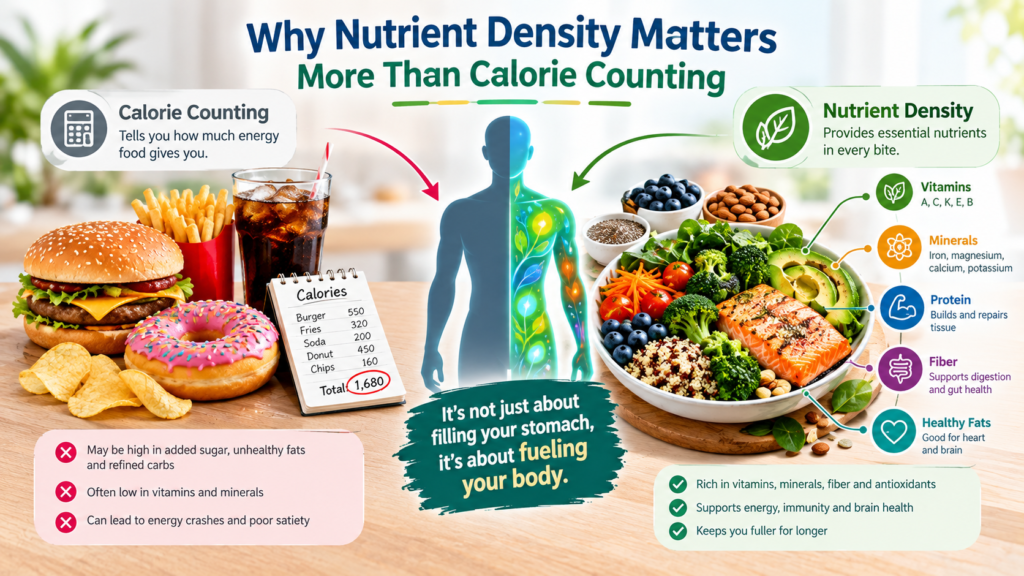
For decades diet advice focused heavily on calorie counting alone. While calories still matter for weight management focusing only on calories can lead people to choose low calorie foods that offer very little actual nutrition. This is sometimes called eating empty calories.
Nutrient dense foods help solve this problem by allowing you to meet your nutritional needs without needing to eat large amounts of food. This is especially helpful for people managing their weight since foods high in protein and fiber tend to be more filling per calorie than heavily processed options. It is also important for people with smaller appetites such as older adults or anyone recovering from illness who need to get more nutrition from smaller meals.
How Nutrient Dense Foods Are Measured
Researchers and nutrition organizations use several scoring systems to rank how nutrient dense a food is. One widely referenced tool is the Aggregate Nutrient Density Index which scores foods based on the levels of vitamins minerals fiber and protein they contain relative to their calories. Foods like leafy greens and cruciferous vegetables consistently score at the very top of these systems.
Other resources such as the USDA FoodData Central database provide detailed nutrient breakdowns for thousands of foods which researchers and dietitians use to compare nutrient content across different food groups. While no single scoring system is perfect these tools give a useful starting point for identifying which foods offer the most nutritional value per calorie.
The Most Nutrient Dense Foods You Can Add To Your Diet
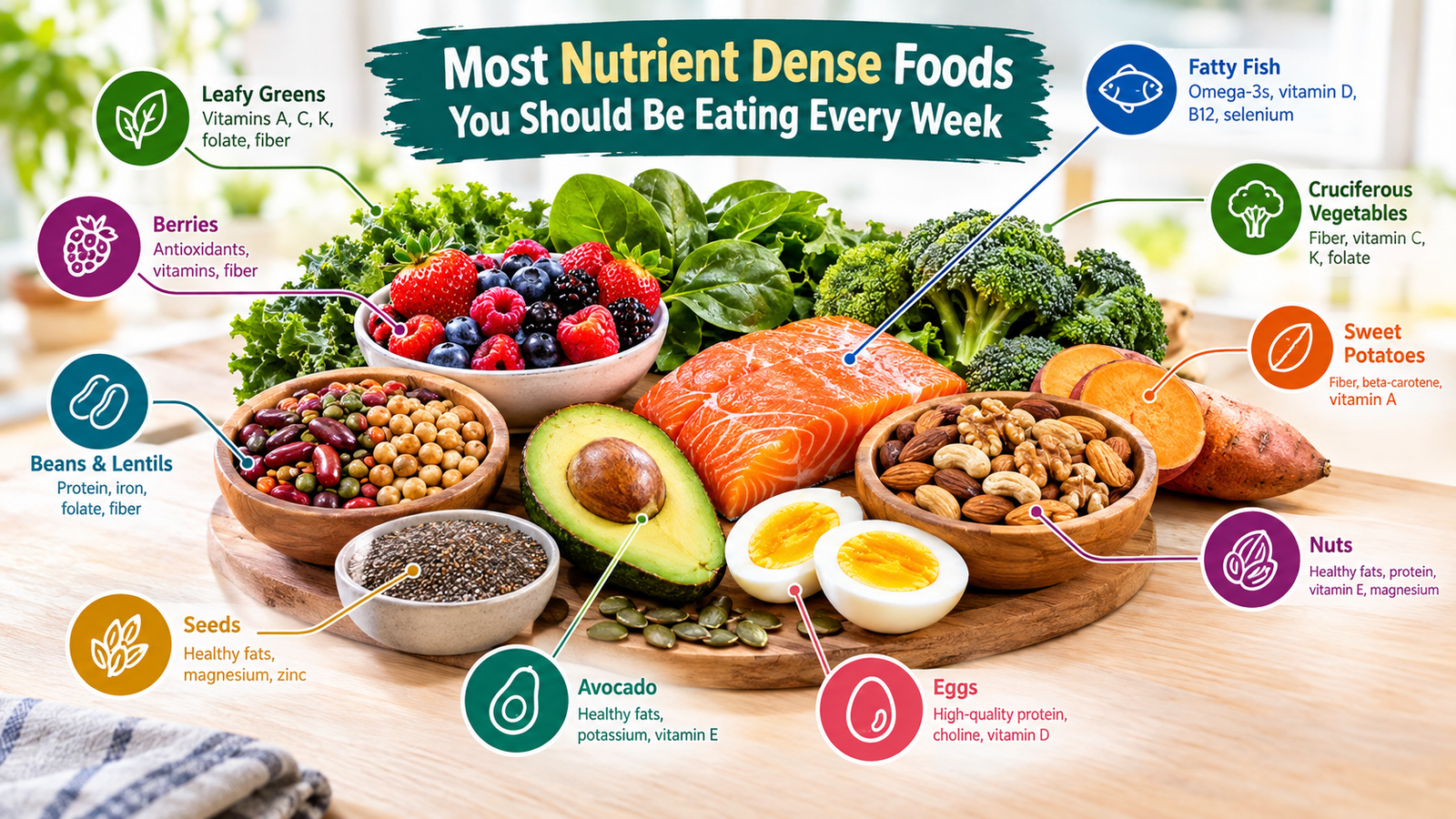
Certain foods appear again and again across nearly every list of the most nutrient dense foods. Below is a closer look at the categories that consistently stand out along with why they earn their reputation.
Leafy Greens
Spinach kale collard greens and Swiss chard rank among the top options available for very few calories. These vegetables are rich in vitamin K vitamin A folate and iron while also providing a meaningful amount of fiber. Because they are so low in calories you can eat large servings without much impact on your overall calorie intake for the day.
Leafy greens are also incredibly versatile. They can be blended into smoothies sauteed as a simple side dish or used as the base for a salad which makes it easy to include them in most meals throughout the week.
Fatty Fish
Salmon sardines and mackerel are packed with omega three fatty acids high quality protein and vitamin D. These nutrients support heart health brain function and reduce inflammation throughout the body. Sardines in particular are often overlooked despite being one of the most nutrient dense and affordable options in the seafood aisle.
Because fatty fish delivers so many nutrients in a single serving it is a strong choice for anyone looking to get more nutritional value without eating large portions. Two servings per week is a commonly recommended target according to major health organizations.
Eggs
Eggs are often called a nearly complete food because they contain high quality protein healthy fats and a wide range of vitamins and minerals including B12 selenium and choline. Choline in particular is a nutrient many people do not get enough of and it plays an important role in brain health.
Eggs are also inexpensive versatile and quick to prepare which makes them one of the most practical nutrient dense foods for people with busy schedules. They can be enjoyed at any meal not just breakfast.
Legumes
Beans lentils and chickpeas provide a strong combination of plant based protein fiber iron and folate. Because they are filling and slow to digest legumes can help control blood sugar levels and keep hunger at bay for longer periods after eating.
Legumes are also one of the most affordable nutrient dense foods available which makes them a practical choice for anyone trying to eat well on a budget. They store for a long time when dried or canned which adds convenience to their nutritional value.
Berries
Blueberries strawberries and raspberries are lower in sugar than many other fruits while still being rich in fiber vitamin C and antioxidant compounds. These antioxidants are linked to reduced inflammation and may support long term brain and heart health.
Berries also satisfy a sweet craving in a way that feels indulgent while still contributing meaningfully to your nutrient intake for the day. Frozen berries retain most of their nutritional value and are often more affordable than fresh ones.
Nuts And Seeds
Almonds walnuts chia seeds and flaxseeds provide healthy fats fiber protein and important minerals like magnesium and zinc. Because they are calorie dense a small handful goes a long way which makes portion awareness important even though the nutritional payoff is significant.
Nuts and seeds are easy to add to oatmeal yogurt or salads which makes them a simple way to boost the nutrient density of an existing meal without much extra effort.
Cruciferous Vegetables
Broccoli cauliflower and Brussels sprouts are rich in vitamin C vitamin K and fiber along with plant compounds that have been studied for their potential role in reducing cancer risk. These vegetables also tend to be filling due to their fiber and water content.
Roasting steaming or sauteing cruciferous vegetables with a bit of olive oil and seasoning can make them far more appealing than boiled versions which often taste bland and lose some of their nutritional value in the cooking water.
Sweet Potatoes And Orange Vegetables
Sweet potatoes carrots and butternut squash are rich in beta carotene which the body converts into vitamin A. This nutrient supports eye health immune function and skin health. These vegetables also provide fiber and a natural sweetness that makes them satisfying without relying on added sugar.
Because they are filling and nutrient rich orange vegetables are a smart way to replace less nutritious starches like white bread or refined pasta in a meal.
Comparing Some Of The Most Nutrient Dense Foods
The table below highlights a few standout nutrients found in some of the foods discussed above to show how differently each one contributes to your diet.
| Food | Standout Nutrients | Best Used For |
|---|---|---|
| Spinach | Vitamin K vitamin A folate | Salads smoothies sauteed sides |
| Salmon | Omega three fatty acids vitamin D protein | Dinner meals meal prep |
| Eggs | Protein choline B12 | Any meal of the day |
| Lentils | Plant protein fiber iron | Soups stews grain bowls |
| Blueberries | Vitamin C antioxidants fiber | Snacks breakfast toppings |
| Almonds | Healthy fats magnesium protein | Snacks salad toppings |
| Broccoli | Vitamin C vitamin K fiber | Side dishes stir fries |
| Sweet potato | Beta carotene fiber vitamin A | Side dishes roasted meals |
Nutrient Dense Foods For Different Goals
Not everyone is eating for the same reason so it helps to know which nutrient dense foods align best with specific goals.
For weight management foods high in protein and fiber such as eggs legumes and leafy greens tend to be the most helpful since they promote fullness on fewer calories. For muscle building fatty fish eggs and legumes provide the protein needed to support recovery and growth. For heart health fatty fish nuts and leafy greens are frequently recommended due to their impact on cholesterol and inflammation. For plant based eaters legumes nuts seeds and a wide variety of colorful vegetables can cover most of the same nutritional ground that animal based nutrient dense foods provide.
Common Myths About Nutrient Dense Foods
| Myth | Fact |
|---|---|
| Nutrient dense foods have to taste bland or boring | Many nutrient dense foods like berries eggs and roasted vegetables are naturally flavorful |
| Only vegetables count as nutrient dense | Fish eggs legumes and nuts are also among the most nutrient dense foods available |
| Eating nutrient dense foods means eating less overall | Many nutrient dense foods are filling which can help you eat appropriate portions naturally |
| Frozen produce is less nutritious than fresh | Frozen fruits and vegetables are often picked and frozen at peak ripeness which preserves most nutrients |
| You need supplements to get enough nutrients | Most people can meet their nutrient needs through a varied diet built around nutrient dense whole foods |
Tips For Adding More Nutrient Dense Foods To Your Meals
- Add a handful of spinach or kale to your morning smoothie where the flavor is barely noticeable.
- Keep canned beans and lentils on hand for quick additions to soups salads and grain bowls.
- Swap white bread or white rice for sweet potato or a whole grain option a few times per week.
- Keep a bag of frozen berries in the freezer for an easy nutrient boost on cereal or yogurt.
- Choose canned sardines or salmon as a fast and affordable source of omega three fatty acids.
Common Mistakes People Make When Trying To Eat More Nutrient Dense Foods
- Focusing only on one food group: True nutrient density comes from variety not just eating endless amounts of one vegetable.
- Overcooking vegetables: Boiling vegetables for too long can cause water soluble vitamins to leach out reducing their nutritional value.
- Ignoring portion size for calorie dense nutrient dense foods: Nuts seeds and oils are nutrient dense but still calorie dense so portions still matter.
- Assuming all packaged health foods are nutrient dense: Some products marketed as healthy are still highly processed with added sugar and low actual nutrient content.
- Not planning meals ahead: Without a plan it is easy to default to convenient but less nutritious options during busy weeks.
Frequently Asked Questions
What are the most nutrient dense foods overall
Leafy greens fatty fish eggs legumes berries nuts and cruciferous vegetables are consistently ranked at the top based on their vitamin mineral and protein content relative to calories.
Is nutrient density the same as being low calorie
Not always. Some nutrient dense foods like nuts and fatty fish are relatively high in calories but still considered nutrient dense because of the large amount of vitamins minerals and healthy fats they provide.
Can I get enough nutrients without eating meat or fish
Yes. Legumes nuts seeds whole grains and a wide variety of vegetables can provide most of the same nutrients found in animal based nutrient dense foods including protein iron and healthy fats.
Are frozen vegetables as nutrient dense as fresh ones
In most cases yes. Frozen vegetables are typically frozen shortly after harvest which helps preserve their vitamin and mineral content often making them just as nutritious as fresh produce.
How many nutrient dense foods should I eat each day
There is no single required number. A helpful approach is to include at least one nutrient dense food in every meal such as leafy greens with lunch or berries with breakfast.
Do nutrient dense foods help with weight loss
They can support weight management since many nutrient dense foods are high in protein and fiber which promote fullness. Overall weight loss still depends on total calorie intake rather than any single food.
Are nutrient dense foods more expensive
Some like fatty fish can be pricier but many of the most nutrient dense foods including eggs beans lentils and frozen vegetables are budget friendly options.
Can children benefit from eating more nutrient dense foods
Yes. Growing children have higher nutrient needs relative to their size so foods like eggs leafy greens and berries can help support healthy development without requiring large portions.
Conclusion
Choosing the most nutrient dense foods is one of the simplest ways to improve the quality of your diet without needing to follow a complicated eating plan. Leafy greens fatty fish eggs legumes berries and a handful of other everyday foods consistently deliver more vitamins minerals and protein per calorie than most alternatives. By building meals around even a few of these foods each week you can meaningfully improve your overall nutrition while still enjoying food that tastes good and keeps you satisfied.
References
- United States Department of Agriculture FoodData Central
- Harvard T H Chan School of Public Health The Nutrition Source